
Alcohol has always been intertwined with human life — from festive cheers to quiet moments of stress relief, it influences how we socialize, celebrate, and cope. But when you look beyond the glass, men’s drinking patterns reveal fascinating insights shaped by culture, geography, and time.
According to the National Family Health Survey (NFHS-5, 2019–21), 22.4% of Indian men aged 15–49 consume alcohol, marking a noticeable decline from 29.2% in NFHS-4 (2015–16). This shift highlights growing awareness about health, fitness, and responsible drinking habits among men.
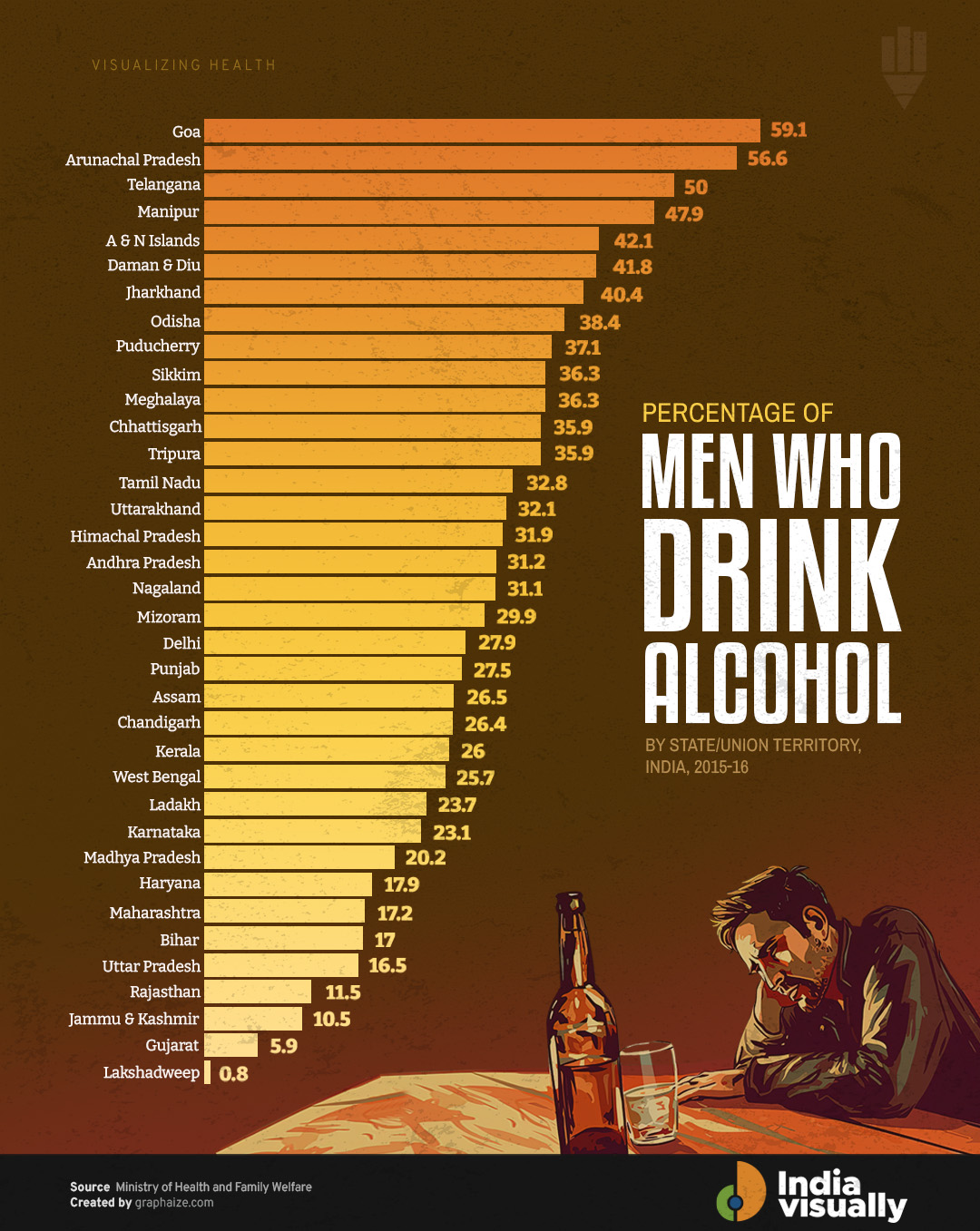
Yet, the story changes drastically across states. Goa leads with 59.1% of men drinking, followed by Arunachal Pradesh (56.6%) and Telangana (50%). In contrast, Gujarat (5.9%), Jammu & Kashmir (10.5%), and Lakshadweep (0.8%) record the lowest alcohol consumption — largely influenced by religious beliefs, prohibition laws, and community norms.
As we explore further, you’ll see how men alcohol drinking statistics vary not just by state, but also by social class, age, and urban-rural divide — offering a closer look at how India’s complex cultural landscape shapes one of its most debated lifestyle choices.
Understanding Alcohol Consumption Statistics
Alcohol consumption is more than just a number — it reflects lifestyle, accessibility, culture, and policy. In India, the NFHS-5 provides a reliable benchmark for understanding who drinks, where, and how much.
At a national average of 22.4%, alcohol use among Indian men has decreased over the past decade, likely due to increased health awareness, anti-alcohol campaigns, and stricter state regulations.
However, some states show contrasting realities.
- High-Consumption States like Goa (59.1%), Arunachal Pradesh (56.6%), and Manipur (47.9%) reflect a strong cultural acceptance of alcohol, often tied to tourism, tribal customs, and social events.
- Low-Consumption States such as Bihar (17%), Gujarat (5.9%), and Lakshadweep (0.8%) are influenced by prohibition laws, religious beliefs, and conservative traditions.
These disparities illustrate that men alcohol drinking statistics are not just about quantity — they mirror the diverse social fabric of India.
Social and Cultural Influences on Drinking Habits
Culture plays a powerful role in shaping drinking patterns among men. In India, alcohol use is often influenced by region, religion, and community norms.
In states like Goa and Sikkim, drinking is a socially accepted part of life — tied to festivals, community bonding, and tourism. Similarly, in tribal regions of Arunachal Pradesh and Meghalaya, traditional brews like rice beer are integral to cultural rituals.
In contrast, regions like Gujarat, Bihar, and Lakshadweep have strict prohibition laws where alcohol consumption is either banned or heavily restricted. These laws, combined with religious values, lead to significantly lower drinking rates.
Globally, similar contrasts exist — Western countries often have liberal drinking cultures, while in parts of the Middle East, alcohol is restricted or prohibited entirely.
Thus, men alcohol drinking statistics often reflect not just individual choices but also collective cultural beliefs and societal norms.
Health Implications of Alcohol Use
The health effects of alcohol go far beyond a temporary buzz. Regular or heavy drinking can have long-term physical and mental consequences that impact not only individuals but families and communities as well. According to NFHS-5 (2019–21) data, 22.4% of Indian men consume alcohol, a decline from 29.2% recorded in NFHS-4 (2015–16). This drop may indicate growing awareness of alcohol-related health risks and lifestyle changes among men.
Excessive drinking is directly linked to several serious health conditions. Continuous alcohol consumption can damage the liver, leading to cirrhosis and fatty liver disease. It also strains the cardiovascular system, contributing to high blood pressure, irregular heart rhythms, and other heart-related problems. Over time, alcohol affects mental health as well, increasing the risk of anxiety, depression, and dependency. It also impairs judgment and coordination, which often leads to accidents and injuries.
The World Health Organization (WHO) estimates that alcohol contributes to nearly three million deaths globally every year, and men make up approximately 75% of these fatalities. Such statistics emphasize how closely health and drinking behavior are connected.
While moderate drinking may not immediately harm most individuals, consistent or heavy use can cause lasting damage — physically, emotionally, and financially. Understanding these risks and practicing moderation are essential steps toward responsible drinking and overall well-being.
Changing Trends and Modern Awareness
One of the most notable shifts in men alcohol drinking statistics is the changing mindset toward health and moderation.
Today’s generation of men is more aware of alcohol’s long-term effects — not just on health but on productivity, relationships, and finances. Campaigns promoting “responsible drinking” and “dry days” have gained popularity, especially among younger professionals and fitness enthusiasts.
Social media and wellness movements have also made sobriety a trend. The rise of “mindful drinking” encourages individuals to enjoy alcohol occasionally but consciously — knowing their limits and making healthier choices.
This modern awareness is a promising sign that alcohol consumption may continue to decline in future NFHS surveys.
Alcohol Policies and the Rise of Non-Alcoholic Alternatives
Government policies have a powerful influence on how, where, and why people drink. In India, alcohol regulation is a state subject, meaning each state sets its own rules regarding production, sale, taxation, and consumption. These variations directly shape men alcohol drinking statistics across the country.
Dry States like Gujarat, Bihar, and Nagaland have implemented full or partial prohibition laws. These strict regulations aim to curb alcohol misuse but also face challenges such as illegal production and smuggling. On the other hand, tourism-driven states such as Goa and Sikkim maintain relaxed alcohol policies to support their hospitality sectors, where liquor sales play a key role in the local economy.
Meanwhile, excise taxes on alcohol remain a significant source of state revenue. Policymakers often find themselves balancing between public health priorities and economic dependence on alcohol sales. To promote awareness, many states have launched campaigns on responsible drinking and alcohol-related health risks, alongside measures like increased taxation and stricter age-verification enforcement.
However, as attitudes toward drinking evolve, another movement is gaining remarkable traction — the rise of non-alcoholic alternatives. Health-conscious and socially active men, especially younger generations, are embracing beverages that offer the same sense of enjoyment without intoxication. From alcohol-free beers and mocktails to kombucha and sparkling botanicals, these options are now staples at bars, restaurants, and even private gatherings.
Globally, the “sober curious” trend is reshaping how people think about leisure and socialization. It’s not about rejecting alcohol entirely but about making mindful, balanced choices. In India, too, brands are innovating rapidly to cater to this growing demand, offering products that combine taste, sophistication, and well-being.
This shift represents more than a change in drinking habits — it’s part of a larger lifestyle transformation. Men are becoming more conscious of health, fitness, and mental well-being. As both policies and preferences continue to evolve, India’s drinking culture is moving toward a future defined by responsibility, moderation, and healthier alternatives.
Final Thoughts: The Road Toward Responsible Drinking
The men alcohol drinking statistics from NFHS-5 present both a challenge and an opportunity. While 22.4% of Indian men still consume alcohol, the decline from previous years signals a positive shift in awareness and behavior.
High-drinking states like Goa and Arunachal Pradesh highlight the role of culture and accessibility, while dry regions such as Bihar and Gujarat show the influence of law and tradition. Yet, across all states, the conversation is slowly moving toward responsibility, moderation, and health.
The road ahead involves a collective effort — individuals making smarter choices, governments enforcing balanced regulations, and society normalizing sober living without judgment.
Unlock the power of captivating visuals with our seasoned expertise! With 7 years of crafting compelling visual content, we’re ready to elevate your brand’s story. From stunning graphics to mesmerizing animations, we bring your vision to life. Let’s create engaging visuals that resonate with your audience and leave a lasting impression. Partner with us today for an unforgettable visual journey!