In an era driven by digital transformation, coding has emerged as one of the most vital skills across industries. But how widespread is this capability among India’s youth? Recent data from the
National Sample Survey Office (NSSO) reveals a complex picture of the nation’s coding literacy—and the regional disparities within it.According to the NSSO report, published by the
Union Ministry of Statistics and Programme Implementation, only
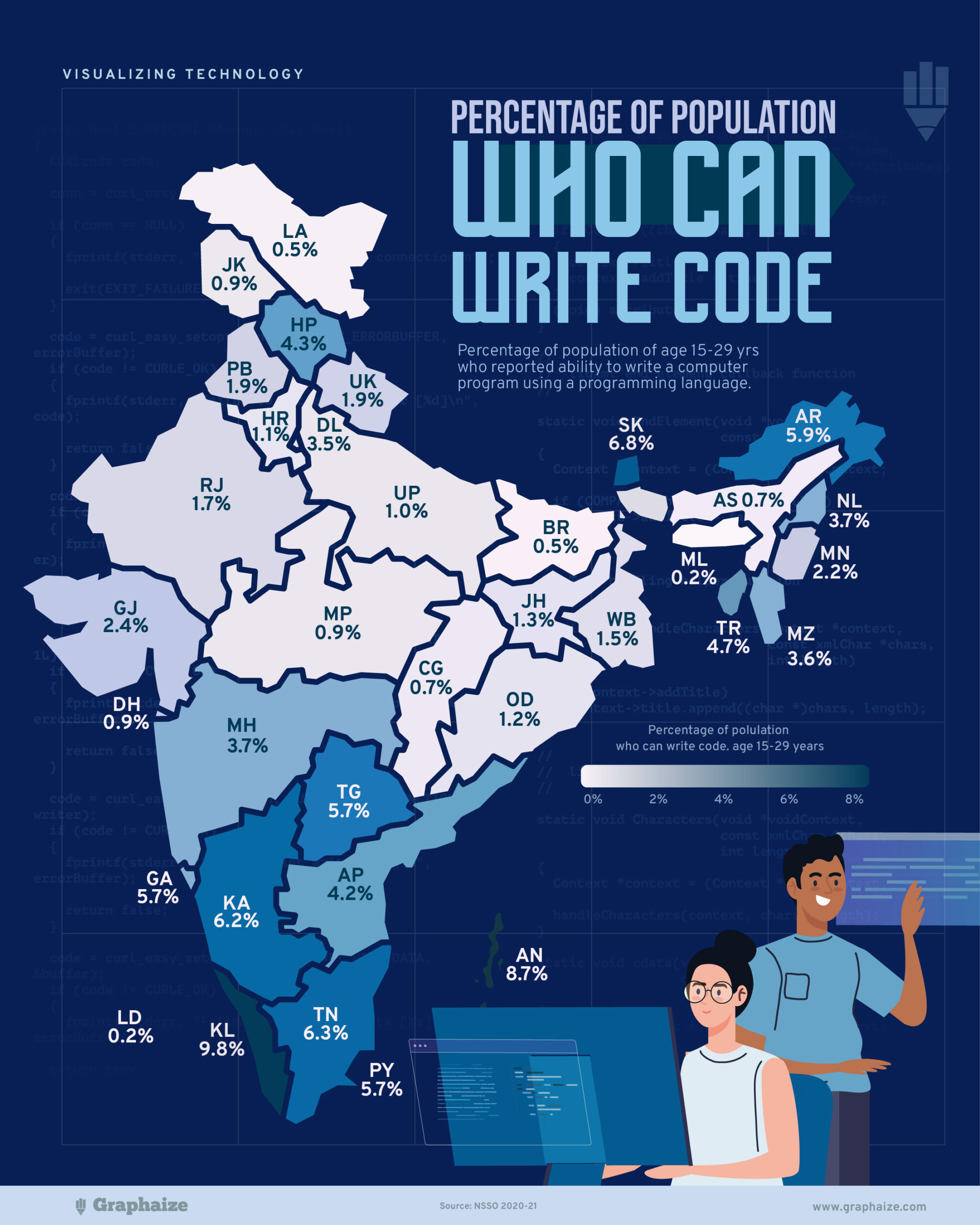
2.4% of Indians aged 15 to 29 are able to write code. While the national figure may appear modest, it reflects deeper trends in education, infrastructure, and access to digital opportunities.
Kerala Leads the Nation, also in Coding Literacy
Topping the list is
Kerala, where
9.8% of the youth population can write code—nearly
four times the national average. The state’s success can be attributed to several factors, including:
- A consistently high literacy rate
- Strong internet access, even in rural areas
- Proximity to major tech hubs such as
- Bengaluru and Hyderabad
- A growing startup ecosystem supported by coding bootcamps and IT skilling programs
Kerala’s emphasis on digital literacy and infrastructure has clearly translated into real-world outcomes, making it the country’s unofficial capital for coding proficiency.
Southern India Emerges as a Digital Stronghold
Kerala’s performance is part of a broader trend across South India, which continues to dominate the coding landscape:
| State | Coding Literacy (%) |
|---|
| Tamil Nadu | 6.3% |
| Karnataka | 6.2% |
| Telangana | 5.7% |
| Andhra Pradesh | 4.2% |
Let me know if you’d like to remove borders or apply any specific styles.The Andaman and Nicobar Islands, though geographically remote, also report a high coding literacy rate of
8.7%, highlighting the importance of localized policy and educational outreach.These figures are not coincidental. States in southern India have benefited from years of investment in digital infrastructure, public-private partnerships, and early integration of IT education in schools and colleges. The presence of global tech companies and a thriving startup culture have further cemented this advantage.
The Middle Performing and Lagging States
At the other end of the spectrum, several states report alarmingly low figures:
Sure! Here’s your HTML code converted from a list to a table format:
| State | Percentage |
|---|
| Meghalaya | 0.2% |
| Bihar | 0.5% |
| Chhattisgarh | 0.7% |
| Assam | 0.7% |
Let me know if you’d like to adjust the width, font, or alignment further.Large states like
Uttar Pradesh (1.0%), Madhya Pradesh (0.9%), and
Rajasthan (1.7%) also lag behind. These figures suggest that millions of young Indians remain outside the reach of effective digital education, often due to weak infrastructure, lack of trained educators, and limited job visibility in tech fields.
Middle-Performing States Show Emerging Potential
Several states fall in the middle of the spectrum, offering hope for future growth if the right interventions are made:
- Delhi, India’s capital, reports a coding literacy rate of 3.5%, reflecting the availability of premier institutions and a growing startup ecosystem.
- In the Northeast, Nagaland (3.7%) and Mizoram (3.6%) exceed expectations despite geographical challenges.
- Arunachal Pradesh, with 5.9%, stands out as a strong performer among non-metropolitan regions.
- Coastal states and Union Territories such as Goa and Puducherry both report 5.7%.
- Manipur sits slightly below the national average at 2.2%, but is seen as having high potential for improvement.
- Gujarat matches the national average at 2.4%, indicating room to grow through increased integration of IT in educational policy.
- Punjab (1.9%), West Bengal (1.5%), and Haryana (1.1%) show moderate performance, while Jammu & Kashmir (0.9%) remains in the early stages of digital skill development.
These mid-tier states represent critical areas of opportunity. With targeted digital literacy campaigns, enhanced infrastructure, and greater private sector participation, they could form the next wave of India’s tech-enabled workforce.
Why Coding Literacy Matters
Experts say the
importance of coding literacy goes beyond employment in the tech sector:
- Expanding Job Market: Coding skills are now relevant in diverse fields such as finance, marketing, design, and healthcare.
- Startup Ecosystems: States with higher coding literacy often see stronger entrepreneurial activity and innovation.
- Economic Productivity: A tech-literate population can boost efficiency and economic output across industries.
- Global Competitiveness: In an AI-driven world, coding fluency will be a key asset in maintaining economic leadership.
India’s demographic advantage can only translate into a digital advantage if skills like coding become widespread. The current statistics underscore the urgent need for a more inclusive and strategic approach to digital education.As India positions itself as a global technology hub, ensuring that every young citizen—regardless of geography—has access to the tools of the digital age will be crucial. In tomorrow’s economy, coding may well be as fundamental as reading, writing, and arithmetic.