

Why These 2025 Mobile Marketing Statistics Matter
The Mobile Reality
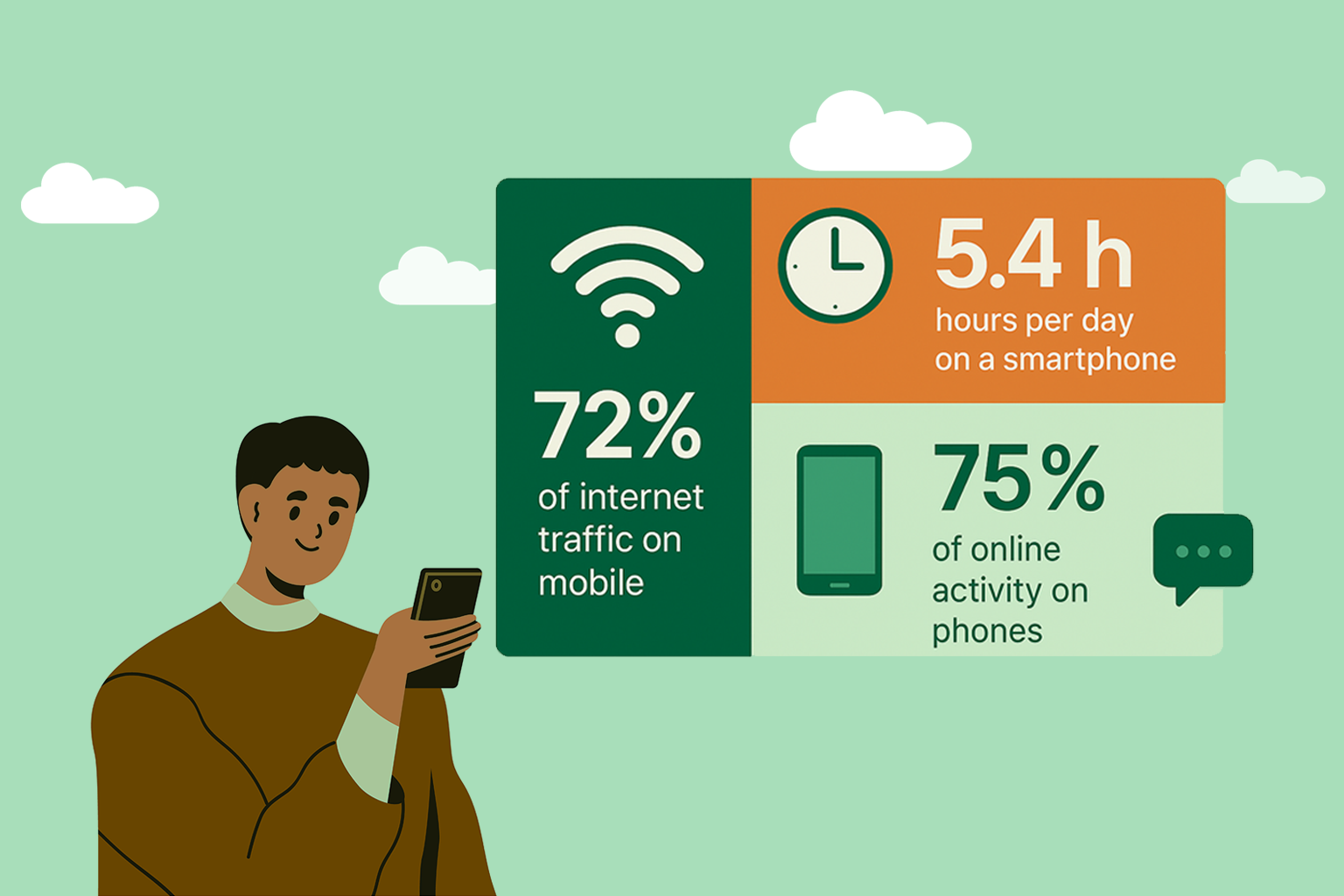
In today’s digital world, mobile is no longer an optional channel—it’s where everything happens. Consider this: 72% of all global internet traffic now comes from mobile devices. That means nearly three-quarters of all online activity takes place on smartphones and tablets, making mobile the primary way people connect, consume, and shop online.
The average American spends an astounding 5.4 hours per day on their mobile device, which adds up to over 1,900 hours annually—more time than many spend watching TV or even sleeping. This massive shift has transformed consumer behavior profoundly.
Your audience is no longer just scrolling or messaging on their phones—they are actively shopping, researching, watching videos, and making purchase decisions directly from their mobile devices. This transformation means that mobile has become the central hub for brand discovery, engagement, and conversion.
If your marketing strategy doesn’t put mobile first, you risk being invisible to the vast majority of your potential customers. Ignoring mobile is no longer an option; it’s a business risk.
The Explosion of Mobile Shopping
Shopping Behavior in 2025
72.9% of all online purchases are expected to happen on mobile devices.
The majority of these purchases occur not through traditional web browsing, but through social media platforms, brand apps, and in-app advertisements.
This rapid shift reflects a significant evolution in consumer trust and comfort. Users now browse, compare, and complete purchases from the palm of their hands—whether they’re on their morning commute or lying in bed.
What’s changed? It’s not just the tech—it’s the psychology. Instant gratification, seamless checkouts, and one-tap buying experiences have transformed mobile from a browsing tool to a full-fledged purchasing platform.
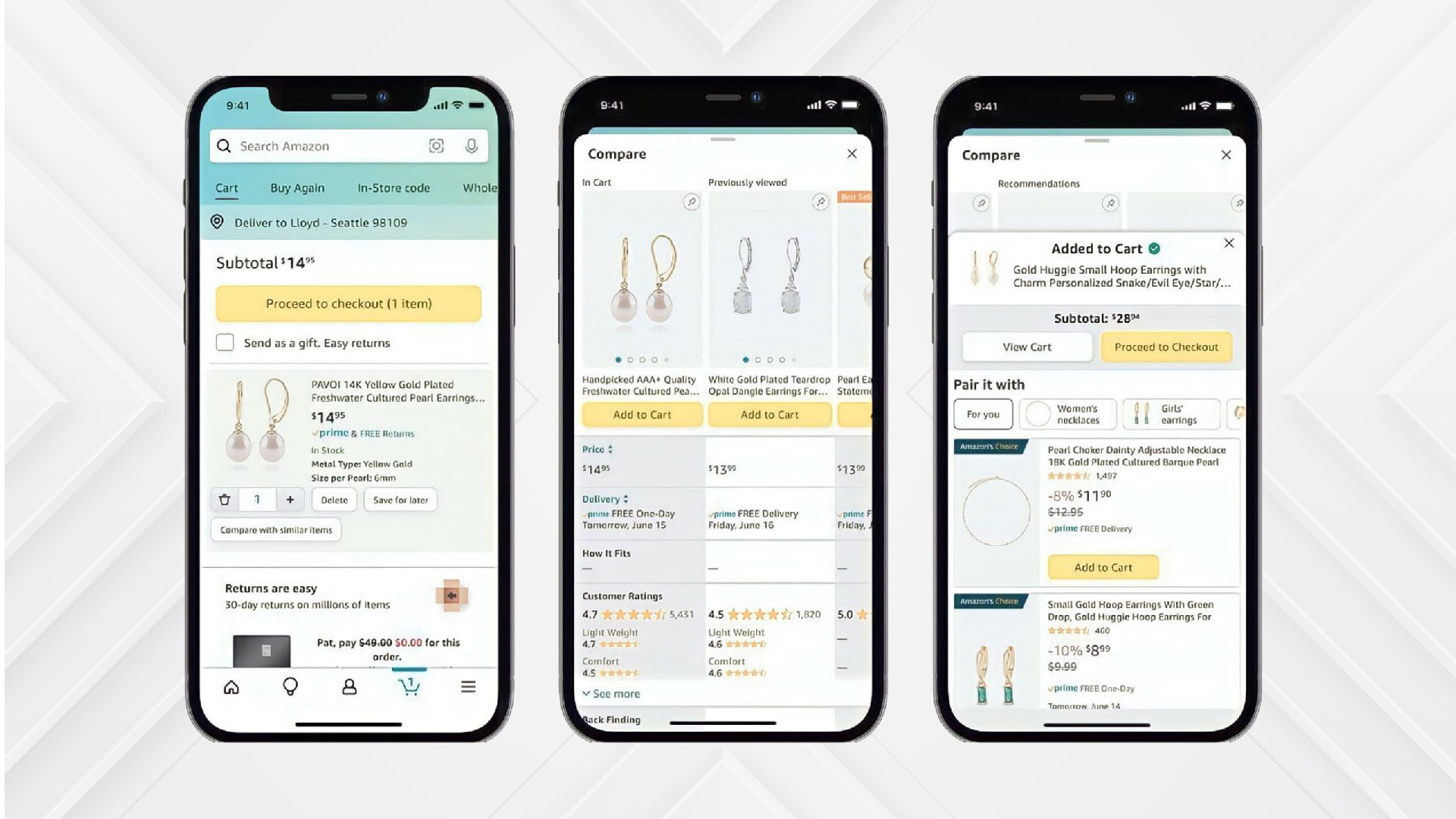
image src: amazon.com
Mobile Shopping Optimization
To meet growing expectations and reduce friction in the buying journey, brands must focus on:
- Responsive, Fast-Loading Websites: Every second counts. A delay of just 1 second in load time can reduce conversions by 7%. Mobile-optimized sites must adapt to different screen sizes and load near-instantly.
- Streamlined Checkout Processes: Simplify steps. Use autofill, one-click purchasing, digital wallets (like Apple Pay/Google Pay), and minimal form fields to make transactions frictionless.
High-Impact Product Pages: Use infographics explainer videos to quickly convey product benefits. Animated visuals reduce cognitive load and increase clarity, especially for complex offerings.
- Integrated In-App Purchasing: Many mobile shoppers never leave the app they’re in. Make use of Instagram Shopping, TikTok Shop, and native checkouts within social platforms to capture impulse buyers.
- Social Commerce-Ready Content: Design ads and product placements that blend into feeds but stand out visually. Think vertical formats, UGC-style content, and interactive polls or carousels that encourage taps.
- Trust Signals: Display mobile-friendly trust indicators—like real-time reviews, secure payment badges, and responsive customer chat—right where users are most likely to hesitate.
Mobile shopping is no longer a subset of e-commerce—it is the standard. And the brands that design for this reality, rather than retrofit, will lead the conversion race in 2025 and beyond.
Mobile Search Trends Across Generations
Age-Based Preferences
Mobile search behavior isn’t one-size-fits-all — it varies significantly across generations, and understanding these differences is crucial for effective targeting.
GenZ (ages ~10–25):
This generation is mobile-native. Nearly 80% of Gen Z users rely heavily on mobile search to discover brands, compare products, watch reviews, and make decisions on the go. For them, search is not limited to Google — it includes TikTok, YouTube, and Instagram, where hashtags and in-platform search functions are used like traditional engines.
Brands targeting Gen Z must optimize for alternative search platforms and visual-first search experiences.
Millennials (ages ~26–41):
While slightly more traditional in their approach, Millennials still lean toward mobile, using search for price comparisons, reviews, and how-to content. They often blend search with shopping and expect personalized results and relevant ads.
GenX and Boomers (ages ~42 and above):
Only about 35% of Boomers regularly use mobile for search. Many still prefer desktop for research and purchasing. However, the shift is happening slowly — especially among Gen X, who are increasingly using mobile for local searches, health information, and services.
Understanding these behavioral trends helps brands craft targeted experiences that match generational expectations.
SEOStrategies That Work on Mobile
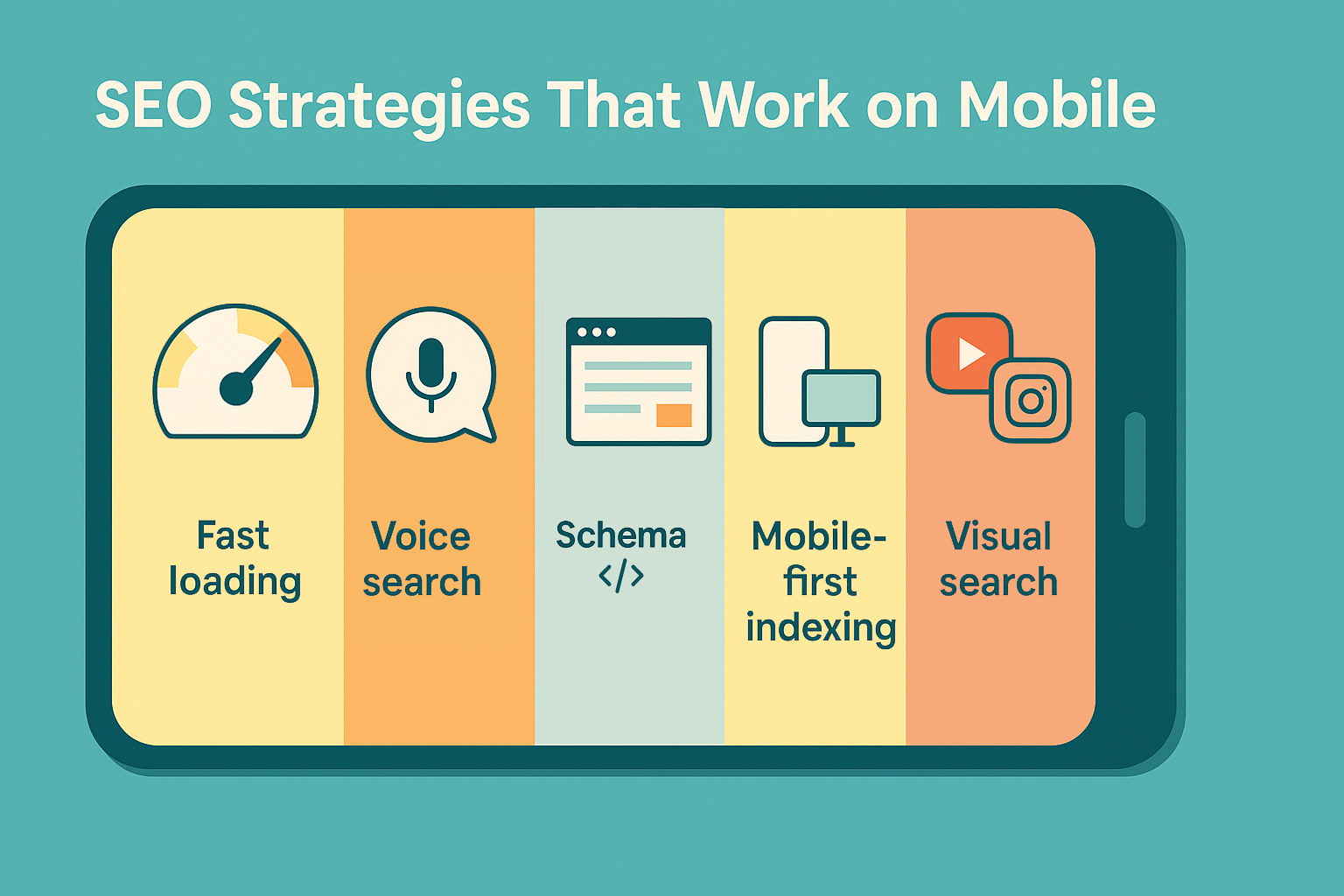
To win attention across generations on mobile, your SEO strategy must be hyper-optimized for how users interact with their devices. Here’s how to stand out:
1.Fast-Loading Pages
Mobile users expect pages to load in under 3 seconds. A delay of even one second can cause a 7% drop in conversions. Use tools like Google PageSpeed Insights and AMP (Accelerated Mobile Pages) to keep your site lightning-fast.
2.Structured Data for Rich Snippets
Addschema markup to help Google understand your content and display rich snippets—like product ratings, FAQs, and how-to steps. These snippets dominate mobile SERPs and capture user attention in limited screen space.
3.Prioritize Mobile-First Indexing
Google uses your mobile site, not desktop, as the primary index. Ensure your mobile version is complete, optimized, and matches the desktop in content and structure. Test mobile usability via Google Search Console.
4.Optimize for Voice and Conversational Search
Especially important for Gen Z and Millennials, who frequently use voice search through Siri, Google Assistant, or Alexa. Target long-tail, conversational keywords and provide concise answers that surface in featured snippets.
5.Use Visual Content for Visual Platforms
If your audience searches on YouTube, Instagram, or TikTok, your “search optimization” needs to include video thumbnails, reels, and hashtag relevance, not just Google ranking.
Different age groups interact with mobile search differently — your SEO efforts must reflect that. Fast, rich, voice-ready, and platform-specific strategies are essential to ensure visibility across generations in a mobile-first world.
The Mobile Email Experience
Email continues to be a cornerstone of digital communication and marketing, and its significance has only grown with the rise of mobile devices. In 2025, 66% of all email opens occur on mobile phones, with nearly half of all users checking their emails exclusively on their smartphones. This shift means that understanding and optimizing for mobile email is no longer optional—it’s essential.
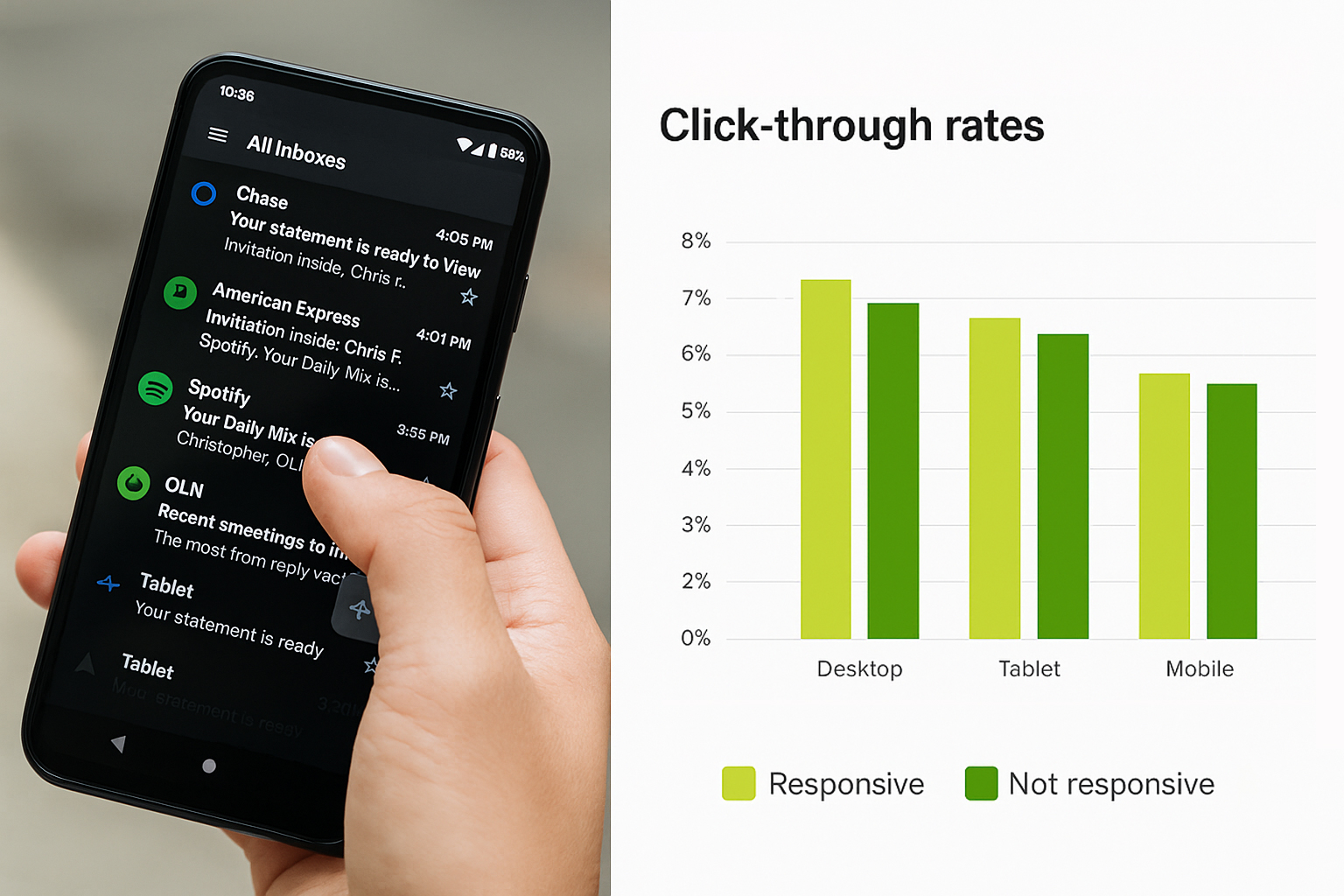
Image Src:superoffice.com
Email Usage Insights
Mobile has transformed the way people engage with their inboxes. Unlike desktop users who may dedicate time to sift through emails, mobile users often browse quickly while multitasking—on commutes, during breaks, or between other activities. This creates a highly dynamic environment where first impressions matter immensely. Emails must grab attention immediately, clearly communicate their value, and encourage swift action.
Email Design for Mobile
To succeed in this fast-paced context, mobile email design needs to be strategic and user-focused. Key elements include:
- Large, readable fonts: Small screens demand fonts that are easy to read at a glance without zooming. Avoiding tiny text ensures your message isn’t lost or ignored.
- Clear calls-to-action (CTAs): Buttons and links should be prominent, well-spaced, and easy to tap with a finger. Confusing or tiny CTAs reduce click-through rates and frustrate users.
- Responsive layouts: Emails must automatically adjust to fit any screen size—whether it’s a compact smartphone or a larger tablet—without requiring horizontal scrolling or awkward resizing.
- Short, compelling subject lines: Since mobile devices display limited characters in notifications, concise subject lines that spark curiosity or urgency improve open rates dramatically.
- Minimal image use: While visuals can enhance messaging, heavy or slow-loading images may deter users or increase data consumption. Balanced use of lightweight graphics improves loading times and overall user experience.
Why Mobile Optimization Matters
When mobile email campaigns follow these design principles, engagement rates rise substantially. Users feel respected and understood when emails are easy to consume and interact with on their preferred devices.
This not only fosters trust but also drives measurable business outcomes such as higher click-through rates, conversions, and customer loyalty.
In an era dominated by short attention spans and mobile-first habits, the best-performing email campaigns are those that embrace simplicity, speed, and clarity—delivering the right message in the right way, every time.
Mobile Advertising: Budgets and Blocking
Ad Spend Trends
The mobile ad space isn’t just growing—it’s dominating.
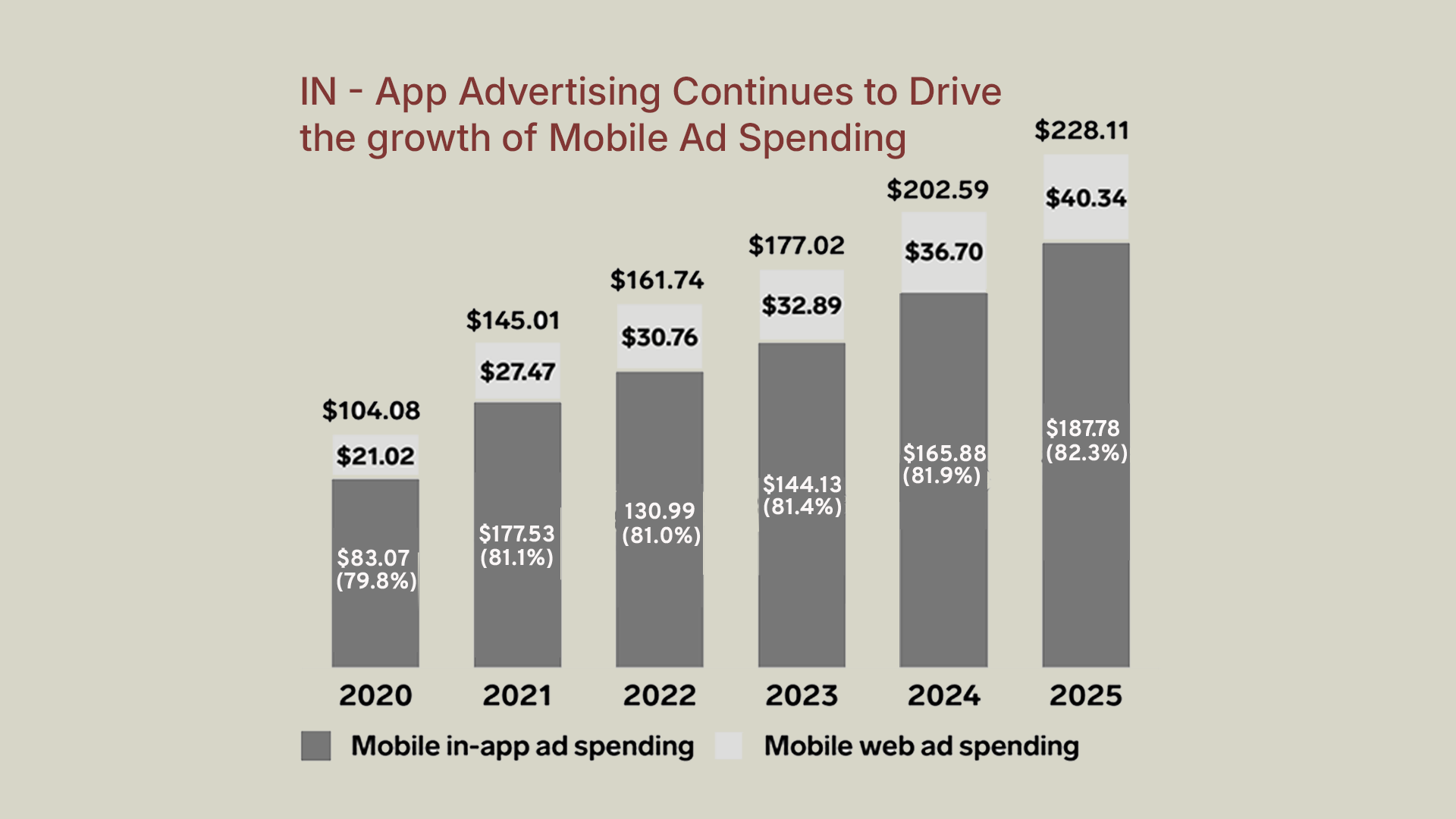
By 2025, global mobile ad spend is projected to reach $228.11 billion, representing more than 75% of total digital ad spending. As mobile becomes the primary channel for engagement, brands are aggressively investing in mobile placements—from social feeds to in-app banners to native video ads.
But with growth comes saturation. Users are exposed to hundreds of ads daily on a screen that fits in their pocket. As a result, competition for attention in mobile environments is fierce. Every scroll, swipe, and tap is a battleground for visibility—and users are pushing back.
Over 530 million mobile users now use ad blockers, a number that continues to grow, particularly among Gen Z and Millennial audiences. These groups are especially sensitive to ads that feel intrusive, irrelevant, or simply overwhelming.
mage Src:emarketer.com
Why Users Block Ads
To create better-performing, less-intrusive campaigns, brands need to understand what drives users to block ads in the first place:
- Pop-ups that interrupt browsing or app usage
Auto-play videos with loud audio - Heavy ads that slow down page loads or drain mobile data
- Poor targeting that makes ads feel irrelevant or spammy
These annoyances signal one thing to users: the brand doesn’t respect their time or attention.
How to Stand Out: Smarter, Softer, More
Strategic Ads
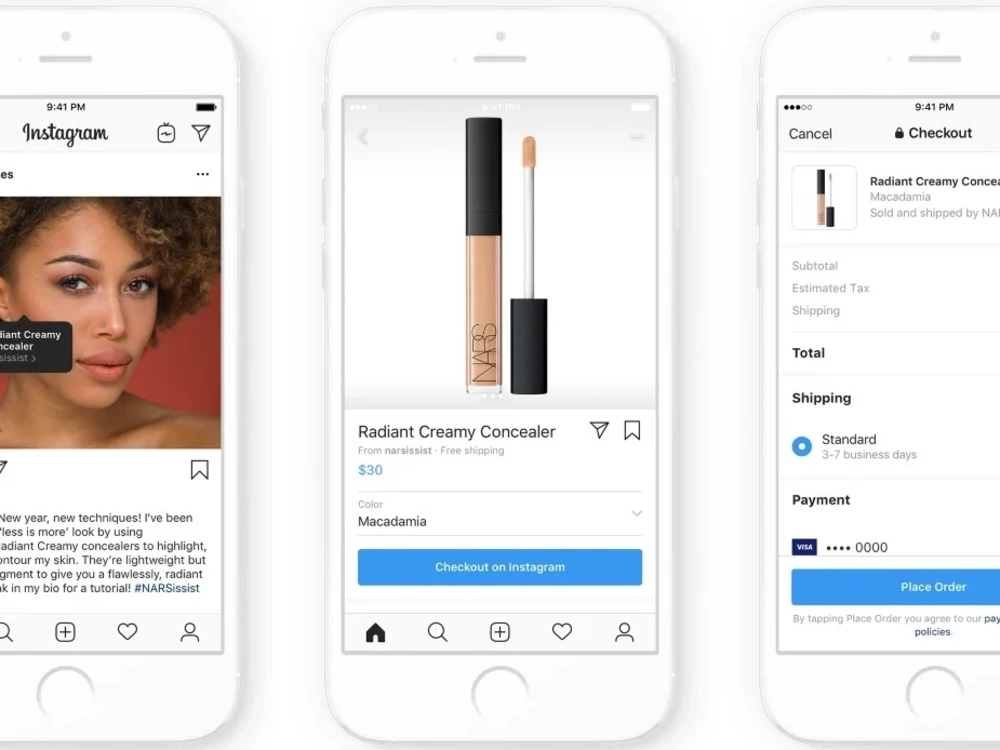
Image src: yourstory.com
To thrive in the mobile ad space, brands must transition from interruption to immersion. The goal isn’t just to get seen—it’s to be welcomed. Here’s how:
1.Native Ads That Match the Platform
- Design ads that blend into the feed, using visuals, formats, and tones that match the user experience.
- Platforms like Instagram Reels, TikTok, and Facebook Stories favor short-form, vertical video ads—explainer video ads work perfectly here.
- Native placements can yield 5–10x higher engagement than traditional display ads.
2.Value-Driven Storytelling Through Explainer Videos
- Don’t sell. Educate, entertain, and empathize.
- Use formats like 2D animation, whiteboard videos, or SaaS explainers to explain the problem your product solves.
- Especially effective in B2B, explainer videos simplify complex solutions with visual storytelling—creating clarity and trust in under 60 seconds.
Conversions and the Mobile User Experience
What the Stats Say
Conversions don’t just happen—they’re earned through seamless, frictionless experiences. In a world where attention spans are short and expectations are high, a brand’s mobile interface plays a critical role in turning browsers into buyers.
- 61% of consumers say they trust brands more when their mobile website is optimized and user-friendly.
- 52% of all PPC clicks now happen on mobile, making it the highest-performing ad environment in terms of engagement.
These numbers reflect a growing reality: if your mobile experience fails to impress, users won’t hesitate to bounce—or worse, form a negative brand impression
Optimize Every Step
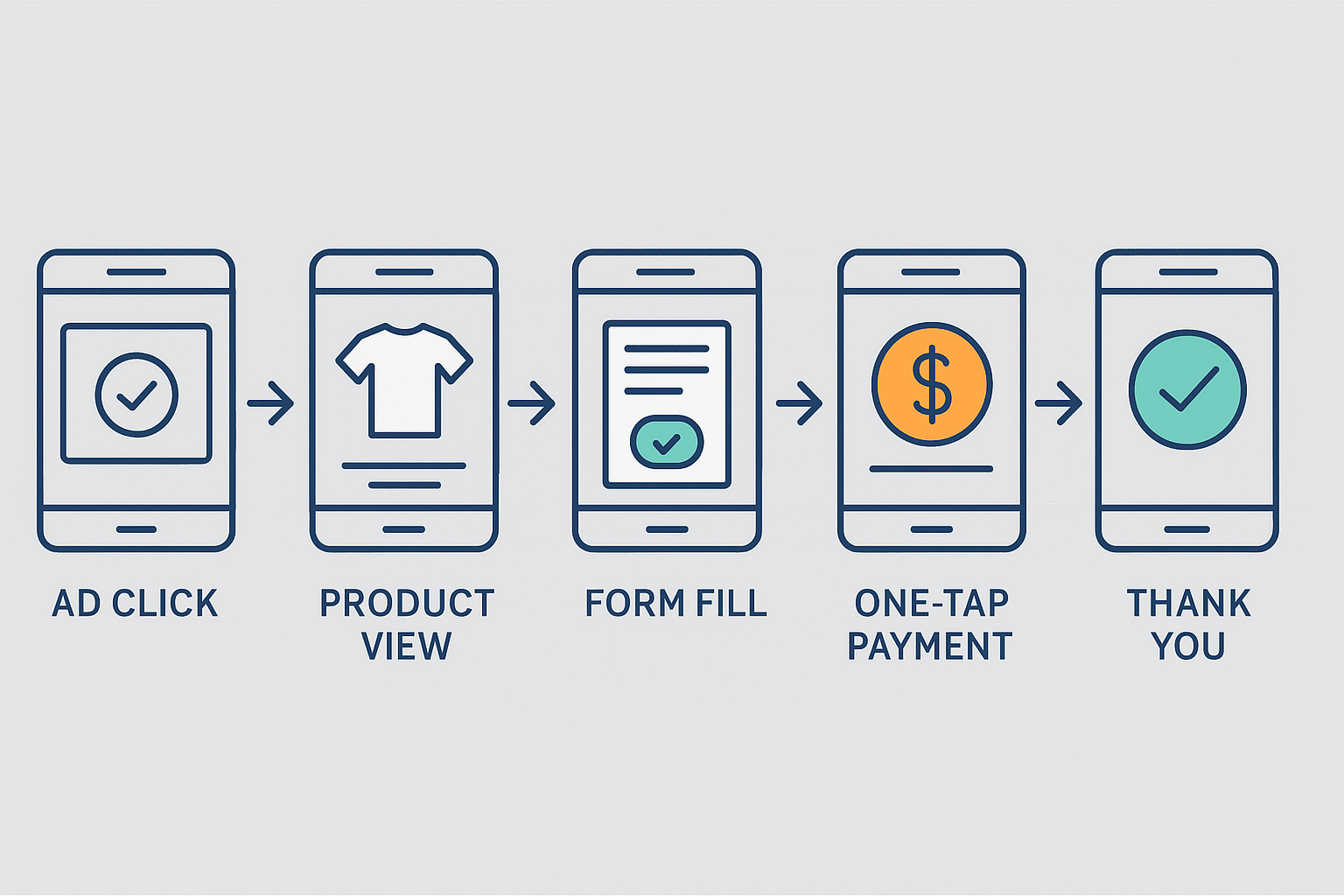
To improve mobile conversion rates, brands need to rethink every detail of the user experience—not just landing pages, but the entire flow from ad click to checkout.
Here’s what makes a high-converting mobile experience:
- Short, distraction-free forms
Only ask for essential information. The more fields you include, the more drop-offs you’ll see—especially on smaller screens. - Lightning-fast load times
Even a one-second delay can result in a 7% drop in conversions. Compress assets, use CDN delivery, and eliminate unnecessary scripts. - Clear and intuitive navigation
Menus should be collapsible, sticky CTAs should guide user flow, and important buttons must be easily tappable. - Touch-optimized design
No pinching or zooming. Everything should feel native to mobile—buttons large enough to tap with one thumb, layouts that adapt vertically. - Consistent cross-device experience
Users might start a purchase on mobile and finish it on desktop (or vice versa). Ensure logged-in states, carts, and preferences sync across devices. - Mobile-first checkout flows
One-tap payment options like Apple Pay, Google Pay, and saved cards streamline the process and prevent cart abandonment.
The best mobile experiences don’t feel like scaled-down versions of desktop—they’re tailored, intuitive, and fast. By optimizing every micro-interaction, brands not only increase conversions but also build long-term trust and loyalty.
Building Integrated Mobile Ecosystems
Beyond Single Campaigns
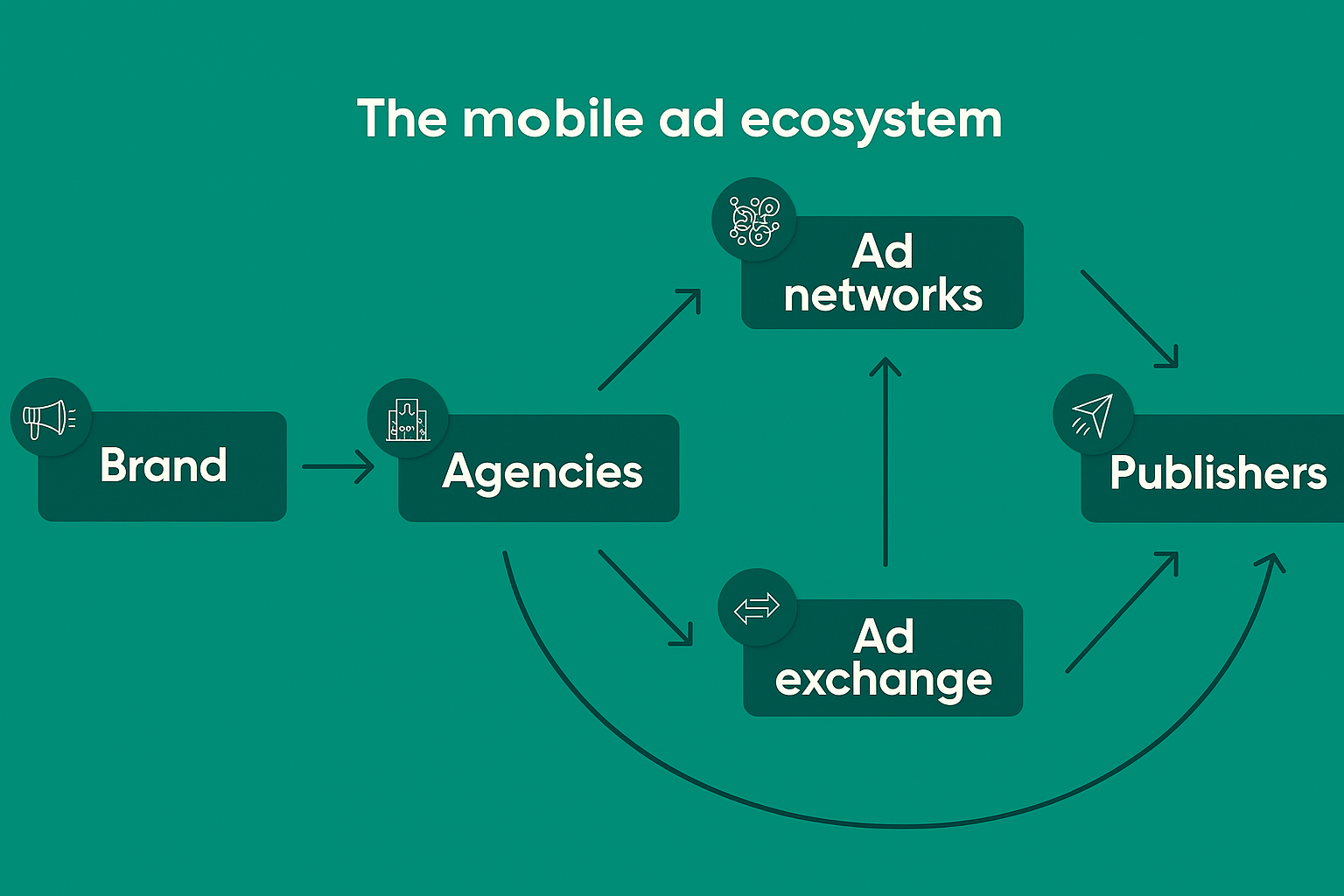
Mobile marketing in 2025 isn’t about isolated campaigns—it’s about building a connected experience across the entire user journey.Today’s users move fluidly across apps, websites, and platforms. The most effective brands don’t treat each channel as a separate tactic but as a synchronized part of a larger mobile ecosystem.A cohesive mobile strategy should align content, communication, and conversion paths across every stage of the funnel.
Here’s how an integrated mobile ecosystem maps out:
- Discovery: This starts with search engines and social platforms. Think keyword-optimized mobile content, paid discovery ads, influencer posts, and organic Reels that create awareness right in the scroll.
- Consideration: Users seek clarity and confidence before taking action. Mobile-friendly explainer videos—whether animated, SaaS-focused, or product walkthroughs—simplify messaging and reduce friction.
- Purchase: The transaction experience must be seamless. Responsive mobile websites, fast-loading product pages, and intuitive checkouts are critical. Avoiding friction here improves conversion rates dramatically.
- Loyalty: After the sale, continue nurturing through mobile channels like SMS, push notifications, and email—especially with content that adds value (how-tos, tips, updates). Retargeting and personalized remarketing help keep the relationship warm.
Anchoring with Explainer Videos
Explainer videos are the glue that holds this ecosystem together.- In discovery, they grab attention in a scroll-heavy feed.
- In consideration, they educate quickly and visually.
- At the purchase stage, they reduce hesitation and clarify product use.
- For loyalty, they re-engage customers with tutorials, onboarding support, or feature updates.
Mobile-Driven Brand Engagement Strategies
Understanding Modern Engagement
In today’s always-connected world, consumers constantly move between devices, but mobile remains the core touchpoint that ties every interaction together. Whether browsing on social media, watching videos, checking emails, or shopping through apps, users engage with brands most frequently on their smartphones. Mobile isn’t just another screen—it’s the central point of digital engagement.
This shift has changed how brands must think about presence and timing. Being visible isn’t enough anymore. Businesses need to meet users where they already are—inside apps, within social feeds, and in inboxes—and deliver content that is timely, personalized, and relevant. In fact, most brand discovery, decision-making, and even loyalty-building now starts and ends on mobile. If a brand fails to connect meaningfully at that point, it risks losing attention altogether.
Action Plan
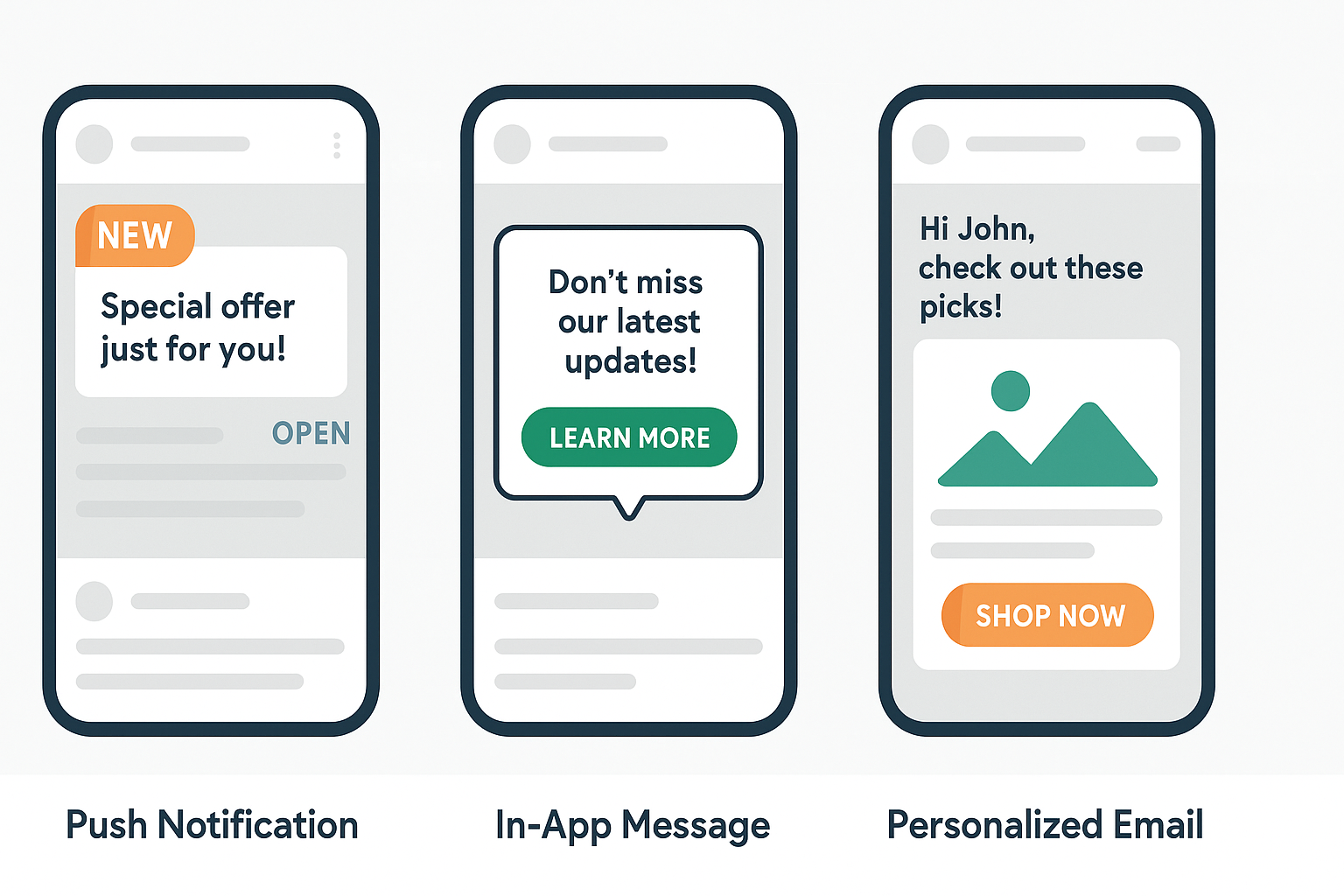
To successfully drive brand engagement on mobile, businesses must embrace dynamic personalization and continuously optimize campaigns based on real-time data. Personalization has evolved far beyond using a customer’s name in an email. Today, it involves understanding user behavior—such as browsing history, location, purchase patterns, and engagement timeframes—and tailoring content accordingly.
For instance, an e-commerce brand can recommend products based on what a user recently viewed or remind them about an abandoned cart at the right moment. A media brand might promote new content based on viewing patterns or reading history. By adapting to each user’s behavior, brands make their communication feel less like marketing and more like helpful guidance.
Real-time analytics play a critical role in this process. With mobile, user behavior changes rapidly, so waiting weeks or months to analyze performance is too late. Brands must track metrics like tap-through rates, session duration, scroll depth, bounce rate, and content drop-off points on a continuous basis. Using this data, marketers can make small adjustments—like changing the placement of a call-to-action, re-editing a video, or adjusting the timing of a push notification—that have a big impact on user response.
Beyond individual tactics, the most effective strategies integrate mobile into a larger ecosystem of engagement. That means syncing mobile experiences with desktop, email, SMS, and even in-store campaigns to create a seamless journey. For example, a user may see a product ad on Instagram, receive a confirmation SMS after purchase, and then get a follow-up offer via a mobile-optimized email. Each touchpoint reinforces the last, increasing trust and encouraging action.
Interactive content is another powerful engagement driver. Features like polls, quizzes, in-app feedback tools, and mobile-optimized explainer videos encourage users to participate rather than just consume passively. This two-way interaction boosts retention, deepens brand connection, and creates a sense of involvement.
In the end, mobile engagement is not just about clicks or impressions—it’s about creating meaningful interactions that build long-term relationships. When brands treat mobile as the heartbeat of their marketing strategy and commit to constant learning and adaptation, they move from being background noise to becoming an essential part of the user’s digital life.