
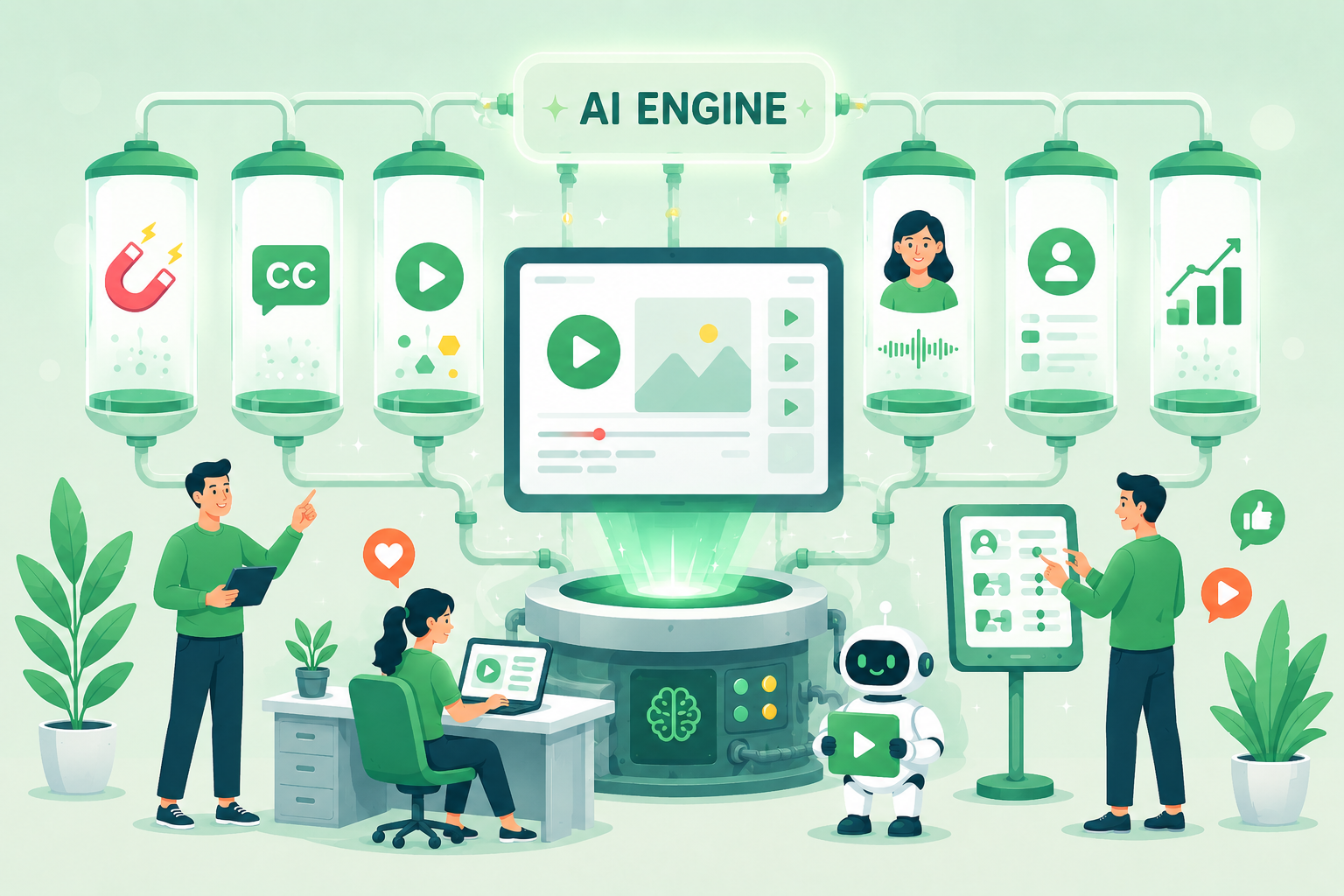
AI Product Demo Video Strategies That Capture Attention

Table of Contents
Product demo videos are no longer just simple walkthroughs with robotic voiceovers and endless feature explanations. In 2026, the entire landscape of video marketing has changed. Audiences are smarter, attention spans are shorter, and AI has transformed how businesses create and deliver content. Today, a great demo video is not just about showing how a product works. It’s about creating an experience that instantly captures attention, builds trust, and helps viewers imagine how their lives become easier with the product.
This is exactly why the modern AI product demo video has become one of the most powerful marketing tools for SaaS companies, startups, and digital brands. Instead of relying on static presentations, businesses are now using AI powered personalization, conversational storytelling, and interactive experiences to keep audiences engaged.
At the same time, competition is higher than ever. Every company is producing content. Every platform is flooded with videos. Simply having a product demo is no longer enough. The real challenge is creating one that people actually want to watch.
So, what separates a forgettable demo from a high converting one in the age of AI? Let’s dive in.
Why the AI Product Demo Video Has Become Essential
Modern buyers rarely trust products based on written descriptions alone anymore. Before signing up for software, booking a demo call, or making a purchase decision, users want to see how the product actually works in real world situations. This shift has become even stronger in the age of AI, where many tools promise automation, productivity, and advanced capabilities that can feel difficult to understand through text alone.
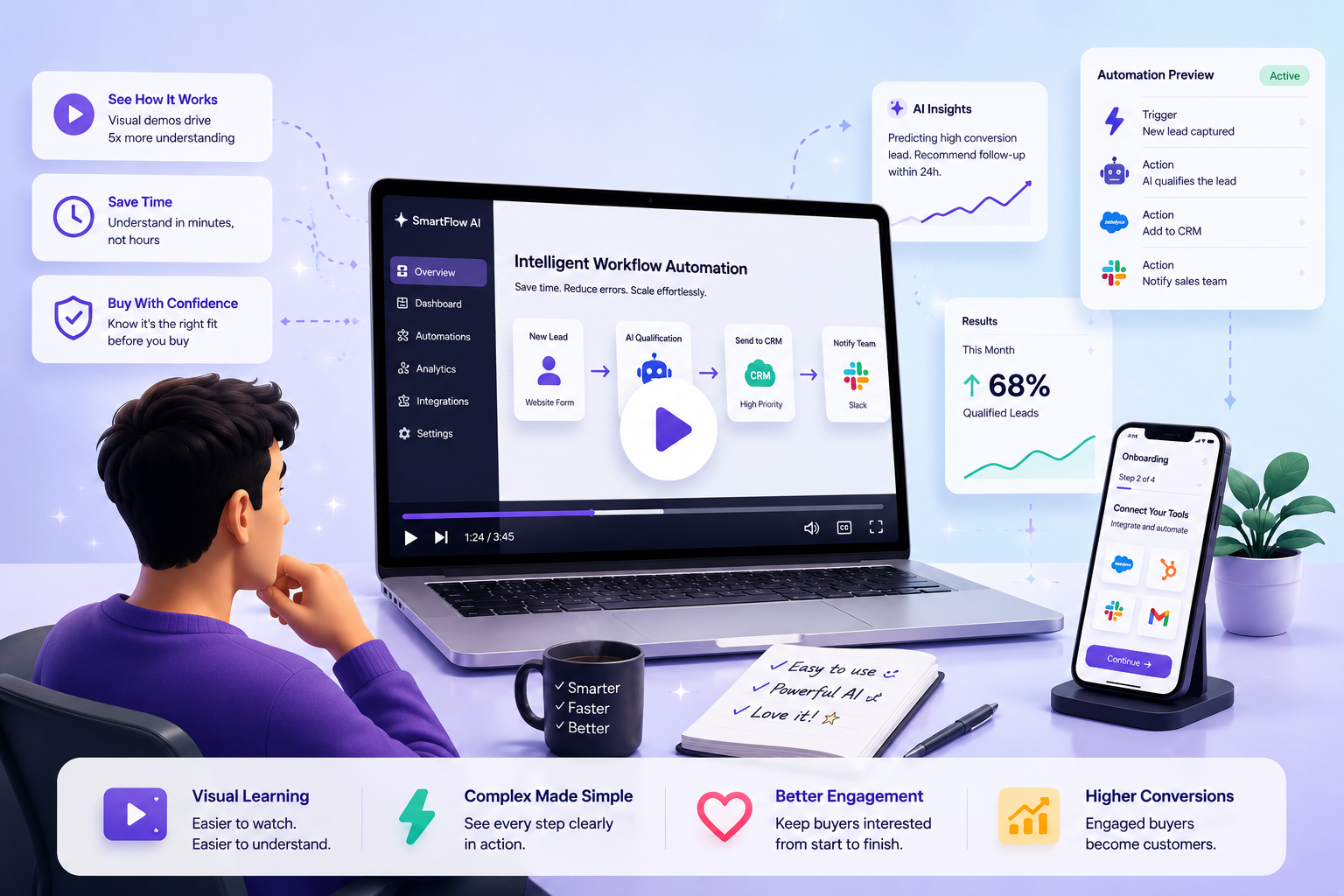
This is exactly why the modern AI product demo video has become such an important part of digital marketing and SaaS growth strategies.
AI powered products are often more complex than traditional software. Many platforms involve automation workflows, intelligent recommendations, integrations, or backend systems that are difficult to explain quickly through landing page copy alone. A demo video simplifies that complexity visually by showing the workflow, the outcome, and the practical value in seconds.
This is especially important for SaaS and B2B companies where buyers want fast understanding before investing time in sales conversations. A strong SaaS Explainer Video helps reduce confusion and allows potential customers to immediately see how the product solves a real problem.
The rise of AI has also changed audience expectations completely. Users now expect:
- faster communication
- personalized experiences
- interactive interfaces
- instant understanding
- visually engaging content
A basic screen recording no longer feels impressive because audiences are surrounded by highly personalized digital experiences every day. Modern buyers expect demo videos to feel smarter, more interactive, and more relevant to their needs.
The companies succeeding today are not simply showcasing features. They are using demo videos to create fast, engaging product experiences that build trust and understanding almost instantly.
The First 10 Seconds Decide Whether Viewers Stay or Leave
One of the biggest mistakes brands still make is wasting valuable time at the beginning of a demo video. Many companies open with long logo animations, slow introductions, or generic corporate messaging that instantly reduces viewer interest. Unfortunately, modern audiences are far less patient than they were a few years ago. People now decide almost immediately whether a video deserves their attention. If the opening feels slow, confusing, or overly promotional, viewers leave before the product even appears properly on screen.
This is why the first few seconds of an AI product demo video are incredibly important. In today’s contentheavy digital environment, your video is competing against endless distractions across platforms like LinkedIn Video, YouTube Shorts, Instagram Reels, and TikTok. Users scroll quickly, skip content rapidly, and rarely give second chances. If your video fails to create curiosity instantly, the audience simply moves on.
The best product demo videos understand this psychological behavior. Instead of beginning with feature lists or technical explanations, they start with emotional relevance. They introduce a relatable frustration, a surprising insight, or a powerful transformation before discussing the product itself. For example, lines like “Still spending hours doing this manually?” or “What if your entire workflow could be automated in seconds?” immediately connect with viewer pain points. These hooks work because they make the audience feel understood.
Strong openings also use visual momentum to maintain attention. Fast cuts, subtitles, UI highlights, motion graphics, and quick “before vs after” transitions help create energy immediately. This is one reason many companies combine live product walkthroughs with a 2D animated explainer video style to make their demos feel more dynamic and engaging.
Ultimately, the strongest demo videos do not slowly build toward value. They show value immediately and explain features later.
Great Product Demo Videos Focus on One Clear ‘Aha!’ Moment
One of the most common mistakes companies make while creating a demo video is trying to explain every single feature in one go. Brands often assume that showing more functionality will automatically make the product look more valuable. In reality, the opposite usually happens. When viewers are overloaded with too many menus, dashboards, workflows, and technical explanations, they become confused instead of impressed.
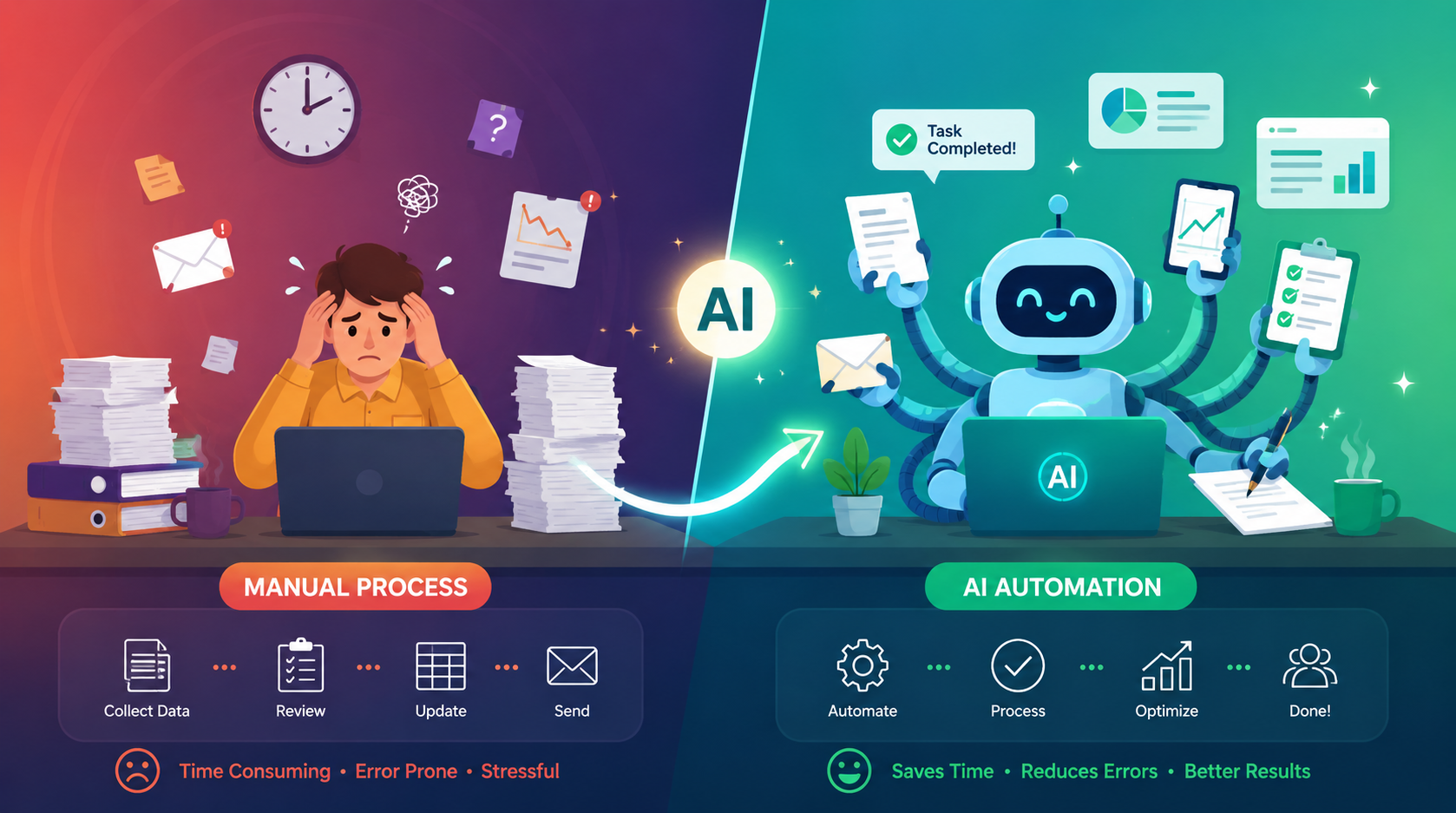
The most successful demo videos work differently. Instead of trying to explain everything, they focus on one powerful transformation moment the exact point where viewers instantly realize:
“This product solves my problem”. That emotional realization is the true goal of a great AI product demo video.
Modern audiences care far more about outcomes than features. They want to understand how the product improves their workflow, saves time, increases productivity, or removes frustration from their daily tasks. This is why high performing demo videos focus heavily on simplicity and clarity rather than technical overload.
For example, a finance platform may focus entirely on reducing reporting time. An AI writing assistant may show how content creation becomes faster and easier. A productivity tool may demonstrate how repetitive manual tasks can be automated in seconds. Instead of showing ten different capabilities, the video focuses on one meaningful result that viewers can immediately connect with emotionally.
This approach works because people remember transformation more than specifications. They remember how the product made their life feel easier.
That’s also why many modern demos are becoming shorter and more focused. In many cases, videos under 90 seconds perform better because they quickly communicate value without exhausting the audience. According to video engagement insights shared by Wistia, shorter videos often maintain stronger viewer retention compared to lengthy feature heavy presentations.
A focused product demo creates understanding quickly. And in today’s fastmoving digital environment, clarity is often more powerful than complexity.
AI Is Completely Changing Product Demo Video Creation
AI has completely transformed how product demo videos are created. A few years ago, producing a professional demo required expensive production teams, voice artists, motion designers, and long editing timelines. For many startups and smaller businesses, creating high quality videos regularly was difficult because the process was both costly and timeconsuming.
Today, AIpowered tools have made video production faster, smarter, and far more accessible.
AI Is Making Video Production Faster and More Accessible
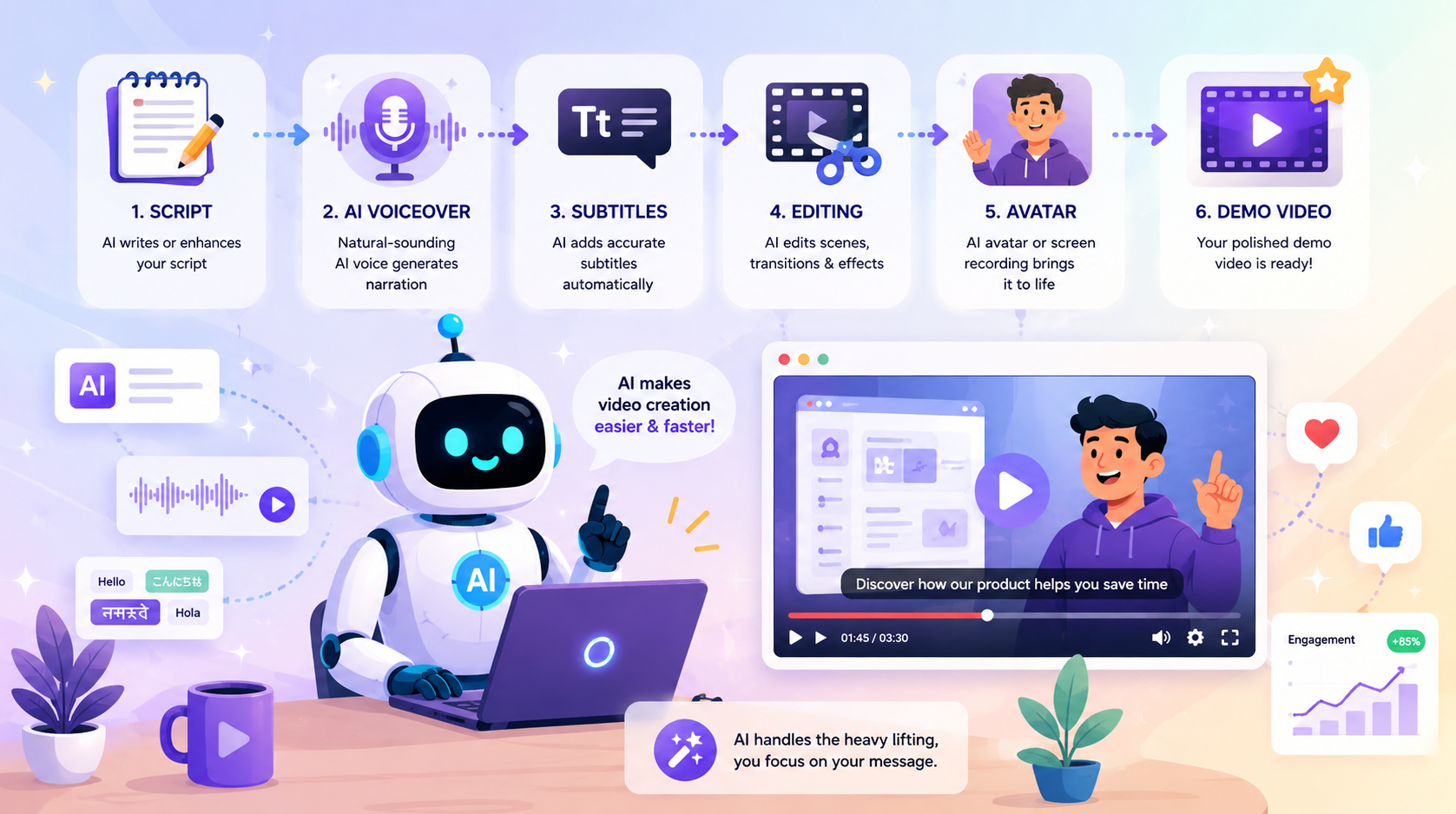
Modern AI platforms can now automate tasks like script writing, subtitles, voiceovers, translations, editing, and avatar presentations. Businesses can create a professional AI product demo video much faster compared to traditional workflows, allowing marketing teams to launch campaigns more efficiently.
This also helps SaaS companies keep demos updated whenever product interfaces change. Instead of rebuilding videos from scratch, AI tools can quickly regenerate scenes and modify workflows for different audiences.
Platforms like Synthesia and HeyGen are helping brands streamline AI video creation with automated voiceovers, avatars, and multilingual support.
Personalization Is Becoming the Biggest Advantage
The biggest advantage of AI is no longer just automation it is personalization.
Modern viewers expect demo videos that feel relevant to their industry, workflow, and business challenges. AI now allows companies to create personalized product experiences for different audiences. For example, a finance company may see analytics focused workflows, while a healthcare business sees health care related use cases.
This makes demo videos more engaging because viewers instantly understand how the product fits their own needs. It also supports modern DemoLed Growth strategies where businesses focus on helping users experience product value before speaking to a sales team.
Instead of creating one generic video for everyone, brands can now create smarter and more targeted demo experiences.
Personalization Is the Future of the AI Product Demo Video
Generic product demos are becoming far less effective in modern marketing. Today’s audiences expect content that feels directly relevant to their own goals, workflows, and business challenges. In competitive SaaS and B2B markets, buyers no longer want to spend time figuring out how a product applies to them. They expect the experience to feel personalized from the very beginning.
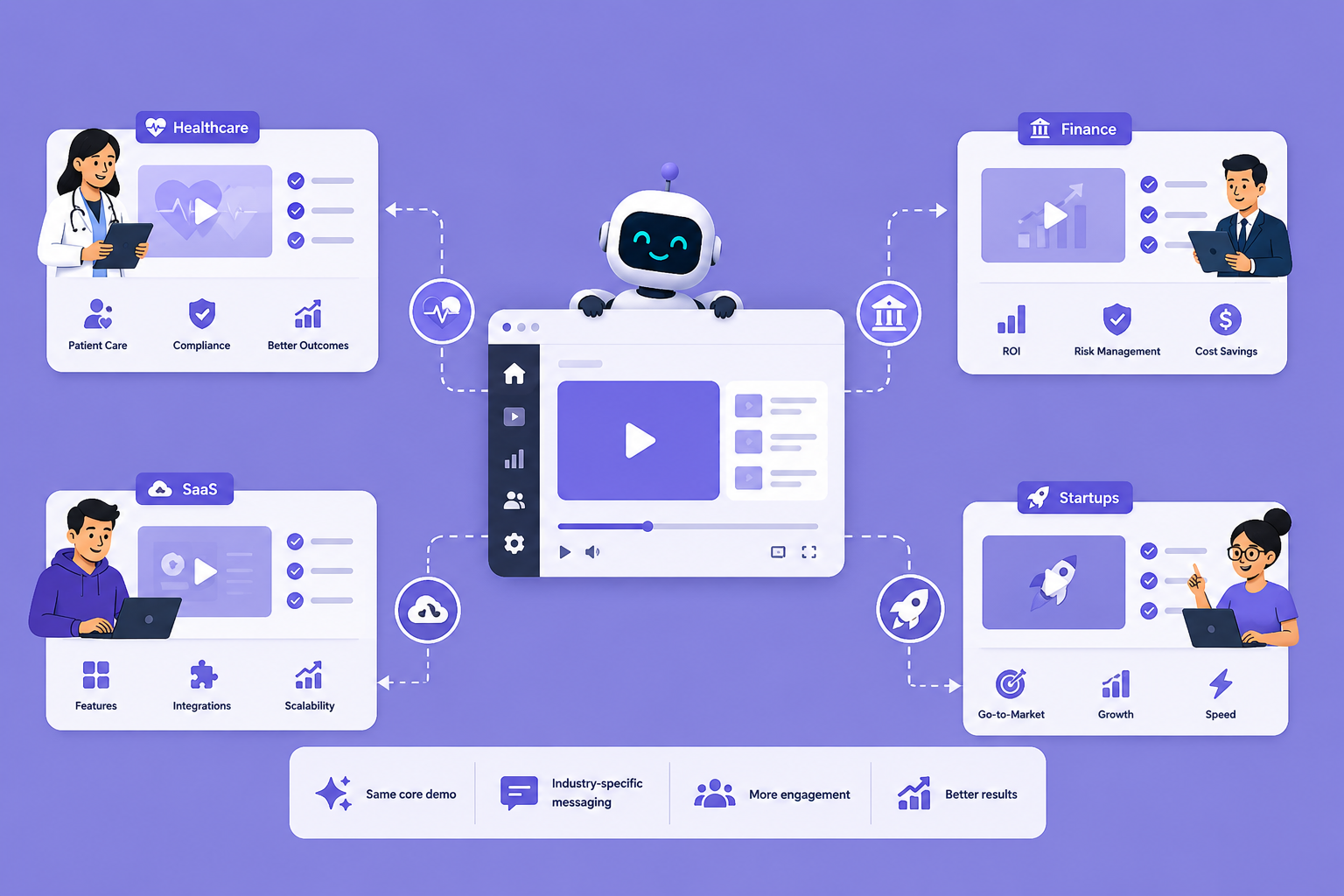
This is where the modern AI product demo video becomes incredibly powerful.
AI now allows businesses to create demo experiences tailored to specific audiences instead of showing the same presentation to everyone. A product demo can adapt based on factors like industry type, job role, company size, or user behavior. This helps viewers immediately see how the product fits into their own workflow instead of forcing them to imagine the use case themselves.
Personalization also improves engagement because people naturally respond more strongly to content that feels relevant to their situation. When viewers see examples connected to their own challenges, they understand the product faster and build trust more quickly. This reduces confusion and shortens the decisionmaking process significantly.
For SaaS companies, personalization has become a major part of DemoLed Growth strategies. Instead of relying entirely on sales calls, businesses now allow prospects to explore personalized product experiences independently through guided demos and interactive walkthroughs. This creates a smoother customer journey while reducing friction during the buying process.
Platforms like Walnut and Navattic are helping companies build more personalized and interactive demo environments that improve user understanding and engagement.
The result is a more effective demo experience that drives faster comprehension, stronger engagement, and higher conversion potential.
Interactive Experiences Are Replacing Passive Viewing
Saas interface demo image snap.
Traditional product demos were mostly passive experiences where viewers simply watched a screen recording while someone explained features step by step. While that format worked for years, modern audiences now expect something far more engaging. People no longer want to sit through long explanations without interacting with the product themselves.
Today’s AI powered demo experiences are designed to make viewers active participants instead of passive observers. Rather than simply watching workflows, users can now explore products directly through clickable interfaces, guided walkthroughs, and interactive product environments.
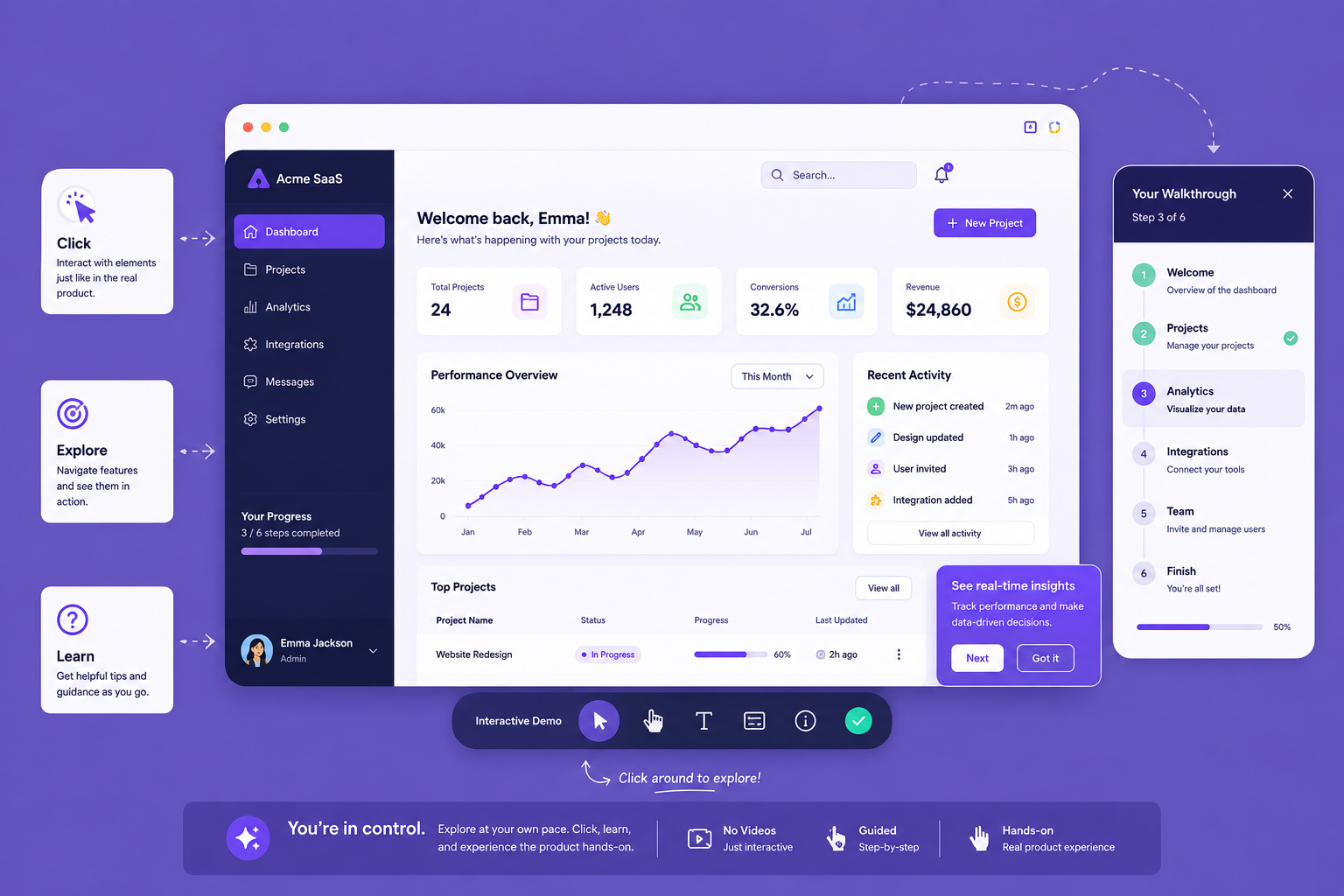
Modern interactive demos often allow users to:
- click through interfaces
- explore workflows in real time
- navigate product menus
- test product flows
- interact directly with important features
This creates a much stronger learning experience because people understand products more effectively through participation and exploration. Instead of memorizing explanations, users experience how the product works naturally on their own. This handson interaction also helps reduce confusion because viewers learn at their own pace rather than trying to process large amounts of information all at once.
Interactive demos are especially valuable for SaaS businesses where workflows, usability, and user experience strongly influence buying decisions. When users actively engage with a product, they become more familiar and comfortable with the platform, which helps build confidence and trust more quickly.
Platforms like Navattic and Walnut are helping businesses create interactive product experiences that feel more immersive and hands on compared to traditional demo videos.
The future of the AI product demo video is no longer just about visual storytelling.
It is about interactive storytelling that allows users to experience value directly.
Human Storytelling Still Matters More Than Ever
AI has made product demo video creation faster and more scalable, but it still cannot fully replace authentic human connection. This is one of the most important realities in modern video marketing. No matter how advanced AI tools become, audiences still connect more deeply with real people, genuine emotions, and relatable communication.
Interestingly, some of the most effective product demos today are not the most polished ones. In many cases, simple founder led videos or natural team member walkthroughs outperform overly scripted presentations because they feel more trustworthy and human.
Modern audiences connect emotionally with:
- natural communication
- relatable experiences
- genuine enthusiasm
- imperfections
- real emotion
This is why direct to camera storytelling continues to perform so well across SaaS and startup marketing. A founder casually explaining how a product solves a real problem often feels more authentic than a perfectly animated AI avatar reading a scripted message.
That doesn’t mean AI should disappear from the production process. In fact, the best modern demo videos combine AI efficiency with human storytelling. Businesses now use AI for editing, subtitles, voiceovers, and personalization while still keeping a human presence at the center of the message.
This balance is what makes a modern AI product demo video feel engaging instead of robotic. AI helps improve speed and scalability, while human storytelling creates trust and emotional connection.
According to insights shared by HubSpot, audiences consistently respond better to authentic and relatable video content compared to overly promotional messaging.
In the age of AI, authenticity has actually become more valuable not less.
Conversational Voiceovers Improve Viewer Retention
Voiceovers influence engagement far more than many businesses realize. Even if a product demo has impressive visuals and strong editing, a poor voiceover can quickly reduce viewer interest. Older demo videos often sounded overly corporate, scripted, and aggressively salesfocused. While that style was once common in marketing, modern audiences now respond much better to communication that feels natural and conversational.
Today’s viewers want demo videos that sound human, not robotic.
A successful AI product demo video usually uses a voiceover style that feels:
- natural
- helpful
- confident
- clear
- conversational
Instead of sounding like a sales pitch, the narration should feel more like guidance from someone who genuinely understands the viewer’s problem. This creates stronger trust and makes the product feel easier to understand.
AI voice technology has also improved dramatically in recent years. Businesses can now create realistic multilingual voiceovers quickly and affordably without sacrificing quality. This makes it easier for global brands to scale product demo campaigns across different regions and languages.
Platforms like ElevenLabs and Murf AI are helping companies create high quality AI generated voiceovers that sound far more natural than older texttos peech systems.
However, technology alone is not enough.
The tone of the voiceover still matters more than the tool itself. A calm, relatable, and helpful tone creates far stronger engagement than an aggressive or overly promotional delivery. Viewers want clarity and guidance, not pressure.
That’s why the best product demo videos feel more like conversations than advertisements.
Short Form AI Product Demo Video Content Is Dominating Social Media
Shortform video content has completely changed how brands market products online. While longform demos still matter for high intent buyers, social media platforms now favor faster, mobile friendly, and highly engaging video formats. This is why shortform AI product demo video content has become a major part of modern marketing strategies.
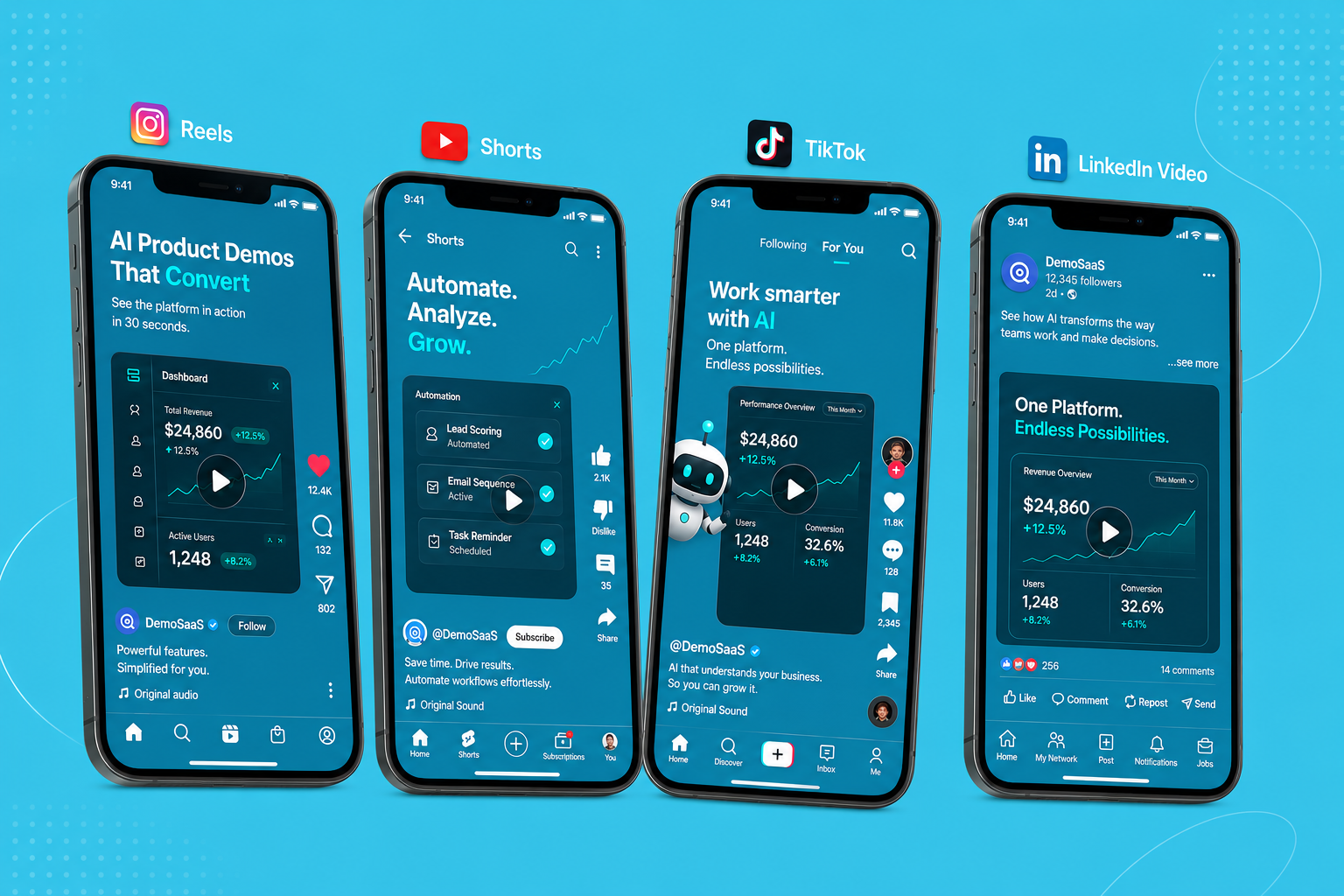
Instead of publishing one long demo everywhere, brands now repurpose content into:
- teaser demos
- feature highlights
- onboarding snippets
- vertical walkthroughs
- quick problemsolution clips
Platforms like Instagram Reels, YouTube Shorts, TikTok, and LinkedIn Video reward videos that generate fast engagement and strong watch time. Since most users now consume content on mobile devices, vertical video formats have also become increasingly important.
What Makes ShortForm Demo Videos More Engaging
Successful shortform demos focus on delivering one clear message quickly instead of explaining every feature. They are designed to create curiosity, communicate value fast, and encourage viewers to explore further.
Most high performing shortform demos combine:
- fast editing
- subtitles
- motion graphics
- zoomins
- visual highlights
- concise storytelling
This style keeps the content visually dynamic, easier to consume, and more engaging for socialfirst audiences. The strongest shortform demo videos are not trying to explain everything at once. Their goal is to quickly capture interest and encourage viewers to learn more about the product.
For deeper insights into modern shortform video marketing trends, you can explore HubSpot Video Marketing Trends.
Analytics Are Helping Brands Create Smarter Demo Videos
One of the biggest advantages of modern AI powered demo platforms is the ability to track detailed viewer behavior. In the past, businesses could only estimate whether a demo video was performing well. Today, companies can analyze exactly how viewers interact with their content and use that data to improve future demo experiences strategically.
Modern demo analytics now show:
- where viewers stop watching
- which sections get replayed
- what users click on
- where engagement drops
- which workflows generate the most interest
This data helps businesses understand what is actually capturing audience attention instead of relying on assumptions. For example, if viewers consistently leave after the first 30 seconds, the opening may need to be more engaging. If users repeatedly replay a specific feature section, that likely means the feature deserves stronger emphasis in future demos.
For SaaS companies, these insights are incredibly valuable because they reveal buyer intent more clearly. If users spend more time exploring pricing workflows or interactive product features, it often indicates stronger purchasing interest.
Platforms like Wistia and Vidyard help businesses track viewer engagement and optimize demo performance using analytics driven insights.
This transforms product demos into more than just marketing videos. They become customer insight tools that help brands continuously improve communication, engagement, and conversion strategies.
Simplicity Beats Complexity Every Time
Many businesses assume that adding more features, more workflows, and more technical explanations automatically creates a stronger product demo. In reality, excessive complexity often makes videos harder to understand. When viewers are overloaded with detailed dashboards, confusing terminology, and feature heavy walkthroughs, they mentally disconnect from the experience.
Modern product demos perform best when information feels visually clear and easy to process.
This is why simplified visual storytelling has become so effective in modern video marketing. Formats like a 2D animated explainer video, Infographics Explainer Video, motion graphics, and clean UI walkthroughs help viewers understand complex ideas much faster than long technical explanations.
Animation is especially useful for explaining:
- AI workflows
- automation systems
- backend processes
- software integrations
- invisible technical operations
Instead of forcing viewers to understand abstract systems through complicated descriptions, visual storytelling makes information feel more intuitive and approachable. Motion graphics, UI highlights, and simplified animations guide viewer attention naturally while reducing cognitive overload.
This approach is especially valuable for SaaS and B2B products where workflows can easily become overwhelming for new users. A successful AI product demo video should make the product feel easy to understand, visually organized, and immediately useful.
The simpler the experience feels, the faster viewers understand the value.
Why AI Alone Cannot Create a Great Product Demo
AI has completely transformed video production, but automation alone does not guarantee a successful product demo. Many AI generated videos look visually polished and technically impressive, yet they still fail to create emotional engagement with viewers. The problem is not the technology itself the problem is the absence of genuine human connection.
Technology can support storytelling, but it cannot fully replace creative human insight.
The best product demos still depend heavily on elements like:
- audience psychology
- emotional storytelling
- strategic pacing
- relatability
- trust building
- authentic messaging
Without these elements, even the most advanced AI generated demo can feel repetitive or emotionally empty. Many brands make the mistake of relying entirely on generic AI templates, resulting in videos that look professional but fail to feel memorable.
The strongest demo videos use AI as a creative assistant rather than a complete replacement for human creativity. Businesses now combine AI powered editing, automation, subtitles, and personalization with real storytelling and authentic communication. This balance helps demo videos feel modern without becoming robotic.
This is also where the best explainer video companies stand out. Instead of depending entirely on automation, they use AI strategically while still focusing on audience emotion, messaging clarity, and storytelling quality.
Ultimately, people connect with people not just technology. That’s why the most successful AI product demo video strategies combine automation with emotional relatability and human authenticity.
The Future of Product Demo Videos
Product demo videos will evolve far beyond traditional screen recordings over the next few years. As AI technology becomes more advanced, demo experiences are becoming smarter, more adaptive, and far more interactive than ever before. Instead of simply watching a product walkthrough, future users may interact with demos almost like speaking to a real sales consultant.
We are already seeing early signs of this transformation through conversational AI assistants, interactive onboarding flows, multilingual AI presenters, and clickable product experiences. However, future demo environments will likely become even more personalized and behavior driven.
Soon, an AI product demo video may adapt in real time based on how a viewer interacts with the content. For example, the demo could automatically highlight different workflows depending on user behavior, industry type, or viewing patterns. AI assistants may also guide users through products conversationally, answering questions instantly and customizing the experience dynamically.
Technologies like voice controlled navigation, immersive product walkthroughs, and AI powered onboarding experiences could eventually make demo videos feel more like interactive product environments rather than static marketing assets.
Platforms like Walnut and Navattic are already helping SaaS companies create more interactive and self guided demo experiences.
Despite all these technological advancements, one thing will remain unchanged: people still connect with stories, emotions, and authentic communication. The future of product demo videos will belong to brands that successfully combine intelligent automation with human centered storytelling.
Technology may attract attention.But connection is what builds trust.
The Future Belongs to Smarter, More Human Demo Videos
The age of AI has completely changed how product demo videos are created and experienced. Modern audiences no longer want slow, generic presentations filled with endless features. They expect fast, personalized, interactive, and emotionally engaging experiences that instantly show value.
A successful AI product demo video is not just about showcasing a product. It is about helping viewers quickly understand how the product solves problems and improves their workflow.
While AI has made video production faster, smarter, and more scalable, human connection still matters most. The strongest demo videos combine automation, personalization, storytelling, and authenticity to create experiences that feel both modern and relatable.
In the end, the future belongs to brands that use AI to strengthen human connection not replace it.
Unlock the power of captivating visuals with our seasoned expertise! With 7 years of crafting compelling visual content, we’re ready to elevate your brand’s story. From stunning graphics to mesmerizing animations, we bring your vision to life. Let’s create engaging visuals that resonate with your audience and leave a lasting impression. Partner with us today for an unforgettable visual journey!

AI Is Making Video Production Faster and More Accessible