

Behind the Scenes Videos for B2B: How They Build Trust

Table of Contents
Most B2B buyers only ever see the finished version of a company. A polished case study. A confident sales deck. A homepage promising expertise, reliability, and results. What they almost never see is the actual work behind that polish, the meetings, the debugging, the revisions, the people who show up every day to make the promise true. That gap between the polished front and the real operation is exactly where B2B behind the scenes videos earn their value.
This isn’t about vanity content or office tours for their own sake. It’s about giving buyers something far more persuasive than another claim: evidence. This article breaks down why that evidence works, what it actually looks like in practice, and how to build it without turning every video into a disguised sales pitch.
B2B buying decisions carry real weight, budgets, timelines, sometimes a buyer’s own professional credibility if the vendor they recommend doesn’t deliver. That weight is exactly why generic reassurance falls flat and specific, visible proof matters so much more in this category than in most consumer marketing. A buyer choosing between two similar software vendors isn’t just picking a product, they’re picking a team they’ll depend on for months or years, and no amount of polished copywriting substitutes for actually seeing that team in action.
How B2B Behind the Scenes Videos Build Trust
Here’s the mechanism in plain terms. Every B2B company makes claims, we’re experts, we’re reliable, we care about your outcome. Buyers have heard all of these claims before, from every vendor they’ve ever evaluated, which means the claims themselves carry very little persuasive weight on their own.
B2B behind the scenes videos work because they shift the burden of proof from the company’s words to the viewer’s own eyes. Instead of a brand asserting “we have deep expertise in this,” a behind the scenes video shows an actual expert working through an actual problem, in real time, with real reasoning visible. The viewer doesn’t have to trust the claim, they can see the thing the claim was describing.
That shift, from telling to showing, is the entire foundation this format builds on, and it’s why behind the scenes content tends to outperform even well produced promotional videos when trust is the specific outcome a brand is trying to achieve.
It helps to think about this from the buyer’s actual position for a moment. Somebody evaluating a B2B vendor is rarely doing so casually. They’re weighing risk: what happens if this vendor misses a deadline, misunderstands the brief, or simply isn’t as capable as their marketing suggests. Every claim on a website gets filtered through that risk lens, and claims, by their nature, are cheap to make and hard to verify. A behind the scenes video changes the verification problem entirely. The buyer isn’t being asked to take the company’s word for it anymore, they’re being handed something they can actually evaluate with their own judgment, which is a fundamentally different, and fundamentally stronger, kind of persuasion.
The Gap Between the Polished Version and the Real Company
It’s worth sitting with how wide this gap actually is for most B2B buyers. By the time someone reaches a vendor’s website, they’ve usually already seen a dozen nearly identical value propositions from competitors. Every homepage says roughly the same thing: fast, reliable, expert, customerfocused. None of that differentiates one vendor from another in a buyer’s mind, because none of it is verifiable from the outside.
B2B behind the scenes videos close that gap by revealing the people and work sitting underneath the polished result. A buyer who watches a real project walkthrough, or a real team working through a technical decision, gets something no landing page can offer: a direct look at how the company actually operates, not just how it describes itself.

This matters most at exactly the stage where B2B deals tend to stall, the point where a buyer has narrowed their options to two or three similar looking vendors and needs a real reason to choose one over another. Behind the scenes content gives them that reason, not through a better pitch, but through better evidence.
This is also where a lot of marketing effort gets misallocated. Teams pour resources into refining the polished front, sharper copy, better design, more impressive case study formatting, when the actual gap holding back conversion isn’t a lack of polish at all. It’s a lack of proof. Two vendors can have equally polished websites and equally compelling case studies, and the buyer still can’t tell them apart on the dimension that actually matters: which team is genuinely more capable. Behind the scenes content is one of the few formats that can actually answer that question, because it’s the one format a company can’t fully script or fake without the seams showing.
Making the Brand Feel Human, Not Distant
There’s a second, quieter benefit running alongside the trustbuilding mechanism: behind the scenes content makes a B2B brand feel considerably less distant.
Seeing real employees, real experts, real founders, and real teams doing actual work changes how a buyer relates to a company. A logo and a case study feel corporate and impersonal. A person explaining their reasoning on camera feels like exactly what it is, a person, someone the buyer can imagine actually working with.

This humanizing effect compounds over multiple videos rather than appearing from a single upload. Different employees can tell different parts of the brand story, behind the scenes content doesn’t have to revolve entirely around the founder. A project manager explaining how timelines get planned, an engineer walking through a technical tradeoff, a support lead describing how a tricky client issue got resolved, each of these adds a different human face to the brand, and together they build a fuller, more relatable picture than any single spokesperson could on their own.
This distributed approach also solves a practical bottleneck a lot of companies run into. Founder led content is powerful, but it doesn’t scale well, a founder only has so many hours, and their presence alone can’t credibly speak to every technical or operational corner of a growing company. Spreading BTS content across multiple team members solves this two ways at once: it produces more content without overrelying on one person’s schedule, and it gives buyers a more complete, more credible view of the company’s actual depth of expertise, since real expertise in most B2B companies is distributed across a team, not concentrated in a single individual.
Process Visibility: Showing How the Work Actually Happens
The strongest behind the scenes content tends to center on one specific idea: process visibility. Not what the company says it does, but how the work actually happens day to day.
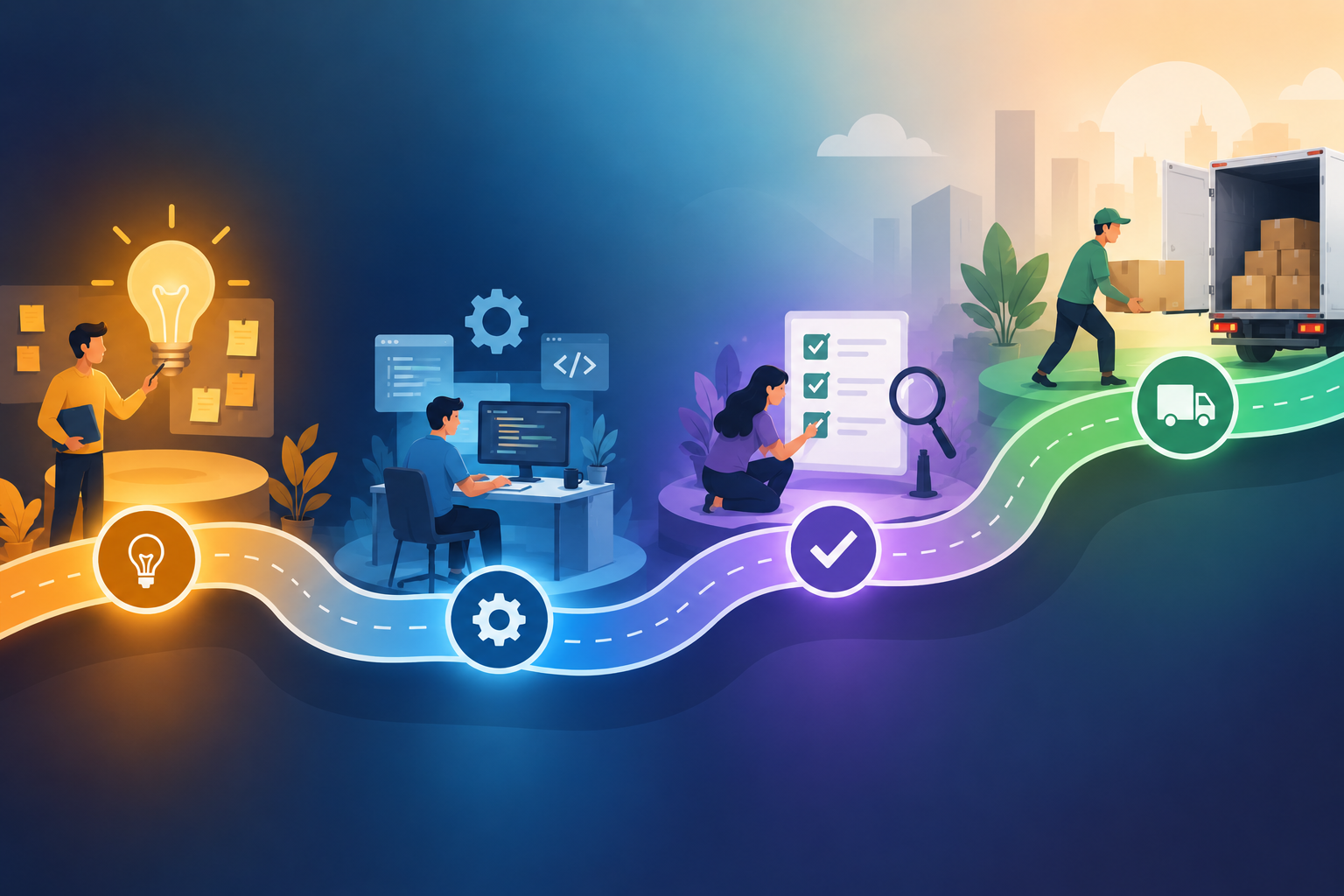
This can take several concrete forms:
- How a product is built, development decisions, iterations, testing
- How a project is planned, the actual conversations and tradeoffs behind a timeline or scope
- How a problem is solved, real troubleshooting, not a tidy summary after the fact
- How a team makes important decisions, the reasoning behind a strategic call, not just the announcement of the outcome
Â
Process visibility works because it’s specific in a way marketing claims never are. “We plan carefully” is a claim anyone can make. A video showing an actual planning session, with real disagreements, real constraints, and a real resolution, is specific evidence a buyer can evaluate for themselves. That specificity is what makes the format so much more credible than a generic promise.
There’s a reason specificity carries so much more weight than polish in this context. A generic, well produced brand film signals that a company has a marketing budget. A specific, process focused video signals that a company has actual expertise, because faking specific, technically accurate process detail convincingly is far harder than faking general enthusiasm. A viewer might not consciously articulate this distinction, but they feel it: vague confidence reads as marketing, specific competence reads as real.
Why Showing the Work Makes a Promise More Believable
There’s a simple but important logic underneath all of this: showing the work behind a promise makes that promise more believable than simply repeating the claim. A company that says “we’re detailoriented” is making an assertion. A company that shows a team catching and fixing a subtle issue before it became a clientfacing problem is demonstrating the exact trait it would otherwise just be asserting.

This is the practical version of the classic writing principle “show, don’t just tell.” Instead of telling a viewer a company has expertise, a behind the scenes video lets viewers watch that expertise in action, a real decision being made, a real technical judgment call, a real piece of specialized knowledge being applied to a live situation. The claim and the demonstration land completely differently, even when they’re describing the exact same underlying capability.
Consider how differently these two things register with a skeptical buyer. Reading “our engineers have deep experience with legacy system migrations” produces a mild, easily forgotten impression. Watching an engineer actually walk through diagnosing a legacy system’s quirks, explaining the reasoning out loud as they go, produces something closer to genuine confidence, because the viewer isn’t being told what to believe, they’re arriving at the conclusion themselves by watching the evidence unfold. That self generated conclusion tends to stick far longer than anything read off a page.
The Value of Showing Real Challenges, Not Just Smooth Wins
One of the most counterintuitive but effective moves in this format is a willingness to show things that didn’t go perfectly.
Presenting every project as flawless actually undermines credibility rather than reinforcing it, because experienced B2B buyers know that’s not how real work looks. Nothing goes perfectly. A brand that only ever shows smooth, effortless success reads as either dishonest or inexperienced, neither of which builds trust.
Showing a real challenge, and how the team actually handled it, does the opposite. It demonstrates competence under pressure, which is a far more convincing signal than competence under ideal conditions. A buyer watching a team work through an unexpected obstacle learns something genuinely useful: not just that this company can do the easy parts of the job, but that they know what to do when something goes wrong. Since something always eventually goes wrong on any real project, that’s exactly the reassurance a buyer actually needs before signing a contract.
This principle extends further than most teams initially expect. Sharing a lesson learned from a past mistake, briefly and without excessive selfflagellation, often lands better than another success story. It signals a level of self awareness and continuous improvement that a perfect track record simply can’t communicate on its own. Buyers who have been in the workforce long enough know that any vendor claiming a flawless history is either exaggerating or hasn’t been tested yet, neither of which inspires confidence.
What B2B Behind the Scenes Content Actually Looks Like
A common misconception holds this format back before it even starts: B2B behind the scenes content doesn’t have to mean an office tour. Sweeping shots of a nice office or a company kitchen rarely interest anyone outside the company itself. The genuinely interesting part is almost always the work, the decisions, the people, and the expertise, not the furniture.
Practical formats that consistently work well include:
- Dayinthelife videos, following a specific role or team through a realistic workday
- Project walkthroughs, showing how a real project moved from kickoff to delivery
- Product development footage, capturing real iteration, testing, and refinement
- Brainstorming and planning sessions, real strategic thinking, not a polished recap
- Testing and problemsolving, showing a team catching and resolving real issues
- Event preparation, the work that goes into a launch, conference booth, or major presentation
- Customer journey walkthroughs, following how a real client’s project or request gets handled internally
None of these require inventing artificial moments purely for content. Companies can often create behind the scenes content from work they’re already doing, rather than staging something extra just for social media. That’s actually a significant practical advantage: the best BTS content usually costs very little beyond a camera and someone willing to hit record during work that was happening anyway.
This practical reality removes one of the biggest excuses teams use for avoiding this format: “we don’t have time to produce content.” Most companies already generate raw material for dozens of behind the scenes videos every single week, they just aren’t capturing it. A planning meeting that already happens. A code review that already takes place. A client call a debrief that the team already runs internally. The content isn’t extra work layered on top of the job, it’s the job itself, simply pointed at a camera. That reframing tends to unlock far more sustainable output than treating BTS content as a separate production initiative requiring its own budget and schedule.
Balancing Authenticity With Production Quality
A frequent misunderstanding about this format assumes “authentic” has to mean rough, shaky, or poorly produced. That’s not accurate, and treating it as a rule actually limits how effective this content can be.
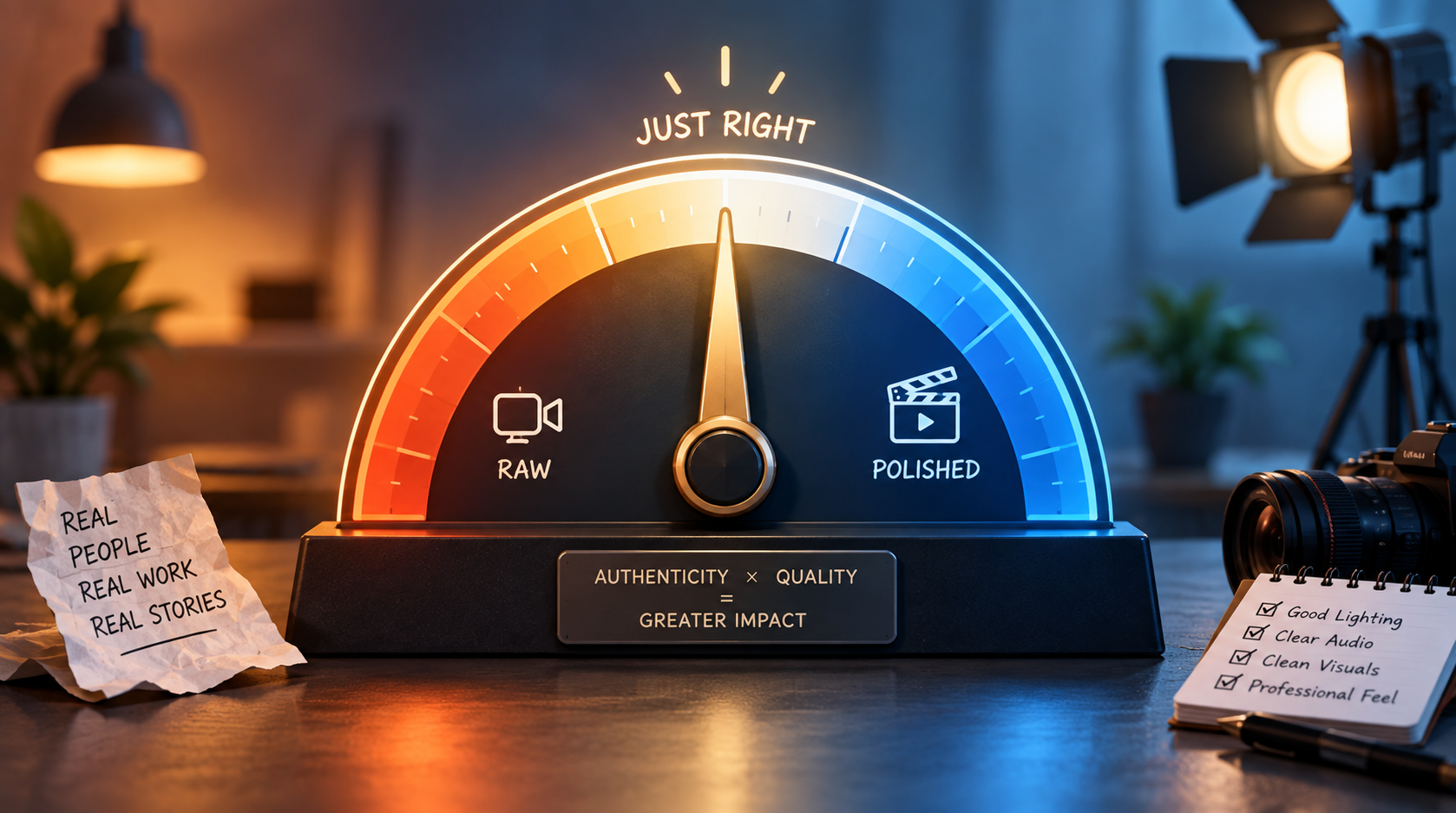
Real footage can still have good lighting, clear audio, thoughtful editing, and genuine storytelling structure. Authenticity refers to what’s happening on camera, real work, real people, real reasoning, not to the technical polish of the footage itself. A behind the scenes video with clean audio and a well paced edit doesn’t become less authentic because it looks professional; it just becomes more watchable while staying just as honest about what it’s showing.
The goal is production quality in service of authenticity, not production quality that replaces it. A beautifully shot video of a fabricated, staged “problem” is less trustworthy than a rough phone recording of something genuinely real. But a welledited version of that same genuine moment is better than both, it keeps the substance while making it easier for a busy buyer to actually sit through.
There’s a practical middle ground most teams should aim for: capture the raw moment with minimal interference, don’t stage it, don’t script the dialogue, then apply thoughtful editing afterward, trimming dead air, adding clear captions, cutting to the moments that actually matter. That combination respects both halves of the equation, the footage stays honest because nothing was staged, and the final video stays watchable because someone cared enough to edit it well. Neither half should be sacrificed for the other.
Avoiding the Disguised Sales Pitch
There’s one mistake that quietly undermines this entire format more than any other: turning every behind the scenes video into a thinly disguised sales pitch.
The moment a viewer senses they’re watching an advertisement wearing a “candid” costume, the trust this format is supposed to build evaporates immediately, and often turns into skepticism worse than if the video had just been an honest ad in the first place. The viewer needs to actually see something useful, interesting, or genuinely informative, not a script that happens to be delivered in front of a whiteboard instead of a studio backdrop.
A useful internal check before publishing: would this video still be worth watching if it had zero promotional intent at all? If a project walkthrough or a problem solving session is genuinely interesting on its own merits, it will build trust naturally. If the only reason it exists is to funnel viewers toward a call to action, that intent tends to show, and it undercuts the exact credibility the format is meant to build.
Common Mistakes That Undermine Behind the Scenes Trust
A few recurring habits quietly weaken what should otherwise be strong trustbuilding content.
- Treating the office itself as the interesting part. A tour of the break room or a shot of the logo on the wall tells a viewer nothing about whether the company can actually do good work. The work is the content, not the furniture.
- Overscripting supposedly candid moments. If every “spontaneous” comment sounds rehearsed, the format loses the exact authenticity that makes it effective in the first place.
- Only featuring leadership. A channel that only ever shows the founder talking misses the richer, more credible picture that comes from letting different employees demonstrate different kinds of expertise.
- Editing out every sign of difficulty. Smoothing over every challenge until the video shows only effortless success removes the most persuasive part of the story: how the team actually handles pressure.
- Publishing once and stopping. A single behind the scenes video is a curiosity. A consistent series is what actually builds the layered picture of who a company is, how they work, and whether they can be trusted.
Where Explainer Video Formats Complement Behind the Scenes Content
Behind the scenes footage and structured explainer content aren’t competitors, they work well together as different tools solving different problems. A B2B explainer video is well suited to communicating what a product does and why it matters, cleanly and efficiently. A behind the scenes video is well suited to proving the team behind that product actually knows what they’re doing.
Used together, a custom explainer video can introduce a product’s value clearly, while a followup behind the scenes piece shows the actual people and process behind delivering on that value. For more technical or visually complex processes, a 2D animated explainer video can clarify a workflow that would be hard to film directly, while raw behind the scenes footage adds the human credibility an animation alone can’t provide.
If you’re evaluating a SaaS explainer video partner or considering working with one of the established explainer video companies in this space, it’s worth asking whether they also support this kind of process driven, human centered content, not just polished product explainers. The strongest video strategies tend to combine both formats deliberately rather than relying on just one.
B2B Behind the Scenes Videos: The Real Takeaway
So why does this format work as well as it does? Because B2B behind these scenes videos don’t rely on being labeled “authentic,” they rely on giving buyers actual evidence of the people, process, expertise, and care behind a brand, evidence that simply isn’t available anywhere else in a typical buyer’s journey.
Consistency is what turns individual videos into a real trustbuilding system. One video might introduce the people. Another might demonstrate real expertise in action. A third might show how the team handled a genuine challenge without pretending everything went smoothly. Watched over time, these repeated exposures gradually build a clearer and clearer picture: who this company is, how they actually work, what they genuinely know, and whether they can be trusted with something that matters.
Unlock the power of captivating visuals with our seasoned expertise! With 7 years of crafting compelling visual content, we’re ready to elevate your brand’s story. From stunning graphics to mesmerizing animations, we bring your vision to life. Let’s create engaging visuals that resonate with your audience and leave a lasting impression. Partner with us today for an unforgettable visual journey!Â
