

Why Customers Trust Brands with YouTube Channels Over Brands That Rely on Ads

Table of Contents
Building customer trust has become far more challenging than simply getting noticed. Every day, people are exposed to countless advertisements across YouTube, Instagram, Facebook, Google, and other digital platforms. While these campaigns help brands gain visibility, they rarely provide enough information for customers to make confident buying decisions.
Today’s consumers prefer to research before they purchase. They want to understand a brand, explore its expertise, and feel confident that they’re making the right choice. Instead of relying only on advertisements, they look for helpful content that answers their questions, solves their problems, and gives them a better understanding of the products or services they’re considering.
This shift has transformed YouTube into much more than a video sharing platform. For many customers, it has become a place to learn, compare options, and evaluate brands before spending money. Businesses that consistently create valuable content are no longer just promoting their products they’re building credibility and lasting relationships with their audience.
In this article, we’ll explore why customers trust brands with YouTube channels more than brands that rely only on advertisements, and how YouTube brand trust has become one of the strongest drivers of long-term customer loyalty and business growth.
Why YouTube Brand Trust Is Becoming More Valuable Than Advertising
Advertising still plays an important role in helping people discover new brands. A well-designed campaign can generate awareness, attract attention, and bring visitors to a website. However, attracting attention is only the beginning of the customer journey. The real challenge is convincing people that your business deserves their trust.
This is where YouTube creates a clear advantage over traditional advertising. Instead of asking customers to believe a marketing message, brands can demonstrate their expertise through tutorials, product demonstrations, customer stories, and educational content. Every video gives potential buyers another opportunity to understand the business before making a purchase.
Unlike advertisements that disappear once a campaign ends, YouTube content continues working long after it’s published.showing why long form videos offer greater staying power when brands want to build deeper audience relationships. Customers can return whenever they want, explore multiple videos, and learn at their own pace. This ongoing engagement helps businesses build credibility over time, making customers more confident when they’re ready to buy.
Businesses that consistently educate their audience become known for their knowledge rather than their promotions. Over time, customers begin viewing them as reliable experts instead of companies trying to make a sale. That shift in perception is what makes YouTube brand trust one of the most valuable assets a modern brand can build.
Why Customers Trust Brands They Can Spend Time With
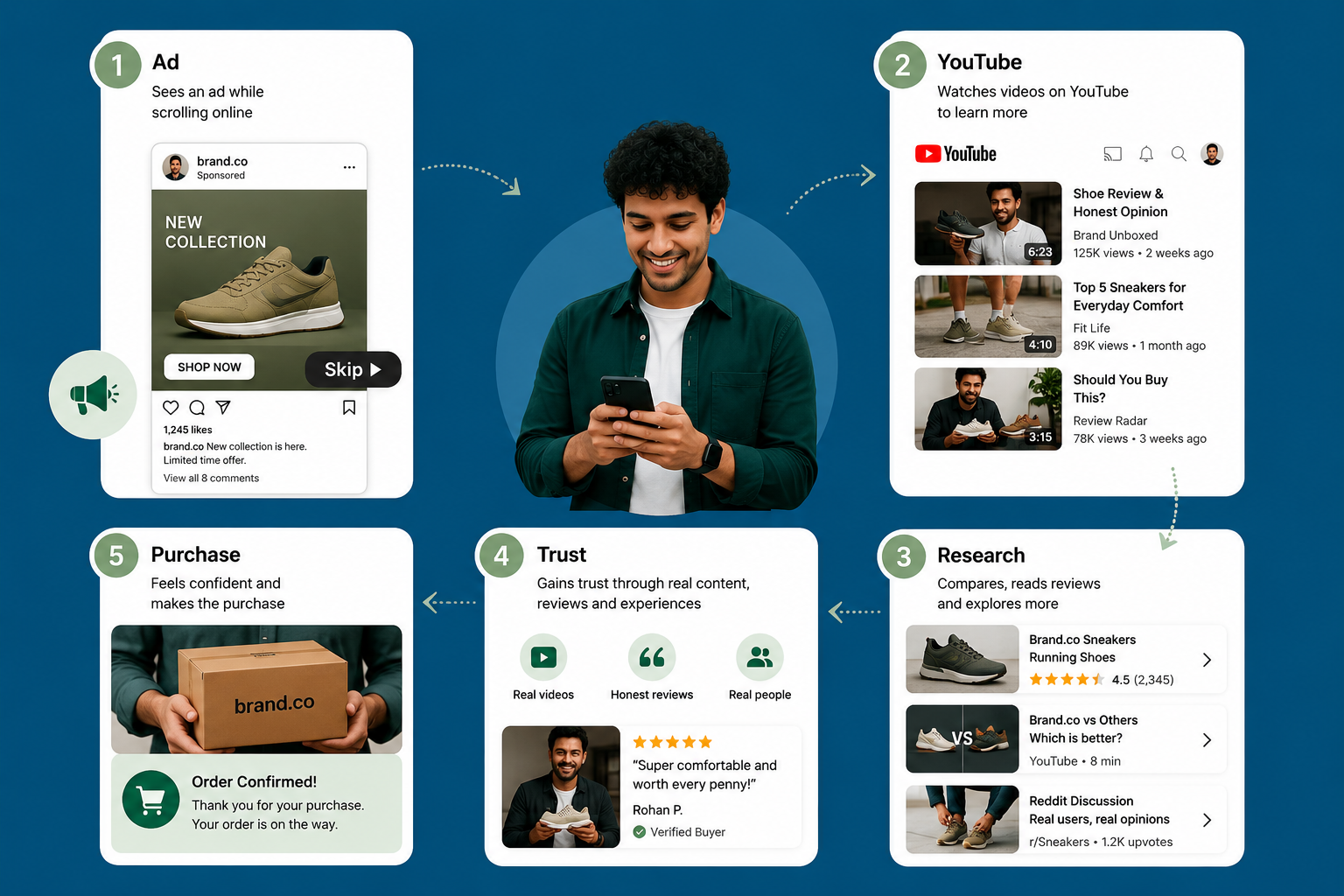
Building customer trust takes time. While advertisements are effective at introducing a brand or promoting a product, they rarely provide enough interaction for people to feel genuinely confident about their decision. Most ads are designed to capture attention, highlight a few benefits, and encourage immediate action. A YouTube channel offers a completely different experience by allowing customers to explore a business at their own pace through tutorials, product demonstrations, customer stories, behind the scenes videos, and expert insights. Every video helps viewers better understand the company’s expertise, values, and products, showing how video marketing can build trust before customers spend any money.
Repeated Interactions Build Familiarity
Trust grows through consistent positive experiences, not a single advertisement. The more time people spend watching valuable content from the same brand, the more familiar and credible that brand becomes. Over time, viewers begin recognising the people behind the business, understanding its communication style, and appreciating its willingness to educate rather than simply promote products.
This approach is especially important in industries with longer buying cycles. Companies selling enterprise software, professional services, or industrial solutions often use a B2B Explainer Video to educate decision makers throughout the research process. Since business purchases usually involve multiple stakeholders and careful evaluation, consistent YouTube content helps establish credibility long before the first sales conversation takes place.
The same principle applies to consumer brands. Canva, for example, has built a loyal audience by publishing free design tutorials and practical guides that help users improve their skills before asking them to upgrade to a paid plan.
Customers don’t trust brands because they see them more often they trust brands that consistently help them make better decisions. That’s why YouTube brand trust often develops through consistent interactions rather than repeated advertising alone.
Helpful Content Always Beats Promotional Content
Customers don’t visit YouTube to watch advertisements they visit to learn something. Whether they’re trying to solve a problem, improve a skill, or understand a product before buying it, people naturally gravitate toward content that provides genuine value. That’s why brands that educate their audience often earn far more trust than brands that constantly promote themselves.
Instead of repeatedly saying they’re the best, successful businesses prove their expertise by helping customers solve real problems. They create videos that answer common questions, simplify complex topics, and share practical advice without expecting an immediate sale. This approach makes the relationship feel educational rather than transactional, encouraging viewers to return whenever they need guidance.
Teaching Builds Credibility Faster Than Selling
The most successful YouTube channels don’t focus on selling products in every video. Instead, they consistently publish content that helps their audience, such as:
- Step by step tutorials that teach customers how to use a product effectively.
- How to guides that solve common problems.
- Product demonstrations showing features in real world situations.
- Industry tips and expert advice that help viewers make informed decisions.
- Frequently asked questions that remove confusion before customers ask for support.
Â
HubSpot is a great example of this strategy. Instead of filling its YouTube channel with software promotions, it publishes videos on marketing, SEO, sales, and business growth. Many companies discover HubSpot through these educational resources long before they ever consider purchasing its software. By the time they’re ready to make a decision, the brand has already established itself as a trusted source of knowledge.
The same strategy can be seen across many successful companies. Canva teaches users how to create better designs, Adobe shares editing techniques for creative professionals, and Google regularly explains how to get more from its products. Rather than relying solely on advertisements, these brands build authority by consistently helping their audience succeed.
Educational content is particularly valuable for businesses selling products or services that require explanation. Working with an Explainer video company allows brands to simplify complex ideas into engaging, easy to understand videos. Instead of overwhelming customers with technical information, businesses can demonstrate real world applications, explain key benefits, and answer common questions in a way that’s both practical and memorable.
Customers may forget an advertisement, but they rarely forget the brand that helped them solve a problem. That positive experience creates goodwill, strengthens YouTube brand trust, and makes future buying decisions feel far more natural.
YouTube Has Become Part of the Modern Buying Journey
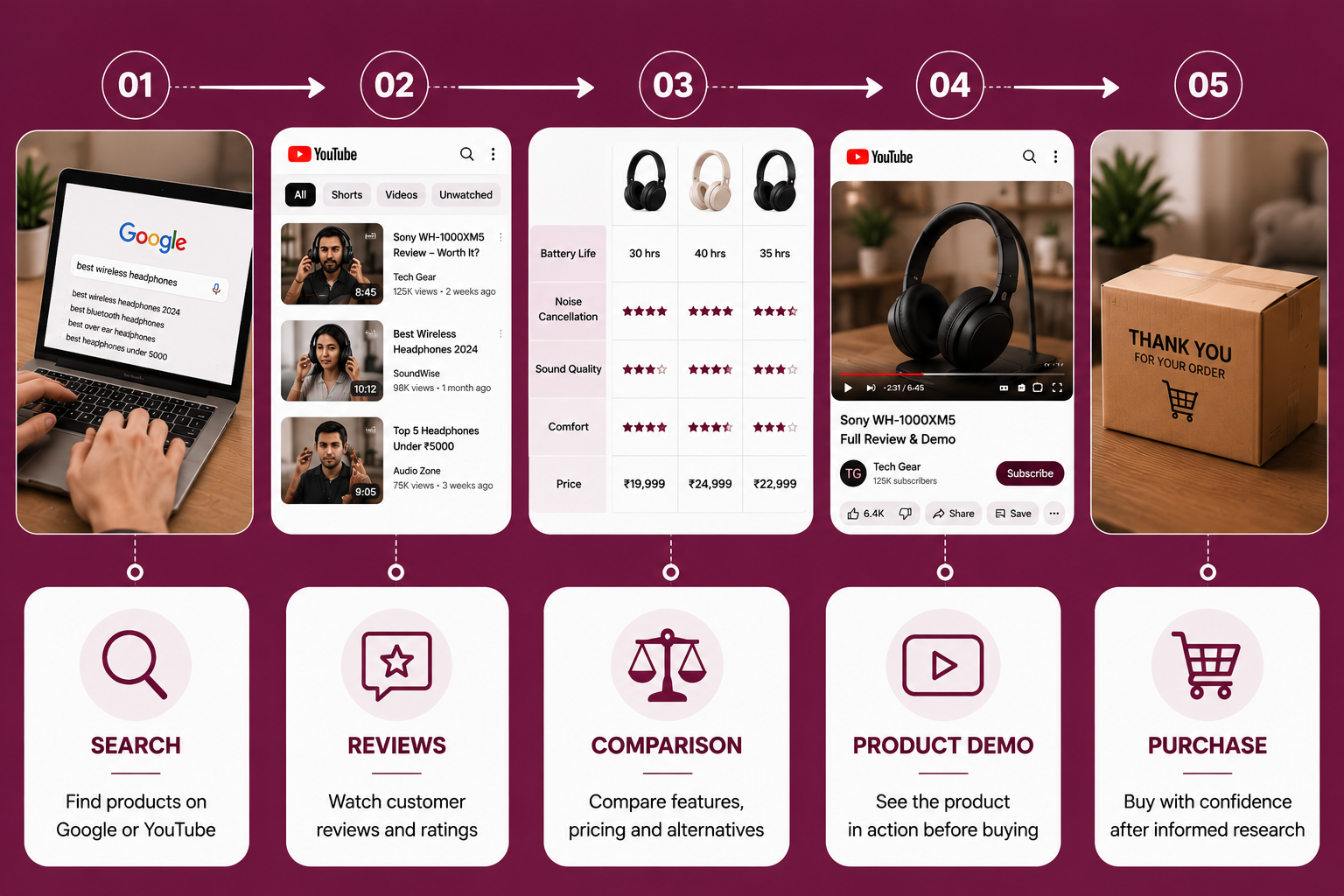
A decade ago, customers often visited a company’s website immediately after seeing an advertisement. Today, the buying journey is far more detailed. Instead of making quick decisions, people spend time researching products across multiple platforms before committing to a purchase. YouTube has become one of the most important stops in that journey because it provides something advertisements rarely can independent exploration.
Think about how most people shop today. Before buying a smartphone, they watch camera comparisons, battery tests, and long term reviews. Before subscribing to project management software, they look for tutorials and workflow demonstrations. Even when purchasing something as simple as kitchen appliances or skincare products, customers often search for honest reviews, unboxing videos, and real customer experiences.
This behaviour isn’t limited to technology. It has become the default buying process across almost every industry because people want confidence before they spend money.
People Research Before They Buy
Customers usually search YouTube to answer questions such as:
- Is this product actually worth the price?
- How does it compare with competitors?
- Does it solve the problem I’m facing?
- What are real customers saying about it?
- Is it easy to use?
By the time they visit a company’s website, many of these questions have already been answered.
Apple provides a perfect example. Every new iPhone launch is supported by thousands of independent videos covering camera performance, battery life, gaming tests, durability, and real world usage. Most buyers don’t rely on Apple’s advertisements alone. They spend hours watching creators explain the product from different perspectives before making a decision.
A business with an active YouTube channel becomes part of this research process instead of waiting until customers reach the checkout page. Every tutorial, FAQ, comparison, or product walkthrough helps remove uncertainty, making the buying decision feel easier and far less risky.
Showing Proof Is More Convincing Than Making Claims
Every brand claims to offer the best product, the best service, or the best customer experience. While these promises may capture attention, modern consumers rarely believe them without evidence. Years of aggressive advertising have made customers more skeptical, encouraging them to look for proof before making a purchase.
This is where YouTube gives brands a significant advantage. Instead of asking people to trust a marketing message, businesses can demonstrate their products in real world situations. A video allows potential customers to see how something works, what results it delivers, and whether it solves their problem. That visual proof is far more persuasive than simply listing features or making bold claims.
Demonstrations Build Confidence
Rather than telling customers why a product is great, successful brands focus on showing its value through practical content, such as:
- Product walkthroughs that explain key features step by step.
- Real world demonstrations showing how the product performs in everyday situations.
- Customer success stories that highlight genuine experiences and results.
- Before and after comparisons that make improvements easy to understand.
- Behind the scenes videos that showcase product quality, craftsmanship, or development.
Â
Some of the most trusted brands focus on showing how their products work instead of simply talking about their benefits. Product demonstrations help customers understand real performance. filtration technology, and product durability through detailed videos. Customers don’t have to imagine how the product works they can watch it solve real problems, making the buying decision much easier.
The same strategy applies across almost every industry. A software company can publish product walkthroughs, a fitness brand can document customer transformations, a furniture manufacturer can demonstrate durability tests, and a financial advisor can simplify complex investment concepts through practical examples. Every demonstration answers important questions long before a customer speaks to a salesperson.
People Buy Confidence, Not Features
Most customers aren’t impressed by long lists of specifications or technical jargon. What they really want to understand is how a product will improve their lives. A simple demonstration often communicates more than pages of marketing copy because it helps people visualise the experience before making a purchase.
This is one reason businesses increasingly invest in a Custom explainer video to simplify complex products and services into engaging, easy to understand content. By showing instead of simply telling, brands remove uncertainty, answer objections, and make customers feel more confident about their decisions.
Advertisements can make promises, but demonstrations create belief. When customers can see a product solving real problems, they no longer have to rely on marketing claims they’ve already seen the proof for themselves.
Transparency Makes Brands Feel More Human
Modern consumers don’t just buy products they buy from businesses they trust. While advertisements usually present a polished and carefully controlled version of a company, they rarely reveal what happens behind the scenes. Customers today want to understand who they’re buying from, how products are made, and what values the business represents. The more transparent a brand is about its people and processes, the easier it becomes for customers to build confidence in the business.
A YouTube channel gives brands the opportunity to replace polished marketing with authentic storytelling. Instead of focusing only on promotions, companies can share the people, experiences, and everyday processes that customers would never normally see. This type of content makes a business feel more approachable because viewers begin to appreciate the effort, expertise, and passion behind the products or services being offered.
Behind the Scenes Content Builds Credibility
Customers appreciate brands that openly share how they operate. Popular behind-the-scenes content includes:
- Product manufacturing and quality control
- Founder or team introductions
- Product design and development
- A day in the workplace
- Packaging, shipping, and customer support processes
Â
Brands that openly share how their products are created often earn greater customer confidence. Instead of using YouTube only to promote new products, the company regularly shares videos featuring its designers, product development process, and creative brainstorming sessions. These videos help viewers appreciate the craftsmanship and innovation behind every product, making the brand feel far more authentic.
Transparency doesn’t always require live action content. Many businesses also use a 2D animated explainer video to simplify manufacturing processes, service workflows, or company values in a clear and engaging way. Animation helps explain complex topics visually, making it easier for customers to understand how a business operates.
Openness Reduces Customer Doubt
When customers understand how a product is created or how a service works, they naturally feel more confident about their decision. Brands that openly share their journey build stronger relationships because customers trust what they can see, not just what they’re told.
Real People Build Stronger Brand Connections
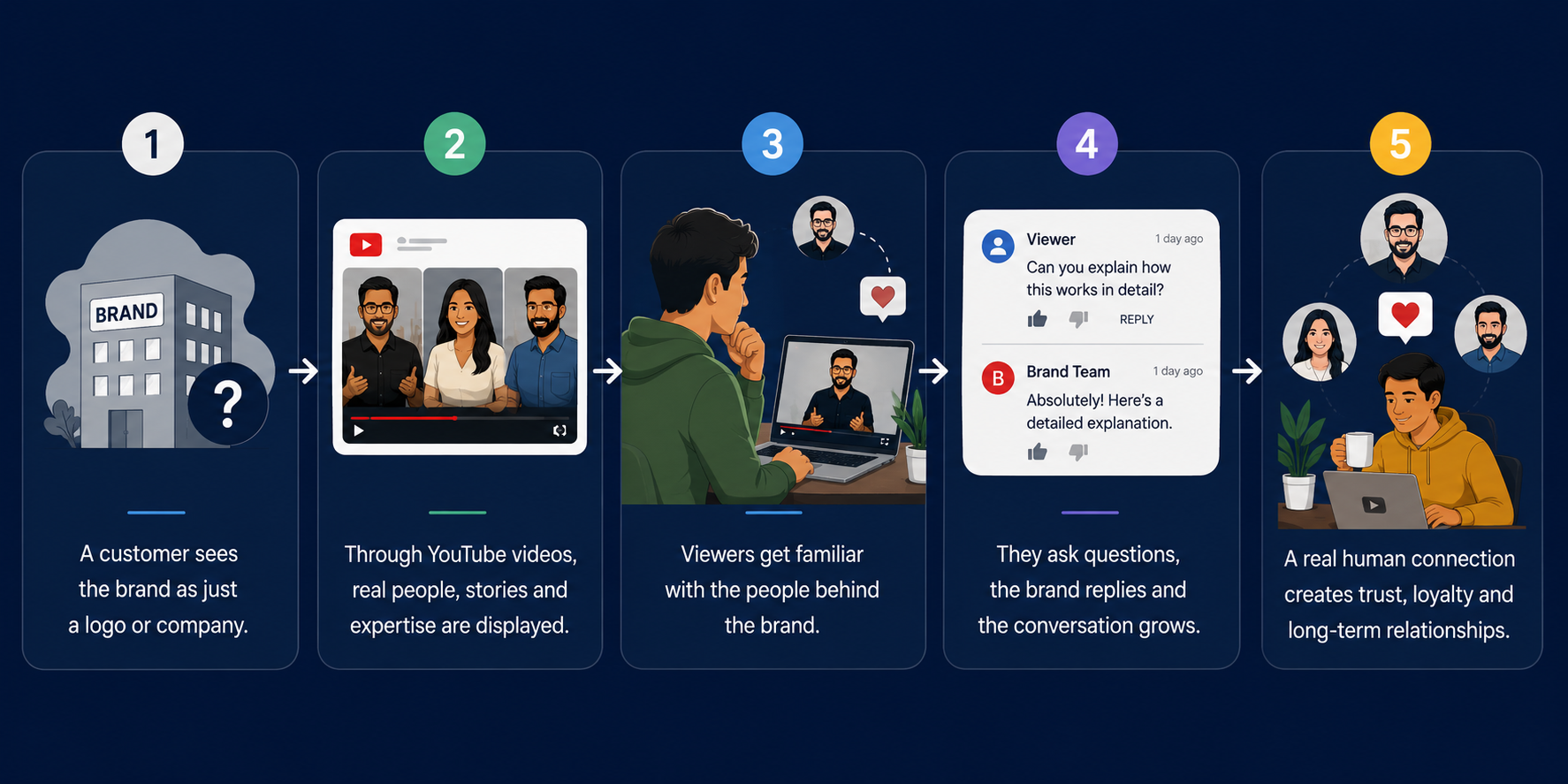
Customers don’t build relationships with logos they connect with the people behind them. While advertisements usually focus on products, pricing, and promotional messages, they rarely reveal the personalities, expertise, and values that make a business unique. A YouTube channel bridges that gap by allowing brands to introduce the founders, employees, designers, engineers, and customer support teams who work behind the scenes. Seeing real people speak openly about their work makes a business feel more approachable, authentic, and trustworthy.
When customers regularly see the same faces sharing useful knowledge, discussing industry trends, or explaining product updates, they begin to develop familiarity with the brand. Instead of feeling like they’re interacting with a large corporation, they feel they’re learning from people who genuinely understand their industry. This human connection makes it easier for customers to trust the business when it’s time to make a purchase.
People Trust Faces More Than Logos
Consider two software companies offering similar products. One relies entirely on polished advertisements and promotional campaigns, while the other regularly publishes videos where its founder explains industry trends, answers customer questions, shares product updates, and discusses future improvements.
Over time, customers naturally feel more connected to the second company because they understand who they’re buying from, not just what they’re buying. That personal connection creates familiarity, making the brand feel more approachable and credible.
Brands can strengthen this connection by creating content such as:
- Founder or CEO insights
- Meet the team videos
- Employee interviews and dayin the life content
- Expert tips and industry discussions
- Behind the scenes conversations
These videos help customers see the people, passion, and expertise behind the business instead of just another company trying to sell a product.
Conversations Build Communities
One of YouTube’s biggest advantages is that communication doesn’t end when the video finishes. The comments section allows brands to answer questions, acknowledge feedback, and engage in meaningful conversations with their audience. Customers often pay close attention to how businesses respond, especially when someone raises a concern or asks a difficult question.
Respectful, honest, and helpful replies demonstrate confidence and show that the company genuinely values its community. Over time, these interactions transform viewers into loyal followers because they feel heard rather than ignored.
Unlike traditional advertisements that simply broadcast a message, YouTube encourages two-way communication. The stronger the conversation, the stronger the relationship becomes. That’s why brands that consistently engage with their audience often build deeper customer loyalty than brands that rely only on advertising.
Why YouTube Brand Trust Matters More Than Ever
Modern marketing is no longer just about reaching more people it’s about earning their confidence. While advertisements are still valuable for creating awareness, lasting customer relationships are built through consistent value, genuine expertise, and meaningful interactions. That’s exactly what a YouTube channel allows brands to do.
By educating, answering questions, demonstrating products, and sharing authentic experiences, businesses become more than just companies selling products they become trusted resources that customers return to whenever they need guidance. Over time, this trust influences purchasing decisions far more effectively than a single advertising campaign.
As competition continues to grow across every industry, brands that focus on helping before selling will have a clear advantage. YouTube brand trust isn’t simply about gaining more views or subscribers; it’s about building credibility that encourages customers to choose your business with confidence.
People may discover a brand through advertising, but they stay loyal to the brands that consistently provide value. That’s why investing in a YouTube channel is no longer just a marketing strategy it’s one of the smartest ways to build long-term customer trust and sustainable business growth.
Unlock the power of captivating visuals with our seasoned expertise! With 7 years of crafting compelling visual content, we’re ready to elevate your brand’s story. From stunning graphics to mesmerizing animations, we bring your vision to life. Let’s create engaging visuals that resonate with your audience and leave a lasting impression. Partner with us today for an unforgettable visual journey!Â


