
The Global Skyscrapers Race: What Rising Skylines Reveal About City Infrastructure Growth
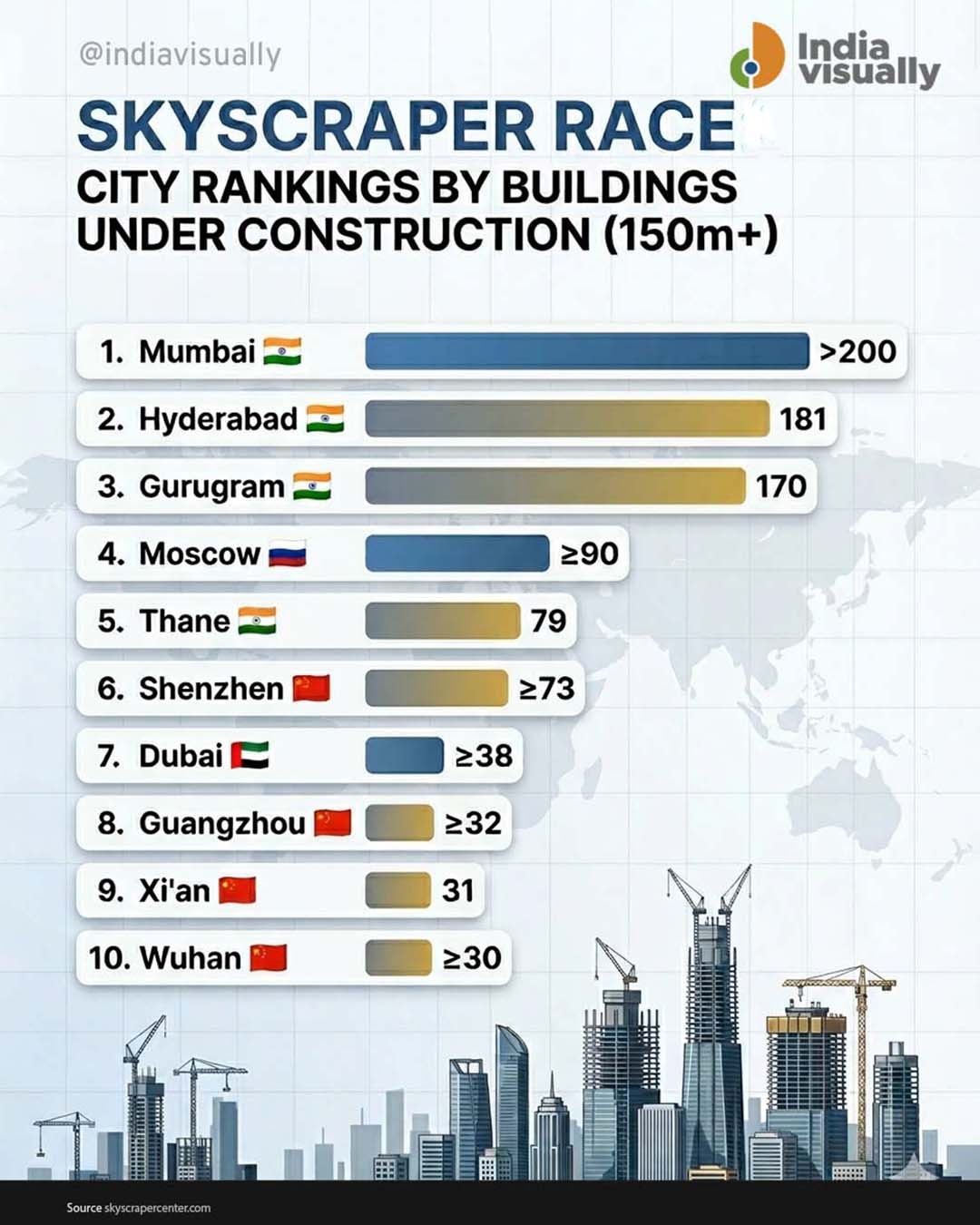
The race to build taller and more impressive skylines is accelerating across the world. From India and China to the Middle East and Europe, cities are investing heavily in high rise construction as they prepare for future growth. This phenomenon, often called the Skyscrapers Race, is about far more than architectural ambition. It reflects economic confidence, population growth, real estate demand, and most importantly, city infrastructure growth.
Today, skyscrapers have become symbols of modern urban development. They provide housing for growing populations, office space for expanding businesses, and landmarks that help cities compete on the global stage. The cities leading this race are not simply building towers, they are building the foundations of their future economies.
Recent construction data paints a fascinating picture. Mumbai currently leads the world with more than 200 skyscrapers under construction. Hyderabad follows with 181 projects, while Gurugram has 170 towers rising across its skyline. These figures reveal how quickly urban landscapes are changing and where major infrastructure investments are taking place.
As cities continue to grow, the Skyscrapers Race offers valuable insights into which regions are likely to become the next economic and business powerhouses.
Why the Skyscrapers Race Matters for City Infrastructure Growth
At first glance, skyscrapers may seem like simple real estate projects. In reality, they are often indicators of much larger urban development plans.
Every skyscraper requires supporting infrastructure. Roads must be expanded, public transportation systems upgraded, electricity networks strengthened, and water supply systems improved. As a result, a surge in high rise construction usually signals significant city infrastructure growth.
This is one reason why urban planners closely monitor skyscraper construction activity. Cities with large numbers of projects under development are often preparing for future population increases and economic expansion.
Mumbai provides a perfect example. With more than 200 skyscrapers currently under construction, the city is adapting to increasing demand for residential and commercial space while maximizing limited land availability. Rather than expanding outward, Mumbai is growing vertically.
The same trend is visible in Hyderabad and Gurugram. Both cities have become major business and technology centers, attracting investment from domestic and international companies. Their growing skylines reflect increasing demand for offices, housing, hotels, and mixed-use developments.
The Skyscrapers Race therefore acts as a visual representation of how cities are planning for the future.
The Cities Leading the Global Skyscrapers Race
Not all cities are expanding at the same pace. Some urban centers have emerged as clear leaders in the global competition to build upward.
According to recent skyscraper construction rankings, the world’s top cities include:
| Rank | City | Skyscrapers Under Construction |
|---|---|---|
| 1 | Mumbai | 200+ |
| 2 | Hyderabad | 181 |
| 3 | Gurugram | 170 |
| 4 | Moscow | 90+ |
| 5 | Thane | 79 |
| 6 | Shenzhen | 73+ |
| 7 | Dubai | 38+ |
| 8 | Guangzhou | 32+ |
| 9 | Xi’an | 31 |
| 10 | Wuhan | 30+ |
One of the most striking observations is India’s dominance. Mumbai, Hyderabad, Gurugram, and Thane all appear in the global top five, highlighting the country’s rapid urbanization and expanding infrastructure investments.
Mumbai’s leadership position demonstrates the scale of development taking place in India’s financial capital. The city faces significant land constraints, making vertical development the most practical solution for accommodating growth.
Hyderabad’s 181 skyscrapers under construction showcase its transformation into a major technology and business hub. Over the past decade, the city has attracted substantial investment from multinational corporations, fueling demand for both residential and commercial real estate.
Similarly, Gurugram’s 170 active projects reflect its growing importance as a corporate center. Located near Delhi, the city continues to attract businesses, professionals, and developers eager to capitalize on its strategic location.
Meanwhile, cities like Shenzhen and Dubai continue to strengthen their positions as global business destinations through ambitious skyline expansion projects.
What the Skyscrapers Race Reveals About Urban Development
The Skyscrapers Race is not simply about constructing taller buildings. It offers a glimpse into broader urban development trends shaping cities worldwide.
One major factor driving high rise construction is population growth. Millions of people move to urban areas every year in search of better employment opportunities and improved living standards. As cities become more crowded, available land becomes increasingly scarce.
Building vertically allows cities to accommodate more residents without expanding endlessly into surrounding areas. A single skyscraper can house thousands of people or provide office space for hundreds of businesses while occupying a relatively small footprint.
Another key driver is economic growth. Cities experiencing strong business activity often require additional office space, residential units, hotels, and retail facilities. High-rise developments help meet these demands while creating jobs and attracting investment.
The Skyscrapers Race also highlights the growing importance of mixed-use developments. Modern towers increasingly combine residential, commercial, entertainment, and retail functions within a single project. These developments create vibrant urban communities while maximizing efficiency.
Real estate investment plays a significant role as well. Developers view skyscrapers as valuable long-term assets capable of generating substantial returns. As demand for premium properties increases, more cities are embracing vertical development strategies.
Ultimately, the number of skyscrapers under construction can reveal which cities are positioning themselves as future economic hubs.
The Future of Skyline Development and Infrastructure Expansion
While today’s skyscrapers are impressive, the future of urban development is likely to be even more transformative.
Modern skyscrapers are increasingly designed with sustainability in mind. Developers are incorporating energy-efficient systems, smart technologies, green building materials, and environmentally friendly construction practices into new projects.
Cities are also focusing on creating integrated urban ecosystems rather than isolated towers. Future developments will be closely connected to transportation networks, digital infrastructure, public spaces, and community facilities.
Technology will play an increasingly important role in how skyscrapers operate. Smart building systems can optimize energy use, improve security, reduce maintenance costs, and enhance occupant comfort.
As cities continue to compete for talent, investment, and global recognition, skyline development will remain a key component of urban planning strategies.
The Skyscrapers Race is therefore evolving beyond a competition for height. It has become a race to build smarter, more sustainable, and more efficient cities.
The Future Is Being Built Today
The global Skyscrapers Race offers a fascinating window into the future of urban development. The cities leading this competition are not simply constructing taller buildingsthey are investing in long-term growth, economic expansion, and modern infrastructure.
The statistics tell a compelling story. With more than 200 skyscrapers under construction, Mumbai leads the world, while Hyderabad and Gurugram follow closely behind with 181 and 170 projects respectively. These numbers highlight where some of the most significant city infrastructure growth is taking place today.
As populations continue to rise and urban economies expand, skyscrapers will play an increasingly important role in shaping how cities function. They provide valuable clues about future business districts, emerging economic centers, and evolving urban lifestyles.
The race to the sky is far from over. In many ways, it is only just beginning, and the cities winning today may become the global powerhouses of tomorrow.
Unlock the power of captivating visuals with our seasoned expertise! With 7 years of crafting compelling visual content, we’re ready to elevate your brand’s story. From stunning graphics to mesmerizing animations, we bring your vision to life. Let’s create engaging visuals that resonate with your audience and leave a lasting impression. Partner with us today for an unforgettable visual journey!