

Why Educational Content Matters in Fintech
Trust is particularly important in financial services because customers are often making decisions involving their money, personal information, or long term financial goals.
A customer may hesitate before investing for the first time, opening a digital bank account, filing taxes online, or integrating a payment system into a business. A traditional advertisement can tell people what a product does, but education can help them understand why, how, and when they should use it.

Traditional advertising can introduce a product and highlight its features, but educational content serves a different purpose. It explains financial concepts, answers common questions, and helps people understand their options before committing. This makes education especially valuable in an industry where unfamiliar terminology and complicated processes can create uncertainty.
For fintech companies, educational content offers several advantages:
- Reduces confusion: Breaks down complex financial products into understandable explanations.
- Builds credibility: Demonstrates expertise by providing useful information rather than relying only on promotional claims.
- Supports customer acquisition: Attracts people searching for answers to specific financial questions.
- Improves decision-making: Helps potential customers understand product features, requirements, and limitations.
- Creates long-term value: Keeps useful guides and resources available long after a marketing campaign ends.
These benefits make educational content more than a way to generate website traffic. It can help fintech companies address customer concerns, communicate more transparently, and provide meaningful support throughout the decision-making process. When people can understand a financial service more clearly, they are better equipped to evaluate whether it meets their needs.
Zerodha Making Investing Easier to Understand
Zerodha has developed an educational ecosystem around investing, particularly for people who are still learning how financial markets work. One of its best-known initiatives is Varsity, an educational platform that provides lessons on investing, trading, and related financial concepts.
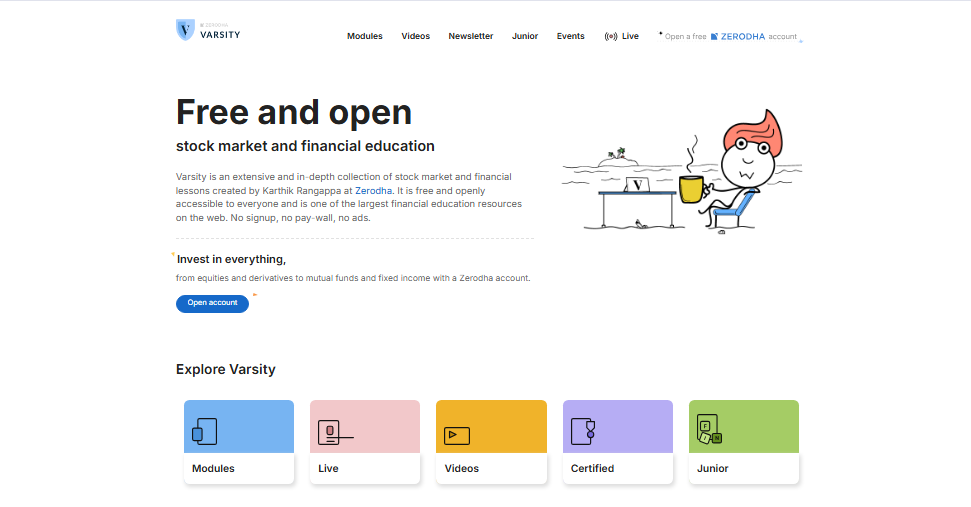
For beginners, the stock market can feel complicated. Terms such as equities, derivatives, fundamental analysis, technical analysis, and portfolio allocation may be unfamiliar to someone making their first investment. Zerodha Varsity helps address this challenge by organizing financial topics into structured learning material that users can explore at their own pace.
One important aspect of this approach is that learning can begin before a person decides to invest. Someone researching the stock market can first build their understanding of financial concepts instead of being immediately pushed toward a transaction. This gives potential investors an opportunity to develop their knowledge before using an investment platform.
Zerodha’s approach also demonstrates the value of making educational resources available beyond a single marketing campaign. Well organized lessons can remain useful to readers as they progress from basic concepts to more advanced investing topics.
For fintech companies, there are several lessons to learn from this model:
- Teach before promoting: Help customers understand a financial topic before encouraging them to take action.
- Structure the learning experience: Break complex subjects into manageable lessons.
- Support different skill levels: Make resources useful for beginners while allowing them to explore more advanced topics.
- Create lasting value: Develop educational material that customers can return to whenever they need it.
Zerodha shows how financial education can become an important part of a fintech brand’s overall experience. By helping people build their knowledge, a company can make investing feel more understandable and give users a stronger foundation for making informed decisions.
Chime Bringing Financial Education Into Everyday Banking
Chime approaches financial education from the perspective of everyday banking and personal money management. Unlike investing-focused platforms, its educational content addresses practical questions people encounter while managing their finances, using banking services, and developing better financial habits.
Through its In the Green blog and other educational resources, Chime provides articles covering topics related to banking, credit, budgeting, and personal finance. These subjects matter because customers often need clear answers to everyday questions, such as how banking features work, how to manage spending, or how different financial choices may affect their budgets.
This practical approach makes financial education relevant to situations people already face. Instead of requiring readers to understand complicated financial concepts first, useful articles can start with a familiar problem and explain the information needed to understand it. Readers can then explore topics that relate to their own financial needs.
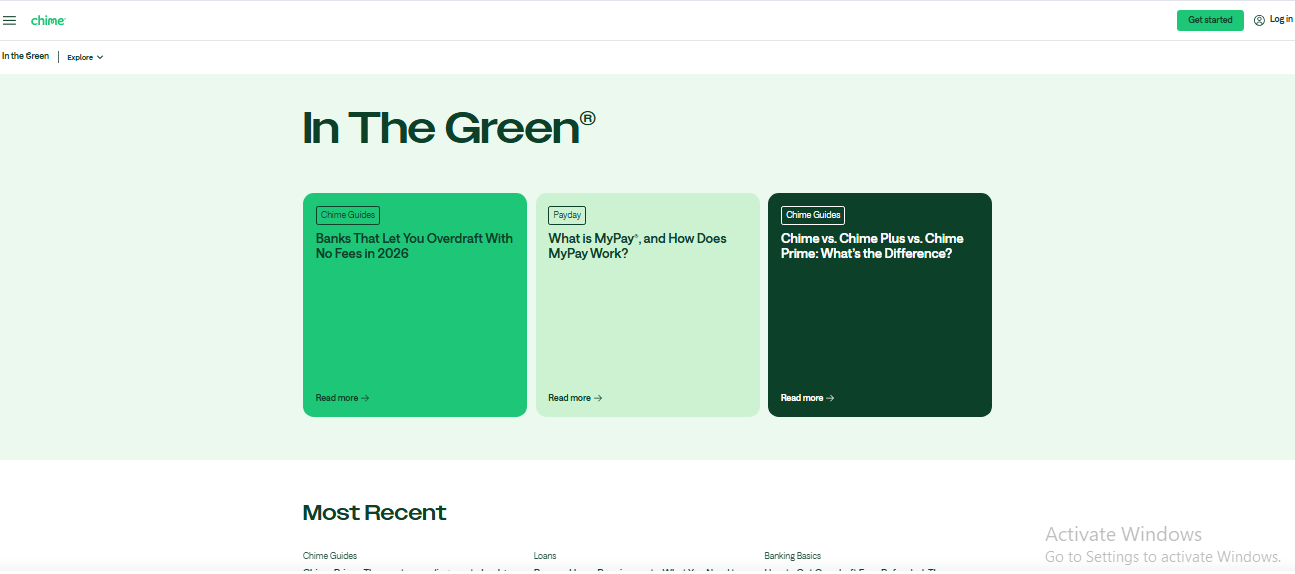
For fintech companies, this offers an important lesson: educational content does not always need to focus on advanced financial knowledge. Sometimes, answering ordinary questions clearly can provide the most immediate value.
Chime’s approach highlights several useful principles:
- Focus on everyday needs: Address questions about banking, budgeting, credit, and money management.
- Use practical explanations: Connect financial information with situations readers recognize.
- Make resources accessible: Help customers find relevant information without unnecessary complexity.
- Support better financial habits: Provide guidance that readers can revisit as their needs change.
Chime demonstrates how educational content can extend beyond product explanations and become part of a broader personal finance experience. For fintech brands, the takeaway is to identify the financial questions customers encounter in daily life and create resources that help them navigate those questions with greater understanding.
What These Five Fintech Brands Get Right About Customer Trust
Zerodha, Robinhood, Chime, ClearTax, and Stripe operate in different areas of financial technology, but their educational approaches reveal several useful lessons for building customer trust.
The first is the importance of answering customer questions. Instead of focusing exclusively on company announcements or product features, educational content addresses the problems people are trying to solve. This makes the information more relevant to customers’ actual needs.
Each company applies this principle differently. Zerodha organizes investing knowledge into structured lessons, while Robinhood makes investing concepts more approachable for newer investors. Chime focuses on everyday banking and personal finance, ClearTax helps users navigate tax related processes, and Stripe provides technical guidance for businesses and developers.
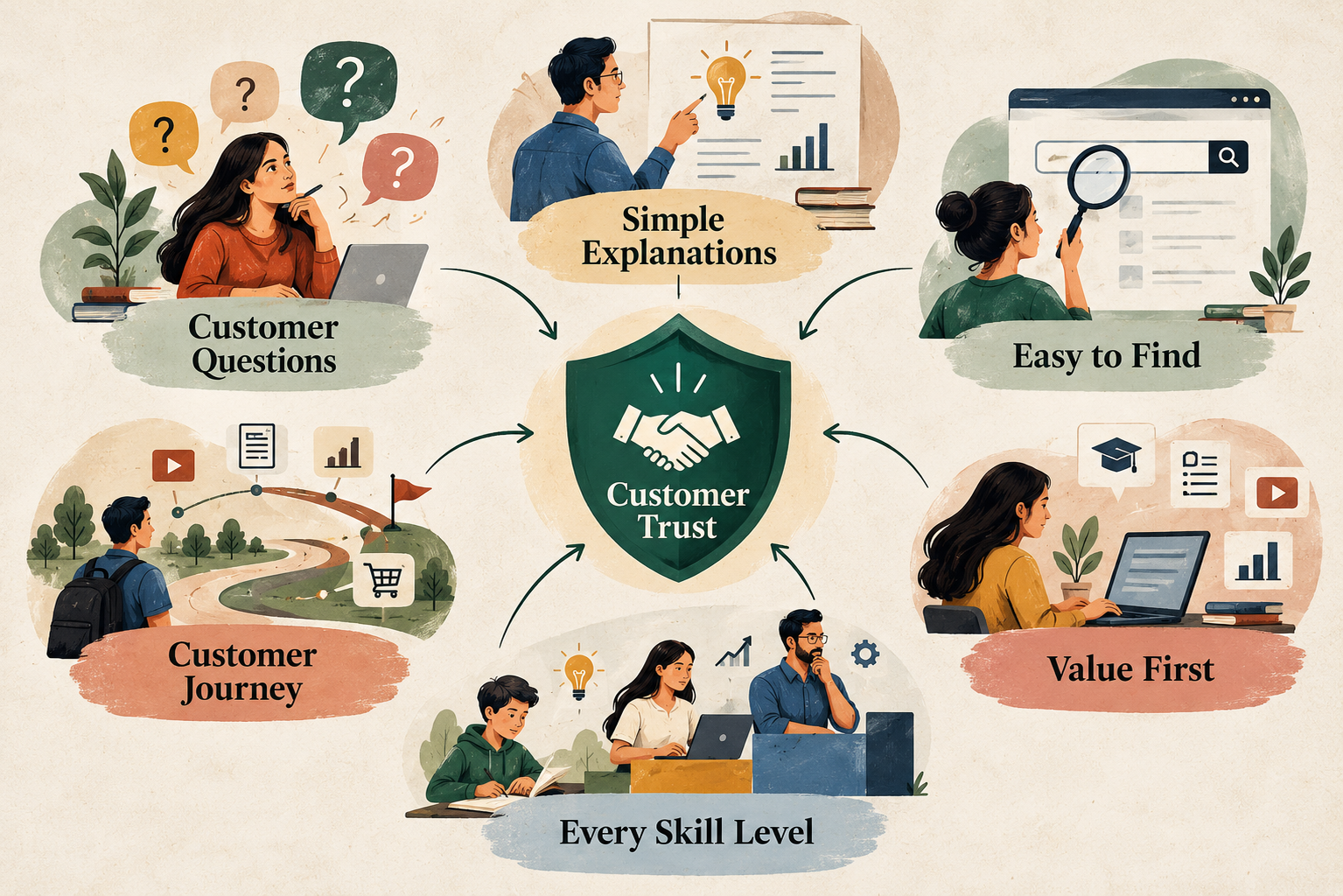
Despite these differences, several common principles stand out:
- Clarity: Explain complicated financial subjects in language the intended audience can understand.
- Relevance: Focus on questions customers genuinely need answered.
- Accessibility: Make educational resources easy to find and use.
- Consistency: Maintain useful resources and update them when information changes.
- Practical value: Help readers understand their options before making decisions.
Consistency is particularly important. A single article may answer one question, but a broader collection of reliable resources can support customers as their needs develop. Someone might begin with a basic guide, return for more detailed information, and later use product documentation or step by step instructions.
The format should reflect the audience and the subject. Beginners may benefit from introductory guides, while developers may need detailed documentation. Customers dealing with taxes may prefer practical instructions that explain each stage of a process.
The central lesson is that effective fintech education is not about publishing the greatest amount of content. It is about providing accurate, accessible information that helps people understand financial products and make informed decisions.
How Fintech Companies Can Build Their Own Educational Trust Strategy
Fintech companies do not need enormous content teams to start educating customers effectively. A successful fintech trust strategy begins by understanding what people find confusing and creating resources that answer those questions clearly.

Identify Customer Questions
Review customer support conversations, search queries, product reviews, and onboarding feedback. These sources can reveal common concerns about fees, security, financial products, and account setup.
Prioritize Important Topics
Focus on questions that influence customer decisions. Pricing explanations, eligibility requirements, investment basics, and tax guidance may be more useful than general topics unrelated to customer needs.
Choose the Right Content Format
Not every question needs a long article. Use blog posts for detailed explanations, videos for visual demonstrations, FAQs for quick answers, and interactive tools for calculations or comparisons.
Use Clear, Simple Language
Avoid unnecessary jargon. When technical terms are essential, explain them with examples that match the audience’s level of knowledge.
Connect Education With Action
Help readers understand their next steps without turning every resource into a sales pitch. Include relevant guides, product explanations, or links to further learning when they genuinely help.
Keep Information Accurate and Updated
Financial regulations, fees, and product features can change. Review important resources regularly, correct outdated details, and make relevant updates easy for readers to identify.
The goal is not to publish content simply to increase website traffic. It is to build a reliable library of resources that customers can use when making financial decisions. By combining clear explanations, relevant topics, and accurate information, fintech companies can make education a consistent part of the customer experience and create stronger foundations for lasting trust.
The Future of Educational Content as a Fintech Trust Strategy
As financial services become increasingly digital, customers will continue to need clear and reliable information. Easier access to financial products does not automatically mean people understand how those products work, what risks they involve, or which options suit their needs.
This creates opportunities for fintech companies to make educational content more useful and accessible. Instead of relying only on traditional blog articles, brands can explore interactive guides, short videos, financial calculators, visual explainers, and personalized learning experiences.

Artificial intelligence may also help customers find relevant explanations more quickly. For example, AI assisted tools could guide users toward information about common banking questions, tax processes, or financial terminology. However, these tools need appropriate oversight, particularly when the information could influence financial decisions.
Three principles will remain important as these formats develop:
- Clarity: Explain financial concepts in language customers can understand, regardless of their experience level.
- Credibility: Provide accurate information, identify relevant limitations, and review content when rules or products change.
- Context: Explain not only how a financial product works, but also when it may be useful and what customers should consider before using it.
Another important development is the shift from product-led content to problem-led education. Rather than beginning with the features a company wants to promote, marketers can start by identifying the questions customers need answered.
A forward looking fintech trust strategy should therefore combine useful educational resources with responsible communication and regular content reviews. New technology can improve how people learn, but lasting trust will still depend on the quality and reliability of the information they receive.
Ultimately, the strongest fintech education will make financial knowledge easier to access without sacrificing accuracy or transparency.