
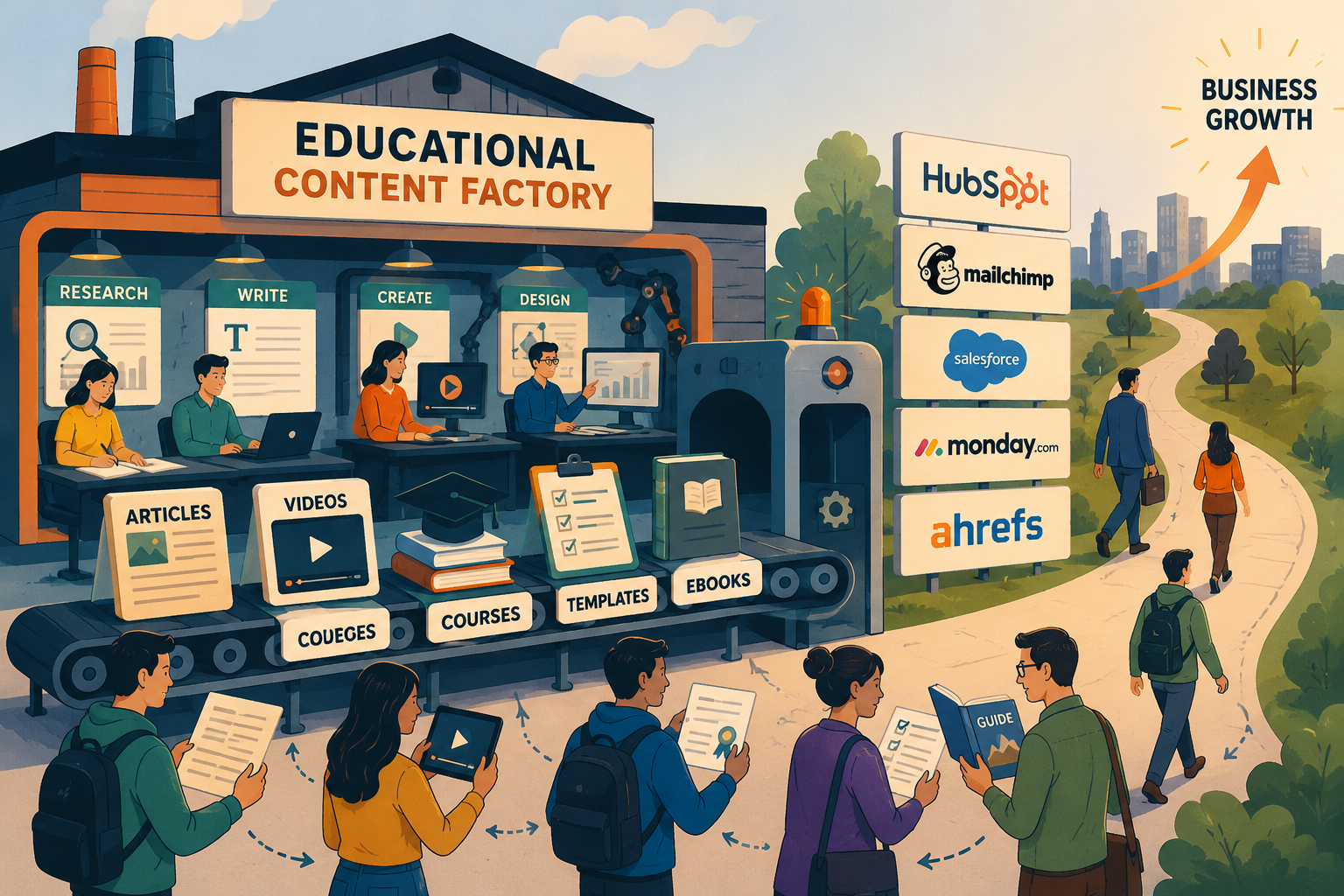
Why Customer Trust Starts Before the Buying Decision
Traditional marketing funnels often make the buying journey look organised. A customer discovers a brand, becomes interested, compares the product, and eventually makes a decision. Actual research behaviour is far less predictable.
A person may first encounter a company while searching for the meaning of an industry term. Six weeks later, they might find a guide from the same website while working on another task. A colleague could later share one of the company’s templates. The person still may not be shopping for software, but they have already had several opportunities to observe how the company communicates.
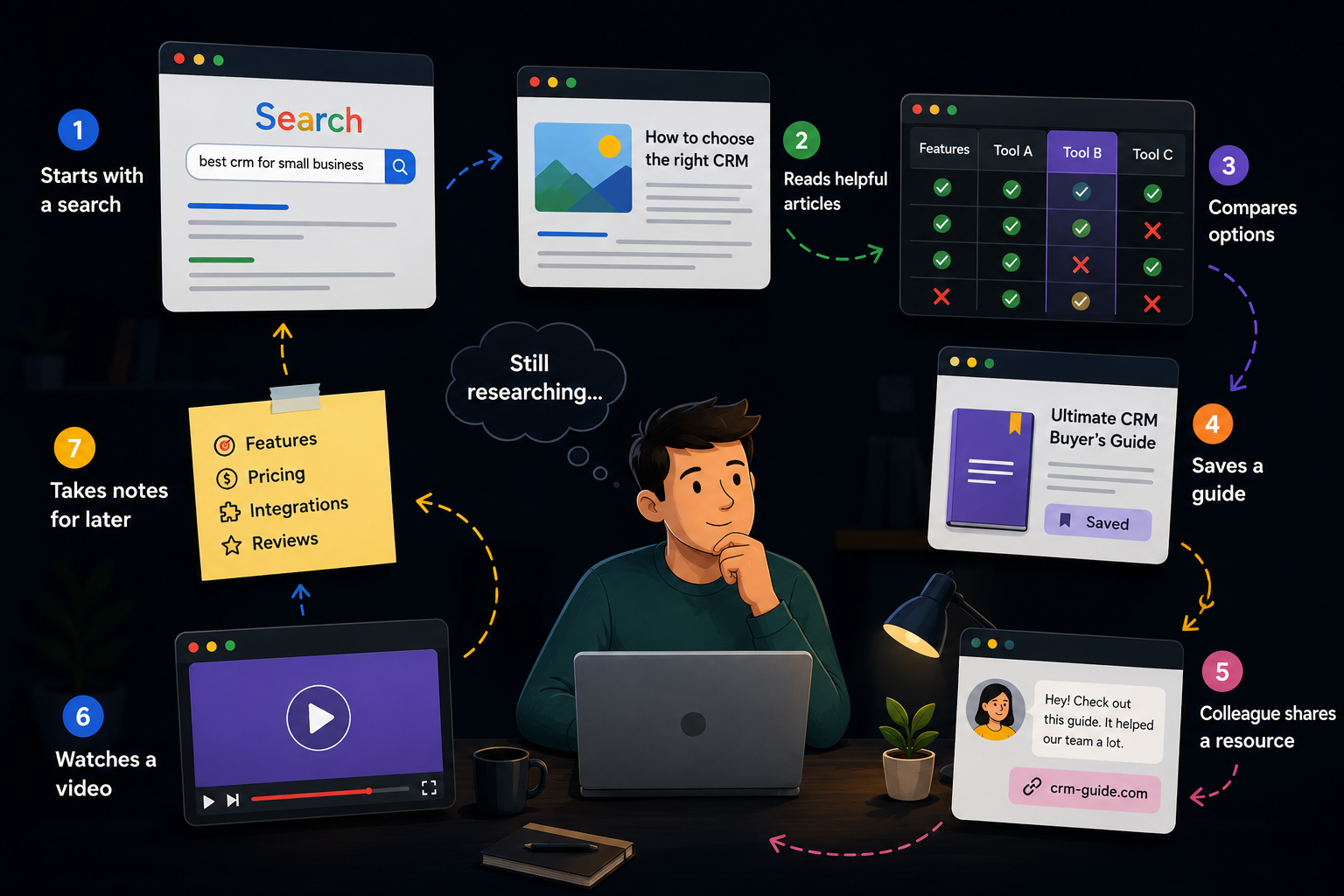
This early research stage matters because people begin evaluating information before they evaluate products. Is the explanation clear? Does it address the actual question? Are the examples relevant to real work? Does the content simplify the subject or make it more confusing?
These small judgments influence the impression a company creates.
The Customer’s Problem Usually Comes First
Most people do not begin research by thinking about a company’s product features. Their attention is on something happening in their own work.
A marketing manager may be struggling to generate qualified leads. A business owner may have customer information scattered across spreadsheets. A sales team may be losing track of follow-ups. None of them necessarily wakes up thinking about automation workflows or CRM integrations.
They first want to understand what is going wrong.
This creates an important communication challenge for brands. A company may be eager to discuss its solution, while the audience is still trying to define the problem. If the content jumps directly to product features, it can arrive too early in the customer’s thinking.
Educational material can fill this gap. It can explain the issue in language the audience recognises and provide enough context for the person to explore the subject further.
At this stage, the goal is not to prove expertise or create brand familiarity. Those outcomes require more evidence and time. The immediate job of the content is simpler: show the customer that the brand understands the question being asked.
The Free Content Debate Changed How Some Brands Market
Once companies begin answering customer questions, a commercial concern often appears: how much practical knowledge should be shared without payment?
The debate is understandable. Businesses invest in research, experience, specialist teams, and industry knowledge. For consultants and service companies in particular, expertise may be a major part of what customers pay for. Publishing useful information can therefore feel like giving away part of the product.
The fear usually follows a straightforward assumption. If customers learn how something works, they may decide to do it themselves.
However, knowing about a process and executing that process at scale are very different things.
Reading about SEO does not give a marketing team reliable search data or years of technical experience. Understanding lead nurturing does not create automated workflows across thousands of contacts. Learning the principles of customer relationship management does not connect scattered company data overnight.
Information can make the problem clearer without removing the operational difficulty behind it.
 Education Can Give a Product Necessary Context
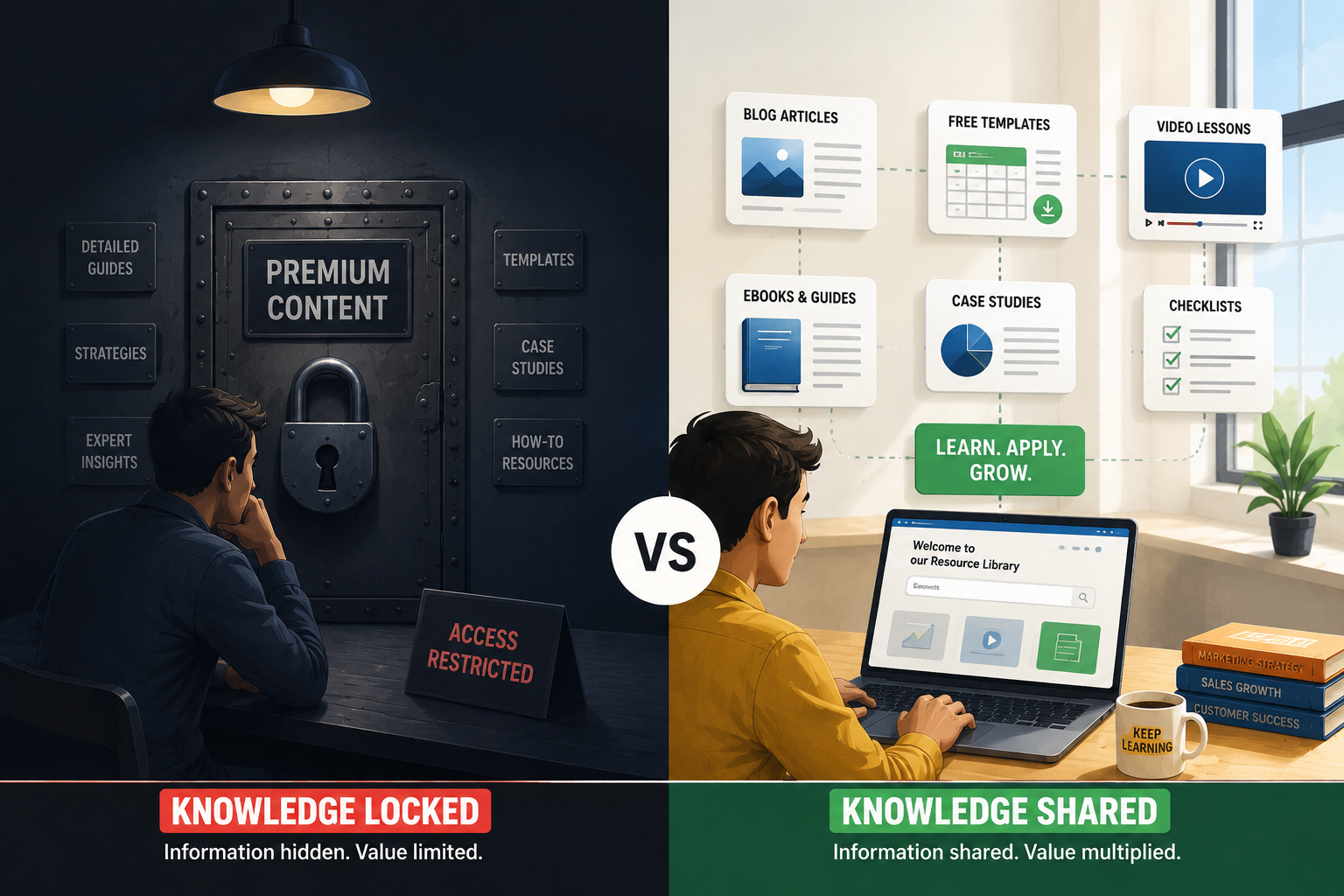 Education Can Give a Product Necessary Context
In complex industries, customers sometimes fail to see the value of a product because they do not yet understand the work the product supports.
Consider lead scoring. A software company could promote scoring features, custom properties, and automated actions immediately. To someone unfamiliar with the concept, those features may sound technical rather than valuable.
The situation changes when the person first learns why sales teams waste time on poorly qualified prospects, how buying signals differ, and why prioritisation matters. Lead scoring now has a purpose.
The feature has context.
This is one reason educational content marketing can be particularly useful in B2B and software markets. A company can explain the surrounding problem before asking customers to assess the solution.
HubSpot’s content model reflects this thinking. Marketing, sales, and service education helps audiences understand the processes in which CRM technology operates. Free knowledge does not have to replace the product. In some situations, it helps customers understand why a particular category of product exists at all.
How HubSpot Built Content Around Real Customer Questions
HubSpot’s educational library covers a much wider range of subjects than its product pages. Marketing strategy, sales processes, email, SEO, social media, customer service, lead generation, and content creation all appear across its resources.
The connection between these topics is the audience.
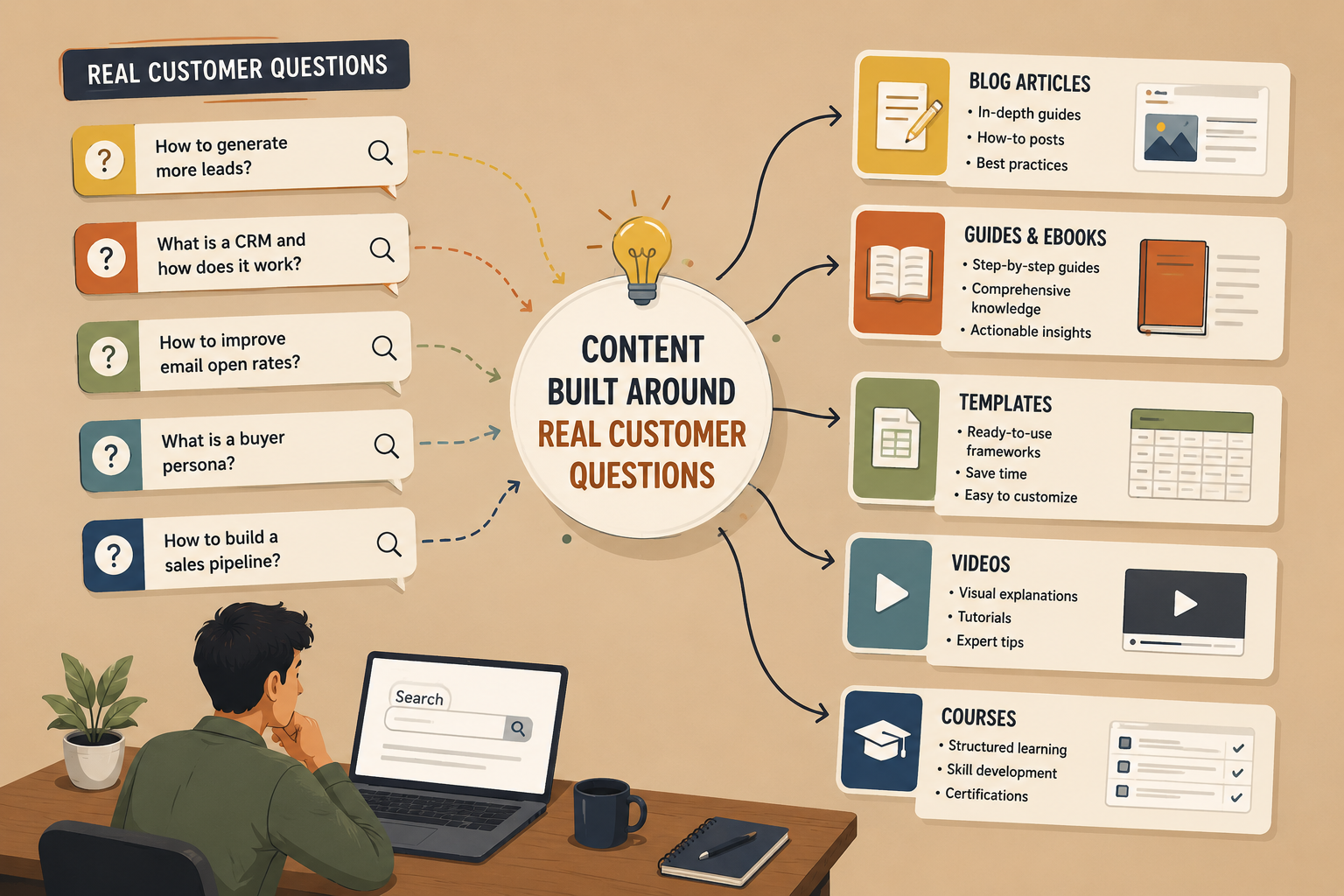
Marketers, sales professionals, service teams, and business owners regularly search for questions such as:
- How can a business generate better leads?
- What information belongs in a buyer persona?
- How does email marketing work?
- What should a content strategy include?
- How should a sales pipeline be organised?
- What is the purpose of a CRM?
Not everyone asking these questions is currently looking for HubSpot software. Some may be students. Others are junior marketers, freelancers, founders, or employees trying to complete a task they have never handled before.
The educational opportunity exists because the question exists.
HubSpot Starts With the Subject, Not Always the Software
Someone researching buyer personas first needs to understand the concept. They need to know why personas are created, what research is involved, and which details are useful. A long explanation of CRM features would not answer that immediate need.
HubSpot can address the subject first.
This allows its content to serve audiences at different knowledge levels. A beginner may need a definition, while an experienced marketer may want a template. A team leader could be more interested in applying the concept across a larger marketing strategy.
These are different learning requirements around the same broad topic.
By publishing across those levels, HubSpot creates multiple ways for people to enter its content ecosystem. The first page someone visits does not need to explain the entire company or push the visitor towards pricing. It only needs to do its specific educational job well.
This question led structure is a key part of the approach. HubSpot can meet the audience while they are learning the language of a problem and continue providing relevant material as the subject becomes more advanced.
Educational Content Marketing Works Across Different Learning Formats
A blog article can answer a question, but not every subject is best explained through a blog article. Some information needs greater depth. Other ideas become clearer when people can see a process or use a practical resource themselves.
HubSpot’s educational ecosystem reflects these different learning needs. It includes:
- Articles for definitions, explanations, and focused questions
- Guides and ebooks for subjects requiring greater depth
- Templates that help users apply ideas to real tasks
- Reports and research for industry information and data
- Video lessons for guided visual learning
- Courses and certifications for structured skill development
The important point is not the number of formats. It is the role each format can play.
A person trying to understand a new term may need a five-minute explanation. Giving them a two-hour course would create unnecessary friction. On the other hand, someone learning digital marketing cannot develop a useful understanding from a short glossary definition.
The learning need should shape the format.
Practical Resources Move People From Reading to Doing
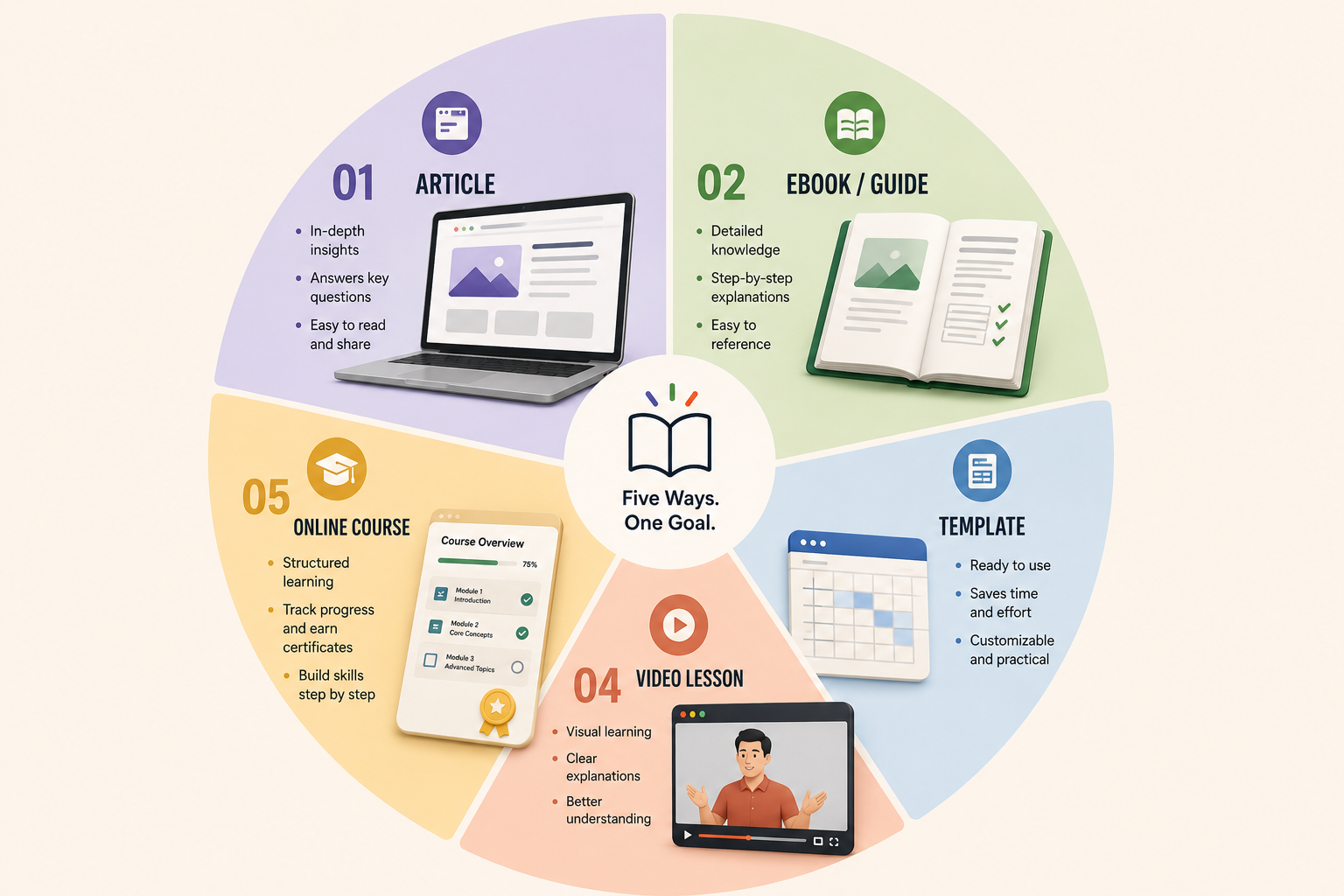 Practical Resources Move People From Reading to Doing
Templates are a good example. An article can explain how to build a content plan, but a planning template gives the reader a structure they can use in their own work. The information becomes actionable.
Visual content serves another purpose. Software workflows, data relationships, and technical processes can become difficult to follow through dense paragraphs. A clear B2B Explainer Video can break a process into stages and let the viewer see how different elements connect.
Courses solve a different problem again. They organise a broad subject into a deliberate sequence so learners do not have to piece together twenty unrelated articles themselves.
This is a useful lesson beyond HubSpot. Creating educational content is not simply a matter of publishing more words. Brands need to identify what the audience is trying to learn and then choose a format capable of teaching it clearly.
HubSpot Academy Turned Education Into Structured Learning
HubSpot’s educational strategy extends far beyond publishing individual blog posts. Through HubSpot Academy and its broader learning resources, the company teaches marketers, sales professionals, and business owners the skills they need to solve real business challenges. Instead of focusing only on software, HubSpot organizes educational content around practical subjects that professionals use every day. This allows learners to build knowledge step by step while gaining confidence in the brand’s expertise long before they become customers.
Content Marketing: Building an Audience Through Valuable Content
Content marketing is one of the core subjects taught through HubSpot’s educational resources. Instead of simply encouraging businesses to publish more content, HubSpot explains how to create a complete content strategy that attracts, educates, and converts audiences. Learners explore topics such as blogging, storytelling, topic clusters, content planning, content distribution, and performance measurement. By teaching businesses how to create valuable content rather than immediately promoting software, HubSpot positions itself as a trusted marketing educator.
 Marketing Automation: Improving Campaign Efficiency
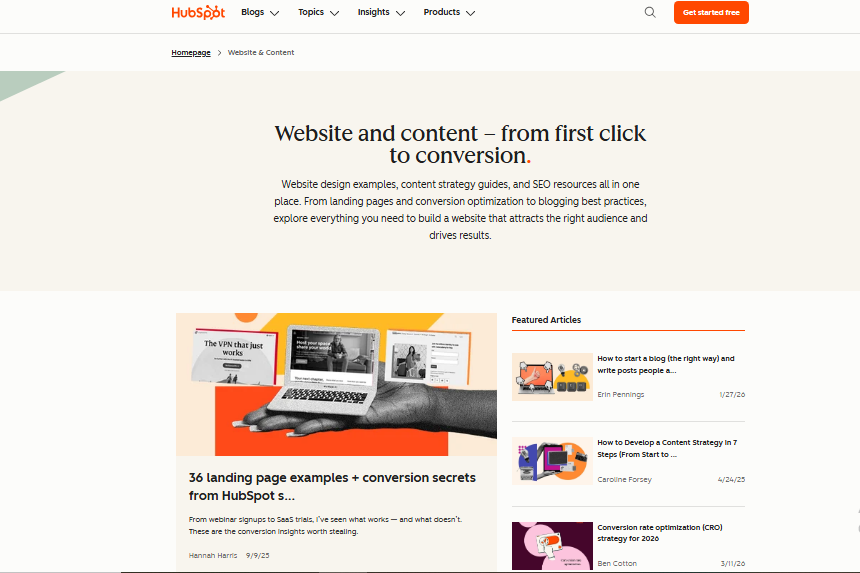 Marketing Automation: Improving Campaign Efficiency
HubSpot also teaches marketers how automation can improve customer experiences while reducing repetitive work. Educational resources such as “Automate Your Marketing to Boost Campaign Efficiency” explain workflow automation, lead nurturing, customer segmentation, email sequences, and campaign optimization. Rather than introducing automation as a software feature, HubSpot first explains the marketing strategy behind automation, helping businesses understand why these processes matter before exploring the tools that support them.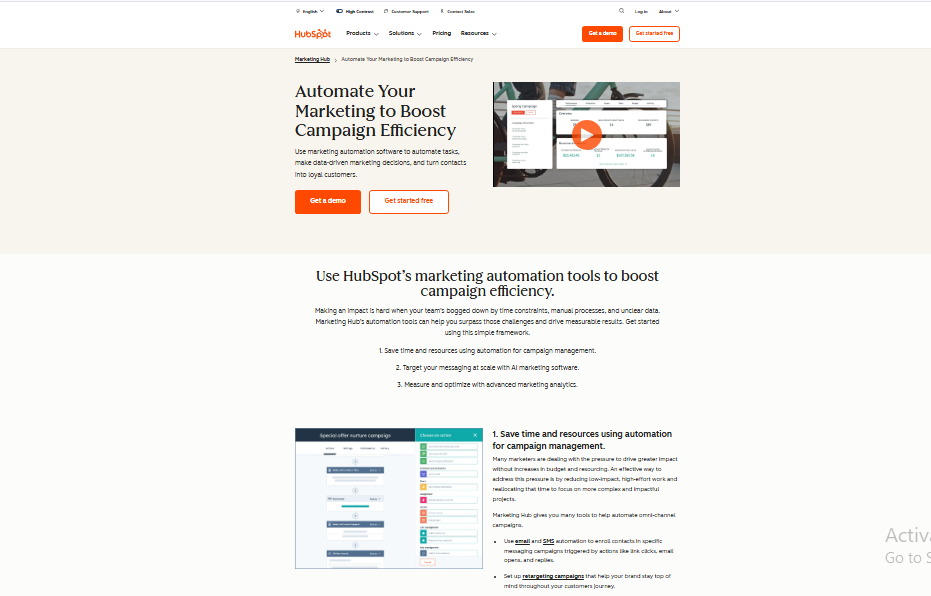
Social Media Marketing: Creating Platform-Specific Strategies
Social media education is another important part of HubSpot’s learning ecosystem. Rather than offering generic posting advice, HubSpot teaches businesses how to develop platform-specific strategies for channels such as LinkedIn, Instagram, Facebook, Pinterest, and YouTube. Its educational content covers audience engagement, content planning, campaign measurement, community building, and social media analytics. By explaining how different platforms serve different business goals, HubSpot helps marketers build more effective long-term social media strategies.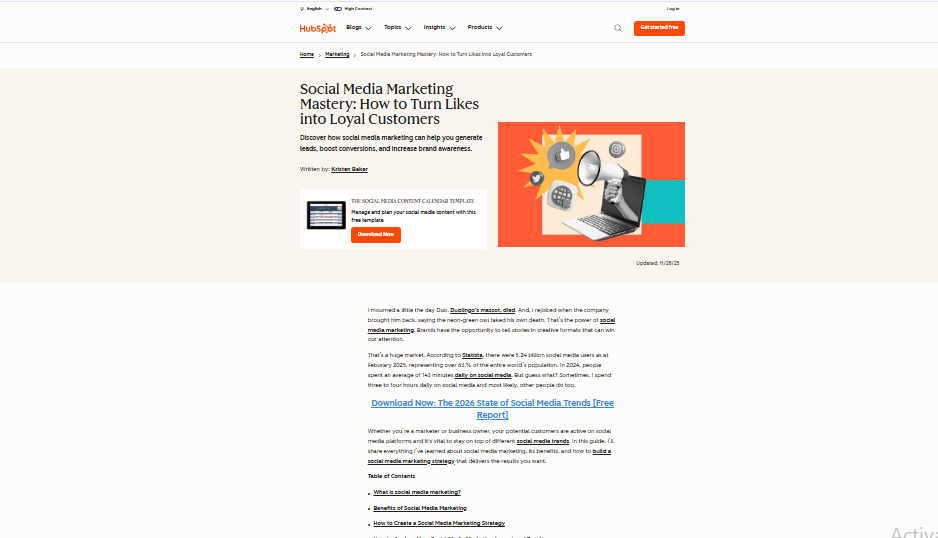
SEO and AI Marketing: Adapting to Modern Search
As digital marketing continues to evolve, HubSpot has expanded its educational resources to include SEO and AI-powered marketing. Through articles, Academy lessons, and practical guides, learners explore keyword research, search intent, on-page SEO, AI-assisted content creation, and search optimization techniques. Instead of treating AI as a replacement for marketers, HubSpot explains how AI can support research, content creation, and workflow efficiency while maintaining quality and relevance.
HubSpot Academy Certifications: Structured Learning for Professional Growth
At the centre of HubSpot’s educational ecosystem is HubSpot Academy, which brings together all these subjects into structured learning paths. Free certifications combine video lessons, quizzes, practical exercises, and final assessments across digital marketing, inbound marketing, content marketing, sales, customer service, CRM, and AI. Rather than learning isolated concepts, professionals develop practical skills through a guided curriculum that can be applied directly in real business situations.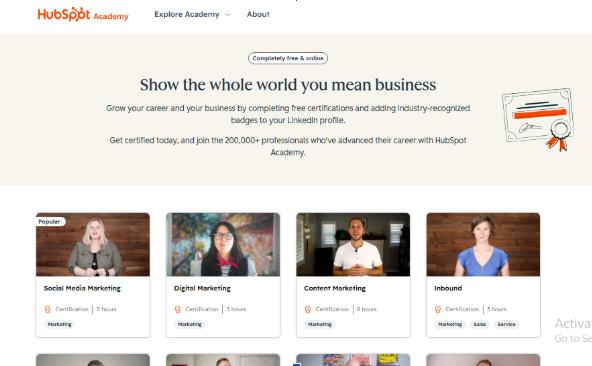
Together, these educational programs demonstrate why HubSpot is widely recognised as one of the strongest examples of educational content marketing. By teaching practical business skills across content marketing, automation, social media, SEO, AI, and professional certifications, HubSpot helps its audience solve real problems before introducing its products. This education-first approach builds credibility, strengthens long-term relationships, and allows trust to develop naturally through continuous learning rather than traditional advertising.
Educational Content Marketing Is a Strategy Shared by Industry Leaders
HubSpot is one of the best known examples of educational content marketing, but it is far from the only company using this approach. Many leading SaaS brands invest heavily in blogs, learning hubs, tutorials, videos, webinars, templates, and practical guides because they understand that customers need education before they are ready to evaluate software. Although these companies operate in different industries, they all use educational content to solve problems first and introduce their products naturally as part of the solution. Looking at a few examples shows that trust-building through education has become a proven strategy across the software industry.
Mailchimp: Teaching Email Marketing Before Selling Email Software
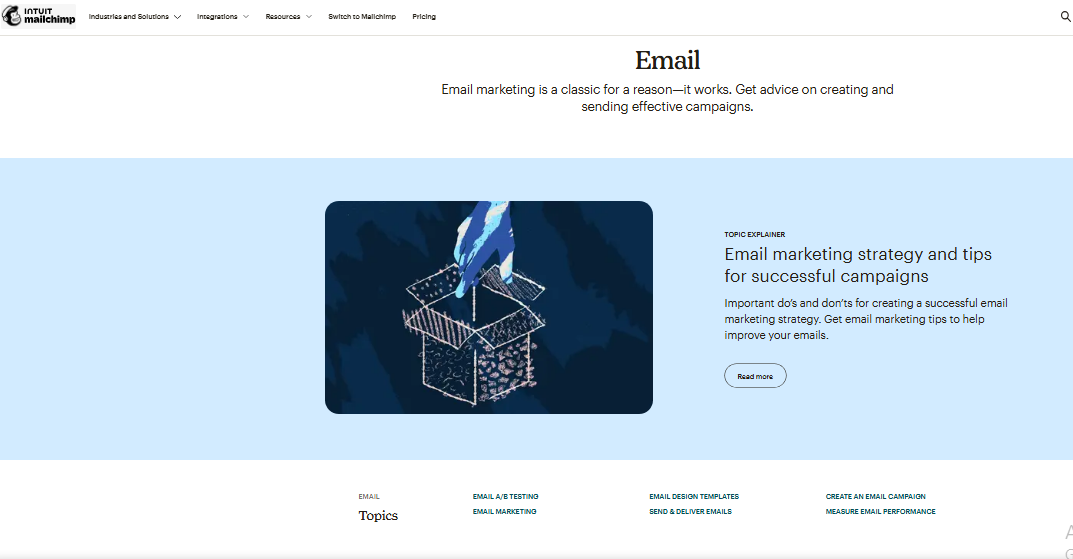
Mailchimp has built an extensive educational library around email marketing, audience growth, automation, newsletters, customer journeys, and digital marketing fundamentals. Rather than asking businesses to sign up immediately, Mailchimp helps beginners understand how successful email campaigns are planned, written, and measured. This educational approach allows marketers to learn the principles first before exploring the platform itself.
 Monday.com: Simplifying Work Management Through Education
 Monday.com: Simplifying Work Management Through Education
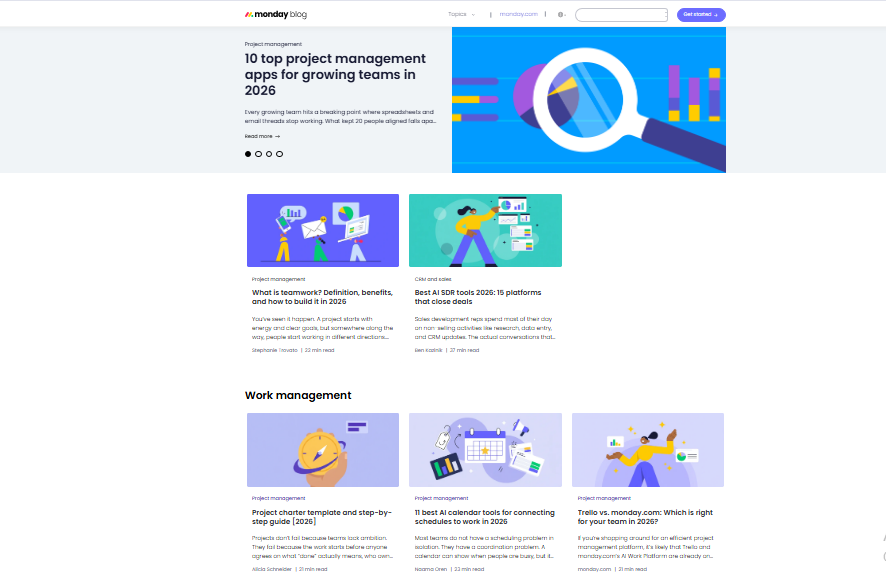
Monday.com creates educational content around project management, workflow automation, team collaboration, productivity, agile planning, and business operations. Instead of focusing only on software features, the company explains common workplace challenges and demonstrates practical ways to organise work more efficiently. This makes the platform easier to understand because readers already know the workflow it is designed to improve.
 Salesforce: Building CRM Knowledge Before Product Adoption
 Salesforce: Building CRM Knowledge Before Product Adoption
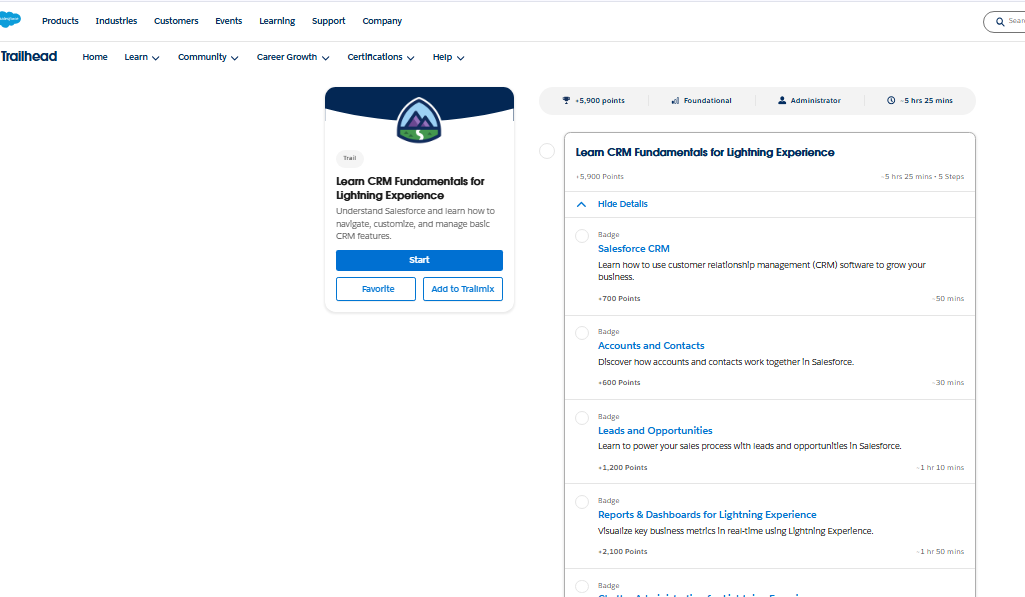
Salesforce supports businesses with learning resources covering customer relationship management, sales processes, customer service, automation, AI, and business growth. Through Salesforce Trailhead and its educational content, users develop professional skills while gaining a deeper understanding of CRM concepts before choosing or implementing software.
 Ahrefs: Turning SEO Education Into Product Trust
 Ahrefs: Turning SEO Education Into Product Trust
Ahrefs has become one of the most trusted names in SEO by publishing detailed articles, YouTube tutorials, free courses, and practical guides on keyword research, technical SEO, backlink analysis, content strategy, and search intent. Many marketers first discover Ahrefs while learning SEO rather than searching for SEO software. This education-first approach naturally positions the brand as an authority before any product comparison begins.
What Brands Can Learn From HubSpot’s Educational Content Marketing
The easiest lesson to take from HubSpot is to publish more content. It is also the least useful lesson.
A large content library has little value if it is filled with generic articles created only to maintain a publishing schedule. The stronger idea behind HubSpot’s approach is alignment between customer questions, educational subjects, and the problems the company’s products address.
Brands can begin by examining what their customers need to understand:
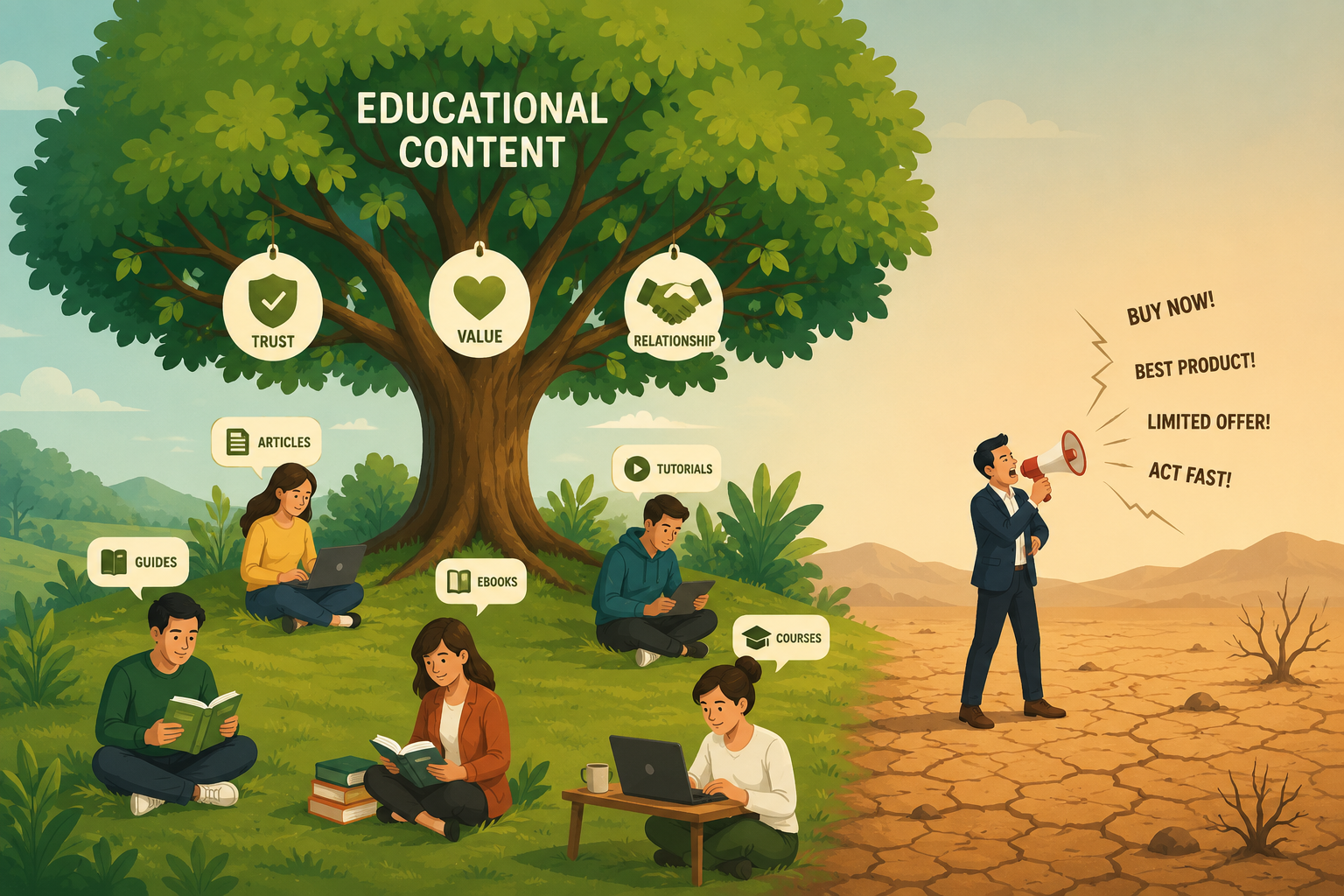 Brands can begin by examining what their customers need to understand:
- Which questions repeatedly appear in sales conversations?
- What confuses customers before they choose a solution?
- Which industry terms are frequently misunderstood?
- What mistakes do new customers make?
- Which processes are difficult to explain on a product page?
- What knowledge would help buyers evaluate solutions more intelligently?
These questions can reveal useful content opportunities without starting from a list of SEO keywords alone.
Build Content Around Learning Gaps
A learning gap is the space between what the customer currently understands and what they need to understand next.
For a beginner, that gap may be terminology. For an experienced buyer, it could involve comparing processes or evaluating implementation requirements.
Good educational content identifies the gap and closes it clearly.
The format should then follow the subject. A short explanation may need an article. A visual workflow may work better in video. A recurring task may justify a template. A large professional subject could become a course.
Brands should also test whether the content provides value independently of the sales message. If removing the product CTA leaves the reader with nothing useful, the resource is probably promotional rather than educational.
Products can still appear where they are relevant. HubSpot, Ahrefs, and Semrush all teach people how to use their software. The difference is that product education sits within a wider body of industry learning.
The objective of educational content marketing should not be to hide a sales pitch inside a tutorial. It should be to create information that genuinely improves the audience’s understanding of a subject connected to the brand’s expertise.