

Table of Contents
Understanding Animated Explainer Videos
Animated explainer videos are short, engaging videos that use animation to simplify complex ideas, products, or services. They typically combine storytelling, motion graphics, voiceovers, and a clear call-to-action (CTA) to convey information effectively. These videos are handy in e-learning, where they can break down intricate topics into digestible content, making learning more accessible and enjoyable.
How E-Learning Is Shaping the Future of Education
E-learning has transformed the educational landscape, offering flexibility and accessibility to learners worldwide. The COVID-19 pandemic accelerated the adoption of online learning, highlighting the need for engaging and effective digital content. Animated explainer videos play a crucial role in this shift by enhancing interactivity and aiding in knowledge retention. Studies show that visual aids can improve learning by up to 400%, making animated content an invaluable tool in modern education.
Why E-Learning Platforms Use Animated Explainer Videos
As the e-learning industry grows increasingly competitive, platforms turn to animated explainer videos to differentiate themselves, improve learning outcomes, and engage modern digital learners. Here’s a comprehensive look at why these videos have become an essential component of successful e-learning strategies:
1. Breaking Down Complex Concepts with Visual Storytelling
One of the biggest advantages of animated explainer videos is their ability to simplify intricate and abstract topics. Concepts like machine learning, blockchain, or quantum mechanics can be hard to grasp through text or static visuals alone. However, animation allows educators to create visual analogies and metaphors that make even the most challenging topics understandable.
For example, in a lesson on quantum physics, an animated explainer can visually depict particle-wave duality or entanglement using relatable real-world metaphors, turning an otherwise dense topic into an engaging and digestible experience. The dynamic visuals paired with narration enhance both comprehension and knowledge retention.
2. Boosting Learner Engagement and Reducing Course Drop-offs
Online learners often struggle to maintain focus during lengthy lessons or monotonous slide shows, leading to high drop-off rates and low course completion. Animated explainer videos combat this by incorporating motion, storytelling, characters, and sound design to deliver content in an engaging, memorable way.
Instead of passively reading content, learners are visually and emotionally drawn into a narrative that keeps their attention. Animation triggers curiosity, breaks cognitive fatigue, and provides active learning cues that help maintain interest throughout the course. As a result, e-learning platforms see higher learner satisfaction, longer session durations, and improved completion rates.
3. Enhancing Brand Personality and Building Credibility
Animated videos also serve as a branding tool. They offer e-learning platforms a unique opportunity to infuse personality, tone, and values into their content. From color palettes and voiceovers to character designs and messaging style, every frame reflects your platform’s identity.
When viewers see consistent branding across explainer videos—be it fun and playful or formal and authoritative—it builds familiarity and trust. A well-crafted animation signals professionalism, attention to detail, and commitment to high-quality education. This strengthens your reputation and establishes a deeper emotional connection with your audience.
4. Delivering Cost-Effective and Scalable Learning Content
Compared to live-action videos or traditional instructor-led formats, animated explainer videos are incredibly cost-effective in the long run. They can be produced once and used indefinitely across courses, marketing campaigns, landing pages, or onboarding sequences. This reusability makes them a smart investment, especially for platforms looking to scale without increasing overhead.
Moreover, animations are easy to update. If a curriculum changes or new information becomes available, revisions can be made without re-shooting or re-recording entire segments. This flexibility ensures that your content remains accurate, up-to-date, and relevant, saving time and resources over time.
Types of Animated Explainer Videos Ideal for E-Learning Platforms
In the evolving digital education landscape, animated explainer videos offer a wide range of styles to suit different learning needs, content types, and audience preferences. Below is a detailed breakdown of the most effective animation formats for e-learning platforms and how each can be strategically used to enhance online learning experiences:
1. 2D Animation Videos – Versatile, Engaging, and Story-Driven
2D animation remains one of the most popular and accessible styles for e-learning content. Its clean, flat design and flexibility make it ideal for storytelling, character-driven lessons, and illustrating complex ideas with visual clarity.
Whether you’re teaching soft skills through role-play scenarios or walking students through scientific processes, 2D animations can bring concepts to life in a visually appealing and easy-to-understand format. They work well across all age groups and are especially effective when paired with relatable characters and simple narratives.
2. Whiteboard Animation – Clear, Structured, and Instructional
Whiteboard animation simulates the effect of hand-drawn illustrations being sketched out in real-time on a whiteboard. This style is highly effective for step-by-step explanations, academic lectures, or procedural tutorials.
Its minimalist and distraction-free aesthetic keeps the learner’s attention focused entirely on the unfolding content. Whether breaking down a math equation or explaining a scientific theory, whiteboard videos provide a structured learning experience that mimics traditional classroom teaching.
3. Motion Graphics – Ideal for Abstract, Data-Heavy Content
Motion graphics animation focuses on moving shapes, icons, charts, and text to convey abstract or analytical information more engagingly. This format is particularly suited for content involving data visualization, infographics, timelines, or technical workflows.
For example, motion graphics can animate statistics in real time or illustrate the progression of a concept across different stages, making otherwise dry content feel dynamic and digestible. This style is perfect for corporate training, business education, and concept-heavy subjects.
4. Kinetic Typography – Emphasizing Language Through Animated Text
Kinetic typography is a visually striking animation technique that brings text to life through movement, pacing, and visual rhythm. This style is great for emphasizing important definitions, quotes, instructions, or terms by combining typography with audio and background effects.
It is particularly effective when used as a reinforcement tool, helping learners remember keywords and key messages through visual repetition and stylized motion. It works well for revision material, bite-sized lessons, or motivational content.
5. Screencast Explainers – Practical and Hands-On Learning
Screencast videos are screen recordings enhanced with voiceover narration, cursor movements, and on-screen annotations. They are invaluable for teaching software applications, digital tools, or online platforms where step-by-step demonstrations are essential.
Learners benefit from seeing exactly how a process works in real time—whether it’s navigating a dashboard, using a tool, or executing a task. Screencasts deliver a hands-on, practical learning experience that feels personal and immediately applicable.
How to Promote Your E-Learning Platform with an Animated Explainer Video
Creating a compelling animated explainer video is just the beginning. To truly maximize its impact, you need a strategic promotional plan that ensures it reaches the right people at the right time. Here’s a detailed step-by-step guide to successfully promoting your e-learning platform using animated explainers:
1. Identify Your Target Audience and Refine Your Core Message
Before creating or promoting your video, clearly define who your ideal learners are. Are they college students, working professionals, educators, or corporate trainees? Understanding their goals, challenges, learning preferences, and motivations allows you to craft a message that resonates deeply.
Once you’ve identified your audience, develop a core message that highlights how your e-learning platform solves their pain points. Whether it’s flexibility, affordability, certification, or access to industry experts, your explainer should directly address how you make learning easier, faster, or more rewarding for them.
2. Choose the Right Animation Style to Reflect Your Brand Identity
Animation style plays a key role in shaping how your brand is perceived. Select a visual format that aligns with your platform’s tone, audience expectations, and educational content.
For instance:
- Use sleek motion graphics for a modern, data-driven, professional appeal.
- Opt for colorful 2D animation if your content is geared toward younger students or casual learners.
- Try whiteboard animation for step-by-step academic content or instructor-led courses.
Consistency in style reinforces your platform’s personality and helps build brand recognition over time.
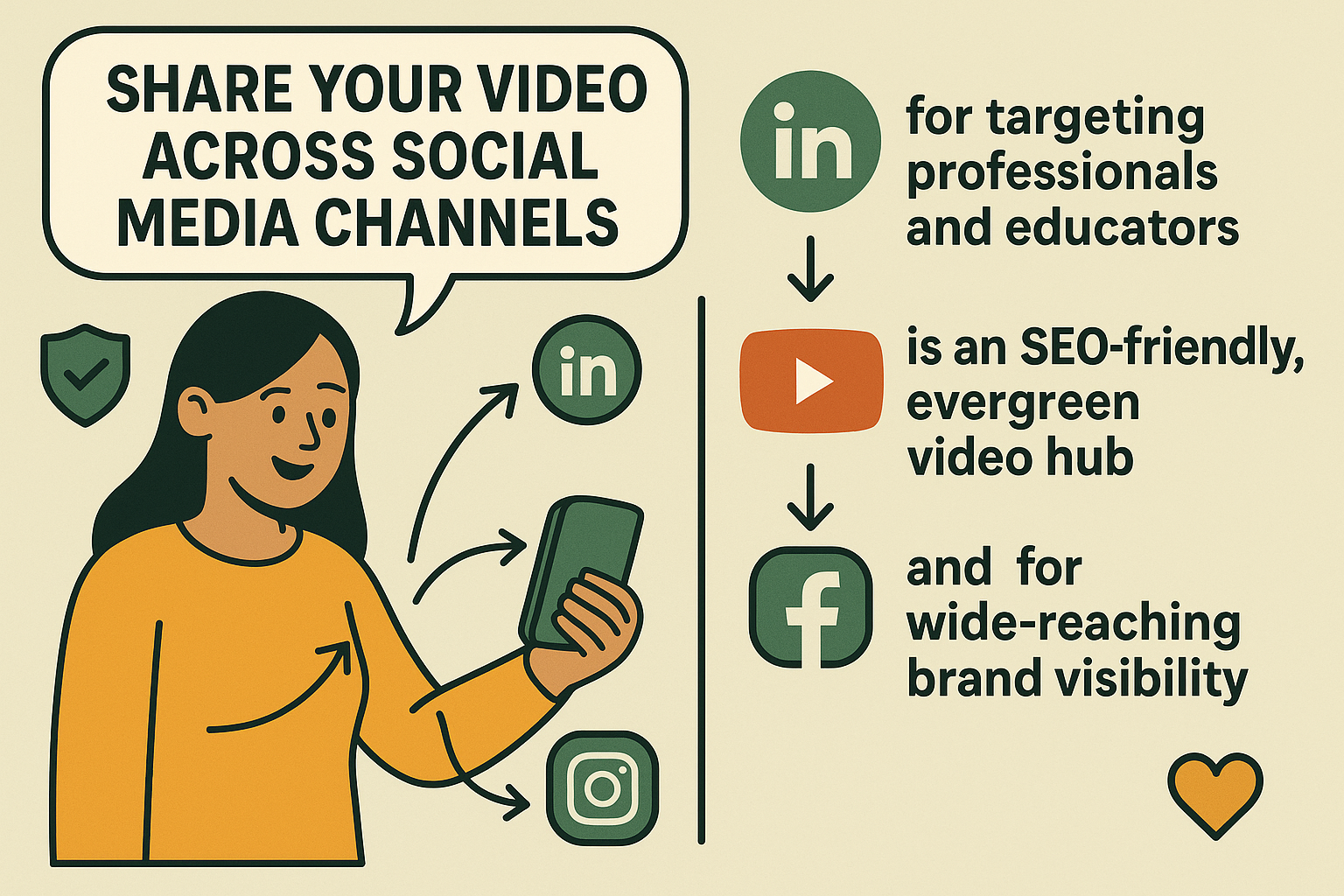
3. Share Your Video Across Social Media Channels
Social media is a powerful tool to amplify your video’s reach. Share it across platforms such as:
- LinkedIn for targeting professionals and educators.
- YouTube is an SEO-friendly, evergreen video hub.
- Instagram and Facebook for wide-reaching brand visibility.
Customize the video format and messaging for each platform—for example, using subtitles for silent autoplay or shorter edits for Instagram Reels. Use attention-grabbing captions and hashtags to maximize engagement.
5. Collaborate with Influencers and Educational Content Creators
Influencer partnerships can greatly expand your platform’s visibility and credibility. Identify edu-creators, YouTube instructors, LinkedIn voices, or niche influencers who align with your audience and values.
Offer them early access to your platform or a branded version of your animated explainer. Their endorsement, paired with their loyal following, can drive trust, interest, and conversions from new audiences.
7. Optimize with SEO Tags, Metadata, and Transcripts
Don’t overlook search engine visibility. Enhance your explainer video’s reach by:
- Adding relevant titles, descriptions, and keyword-rich tags on platforms like YouTube and Vimeo.
- Embed the video on your blog or landing page with schema markup for video.
- Including video transcripts and closed captions to improve accessibility and indexability.
This boosts your chances of appearing in video search results and helps learners who prefer or need text-based support.
Conclusion
Animated explainer videos are transforming the e-learning industry by simplifying complex topics and making education more engaging. These videos use visuals, motion graphics, and storytelling to break down intricate concepts into easily digestible content, making learning more accessible and enjoyable for students of all levels.
By incorporating animated explainer videos, e-learning platforms can enhance user engagement, improve retention, and provide scalable content solutions. This visual approach not only keeps learners interested but also offers a more effective way to present information. As the education sector continues to evolve, animated videos help platforms stay competitive and deliver a more interactive and impactful learning experience.
Unlock the power of captivating visuals with our seasoned expertise! With 7 years of crafting compelling visual content, we’re ready to elevate your brand’s story. From stunning graphics to mesmerizing animations, we bring your vision to life. Let’s create engaging visuals that resonate with your audience and leave a lasting impression. Partner with us today for an unforgettable visual journey!