
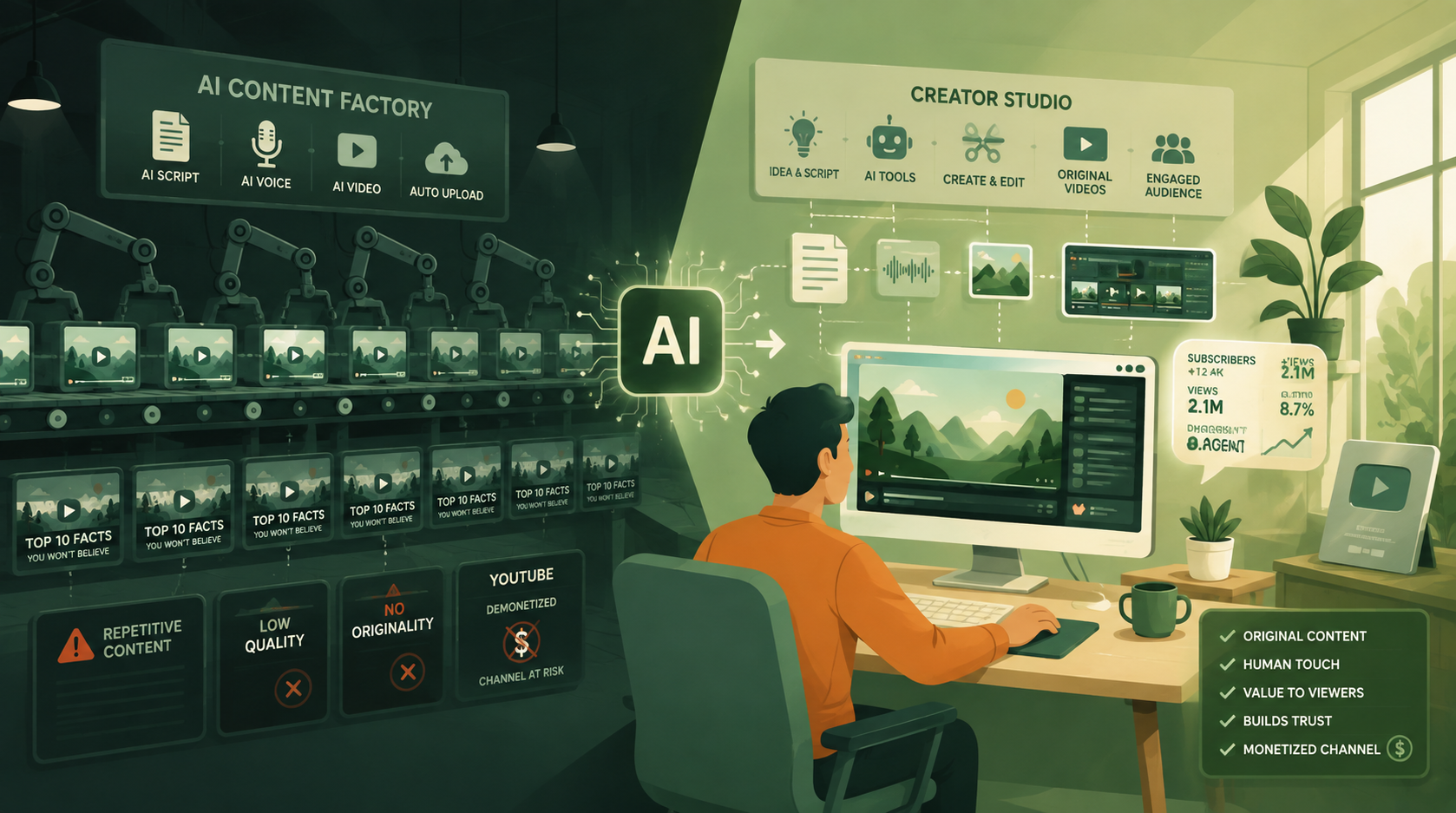
Does YouTube Ban AI Content? How to Use AI Without Losing Your Channel

does YouTube ban AI content

Table of Contents

You’ve probably typed some version of this into Google late at night: “will YouTube ban my channel if I use AI to make videos?” Maybe you just discovered an AI voice generator that sounds shockingly human, or you’re eyeing an AI video tool that promises to turn a script into a finished upload in twenty minutes. And right behind that excitement sits a nagging worry: what if the platform flags it, pulls your videos, or worse, shuts the whole channel down?

Here’s the short version, and then we’ll unpack every layer of it. Does YouTube ban AI content? No, not outright, and not just because a video was made with AI. What actually gets creators in trouble is far more specific than “using AI,” and once you understand exactly where the line sits, you can use these tools with real confidence instead of constant anxiety.

This article walks through what YouTube actually allows, what it requires you to disclose, what genuinely crosses the line into prohibited territory, and how to build an AI-assisted channel that stays safe, monetized, and growing.

If you’ve spent any time in creator forums or comment sections lately, you’ve probably seen wildly conflicting takes. One thread swears AI channels are getting wiped out en masse. Another insists YouTube couldn’t care less what tool you used. Both are technically pointing at real events, but neither tells the full story on its own. The truth sits in the details, in exactly which behaviors trigger enforcement and which ones don’t, and that’s precisely what tends to get lost in the panic-driven headlines. By the end of this, you’ll know exactly where the real boundaries are, instead of relying on secondhand fear from a comment section.

Does YouTube Ban AI Content? The Short Answer

Let’s clear up the core confusion first. YouTube does not ban AI generated content outright. The platform permits AI content as long as it complies with community guidelines and, where applicable, disclosure requirements. AI tools are treated the same way editing software, stock footage, or voiceover artists have always been treated: as a legitimate part of the production process, not a violation waiting to happen.
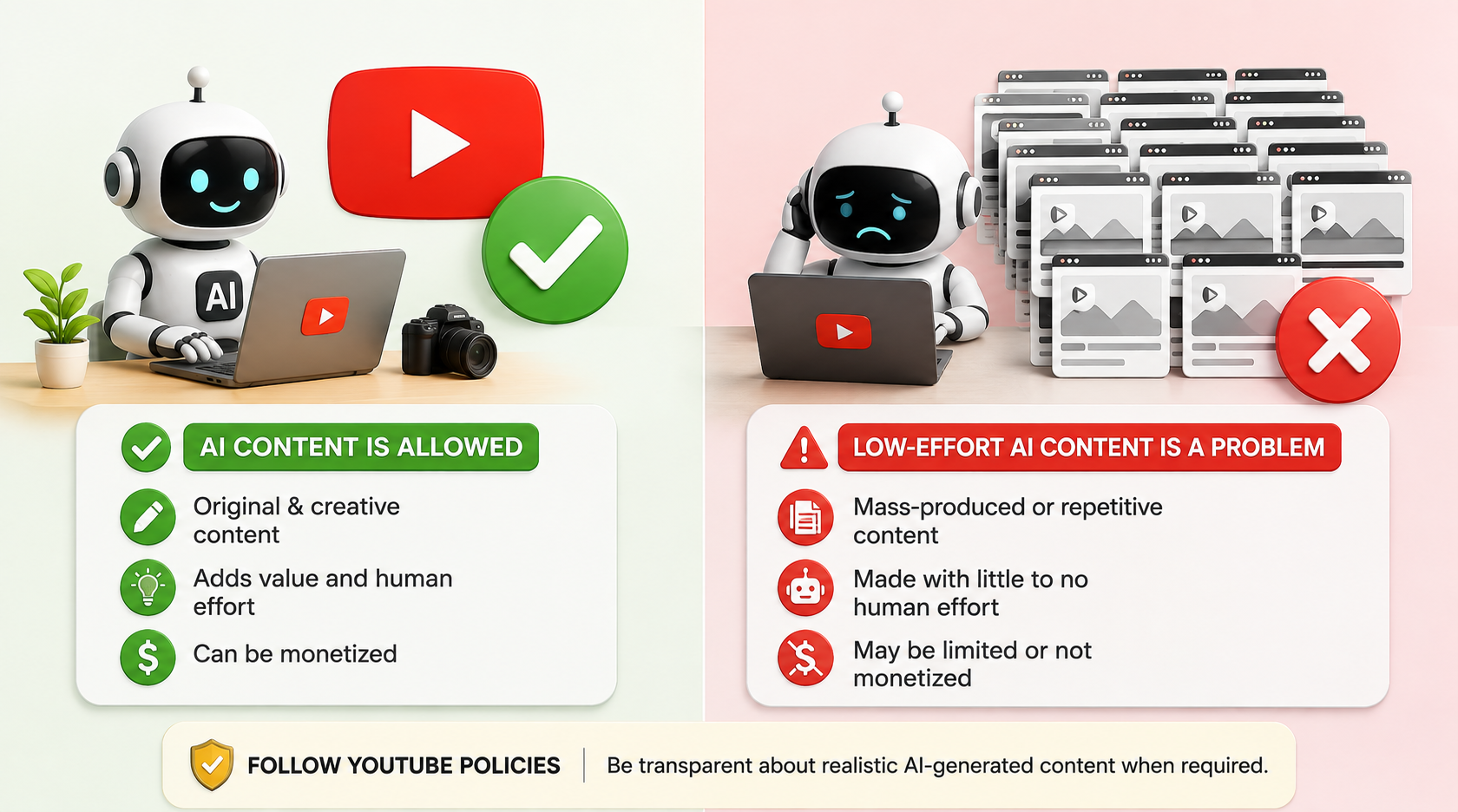
That means creators can genuinely use AI for scriptwriting, generating thumbnails, synthesizing voiceovers, or producing full videos from start to finish. None of that is inherently against the rules. If you’ve been avoiding AI tools out of fear that touching them at all puts your channel at risk, that fear isn’t grounded in how the policy actually works.

What trips creators up isn’t the tool. It’s what they do with it, specifically, whether they’re transparent with viewers about what they’re watching, and whether the content is genuinely original or just mass-produced filler wearing an AI mask.

Think of it this way: nobody ever accused a word processor of being against journalism rules just because a bad writer could type something lazy on it. The word processor isn’t the problem, the lazy, unoriginal output is. AI video tools sit in the exact same category on YouTube. The software itself carries no penalty. What carries a penalty is publishing something dishonest, deceptive, or so formulaic it offers viewers nothing they couldn’t get from a hundred other near-identical uploads.

AI Tools YouTube Actually Lets You Use

It’s worth spelling out just how broad YouTube’s tolerance for AI actually is, because a lot of the anxiety online comes from creators assuming every AI use case is risky. In reality, the accepted use cases are wide. Creators regularly and safely use AI for:
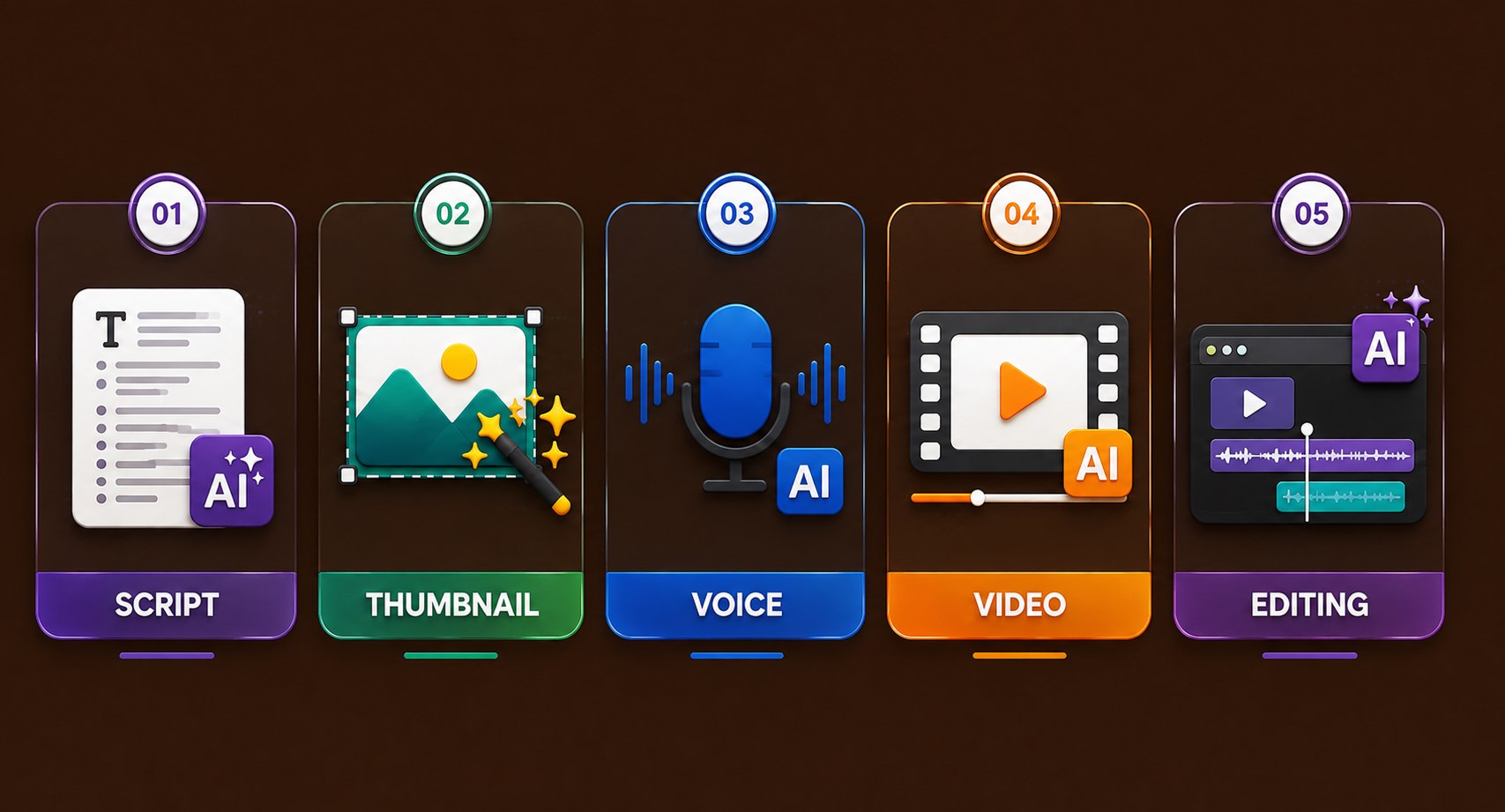
  • Scriptwriting – brainstorming or drafting video scripts with an AI assistant
  • Thumbnail creation – generating thumbnail concepts or final images
  • Voice synthesis – using an AI voiceover instead of recording your own voice
  • Full video segments – animations, B-roll, or entire explainer-style videos built with generative tools
  • Editing assistance – auto-captioning, pacing suggestions, or background removal

None of these categories are blacklisted. YouTube’s own framing treats AI as a production tool, not a forbidden shortcut. The distinction the platform actually cares about is whether the finished video is original, valuable, and honest with the audience, not which software touched it along the way.

It’s worth comparing this to how the platform has always treated other production shortcuts. Stock footage libraries, pre made background music, template based thumbnail generators, and text to speech tools have existed for years without triggering channel wide panic. AI tools are simply a faster, more capable version of the same category of resource. The policy conversation shifted not because a new category of tool appeared, but because AI made it possible to produce at a volume and realism that older tools couldn’t match, and that shift in scale is what prompted YouTube to sharpen its guidance, not to draw a new line around “AI” as a concept.

When and How to Disclose AI-Generated Content

This is the part of the policy that actually matters most, so let’s slow down here. Disclosure isn’t required every single time you touch an AI tool. It’s required specifically when AI significantly contributes to content that a viewer might reasonably assume was entirely human-made or genuinely real.

YouTube boils this down to a simple test: would a reasonable viewer assume this content depicts something real and authentic? If yes, and AI played a significant role in creating that illusion, disclosure kicks in.

Picture two creators uploading videos on the same day:

  • Creator A runs a finance explainer channel using an AI animated character with a synthesized voice, walking viewers through how index funds work. It’s clearly stylized, clearly not pretending to be a real news anchor.
  • Creator B posts a fabricated “interview,” using AI to recreate a well known public figure’s face and voice saying things that person never actually said, with no indication it’s synthetic.


Creator A is operating well within the accepted use of AI on the platform, no disclosure drama required. Creator B is exactly the scenario disclosure rules, and in serious cases outright prohibition, were built to catch. Same underlying technology, completely different outcome, because the test isn’t “was AI used,” it’s “would a viewer reasonably think this is real.”

Disclosure specifically applies to realistic AI depictions of real people, real places, or real events. It is not a blanket requirement that applies to AI use in general. A stylized animation, a synthetic narrator on an educational channel, or an AI assisted edit of your own footage typically doesn’t trigger the same disclosure obligation as content designed to look like unaltered reality.

Once you know disclosure applies to your video, the mechanics are simple:

Use YouTube’s Built In Labelling Tool

At upload, YouTube provides a built in option to flag content as altered or synthetic. Checking this box adds a visible label under the video, letting viewers know some or all of what they’re watching was significantly edited or generated with AI. It’s a quick step in the upload flow, not a separate application process.

Add an On Screen or Verbal Note

For creators who want extra clarity, or who are producing content where transparency really matters, like educational or documentary style videos, you can also disclose directly within the video itself. A brief line of on screen text or a spoken mention (“this narration was generated using AI”) does the job.

Here’s the part that should ease a lot of anxiety: disclosed content is not penalized in recommendations. Flagging your video as AI assisted doesn’t push it down in the algorithm or hide it from viewers. Disclosure protects you from policy trouble; it doesn’t cost you reach. Too many creators avoid disclosure because they assume it’ll tank their views, and that assumption isn’t backed by how the system actually treats labeled content.

What YouTube Actually Prohibits (It’s Not “AI”)

If disclosure covers the gray zone, this section covers the genuinely red zone: the stuff that’s actually prohibited, regardless of disclosure.
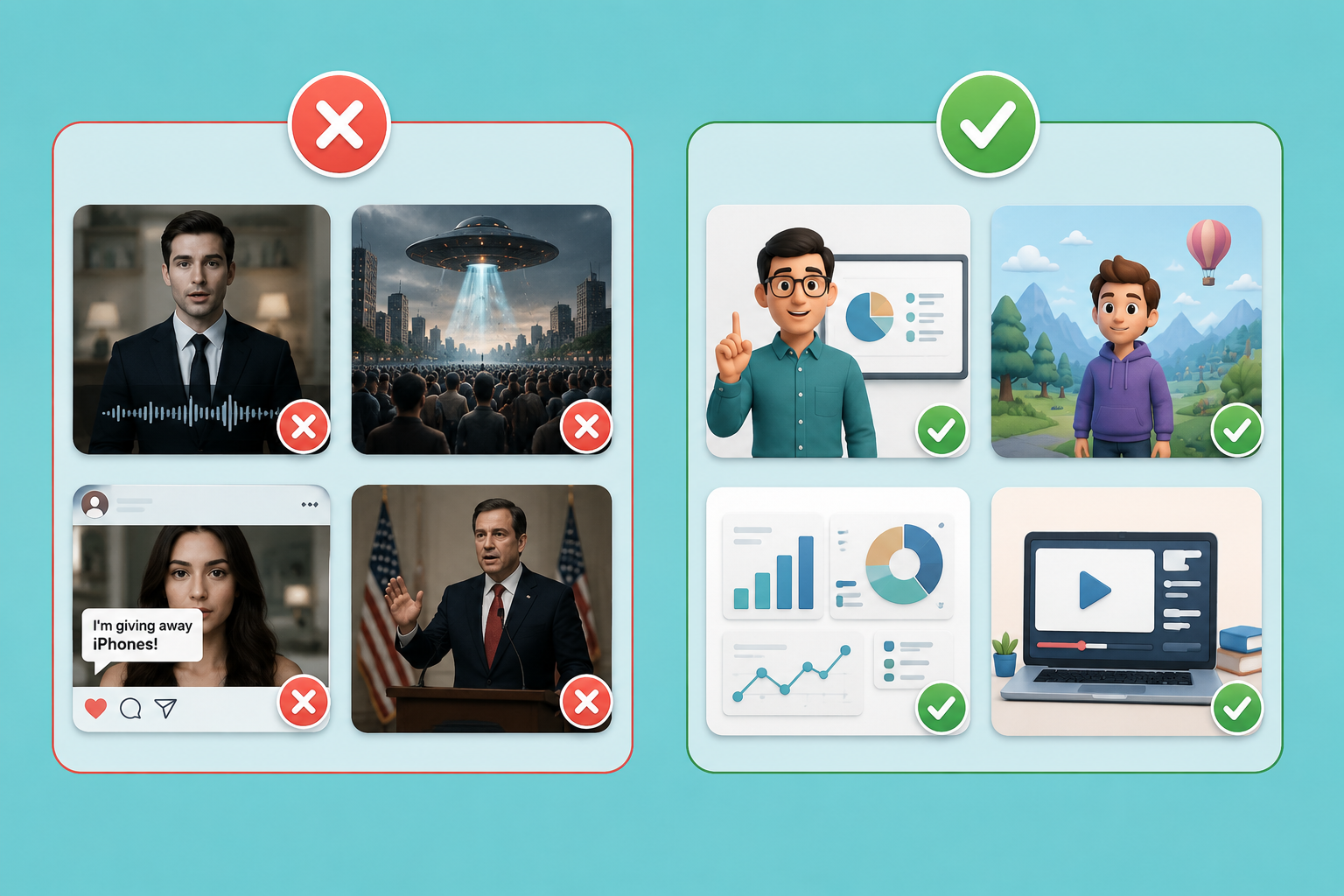
YouTube prohibits:

  • Malicious deepfakes and synthetic media specifically designed to mislead viewers about real events, elections, or other matters of public concern
  • Realistic depictions of real people saying or doing things they never actually said or did, when that depiction is presented as authentic


Notice what’s absent from that list: cartoon style AI content, synthetic narration on a tutorial channel, AI generated stock style B-roll, or animated explainer content. YouTube draws a clear distinction between creative AI use and harmful deception. Entertainment, artistic expression, and educational material made with AI typically remain entirely acceptable, provided proper disclosure is in place where it’s needed.

So if your channel is making product reviews with an AI narrated voiceover, or animated explainers using AI generated visuals, you’re nowhere near the actual prohibited zone, as long as you’re transparent and not fabricating scenes designed to pass as real footage of real people or events.

Ban vs. Demonetization: What You’re Actually Risking

This is probably the single most important distinction in this entire article, and it’s one most creators searching “will YouTube ban my channel” don’t fully understand yet.
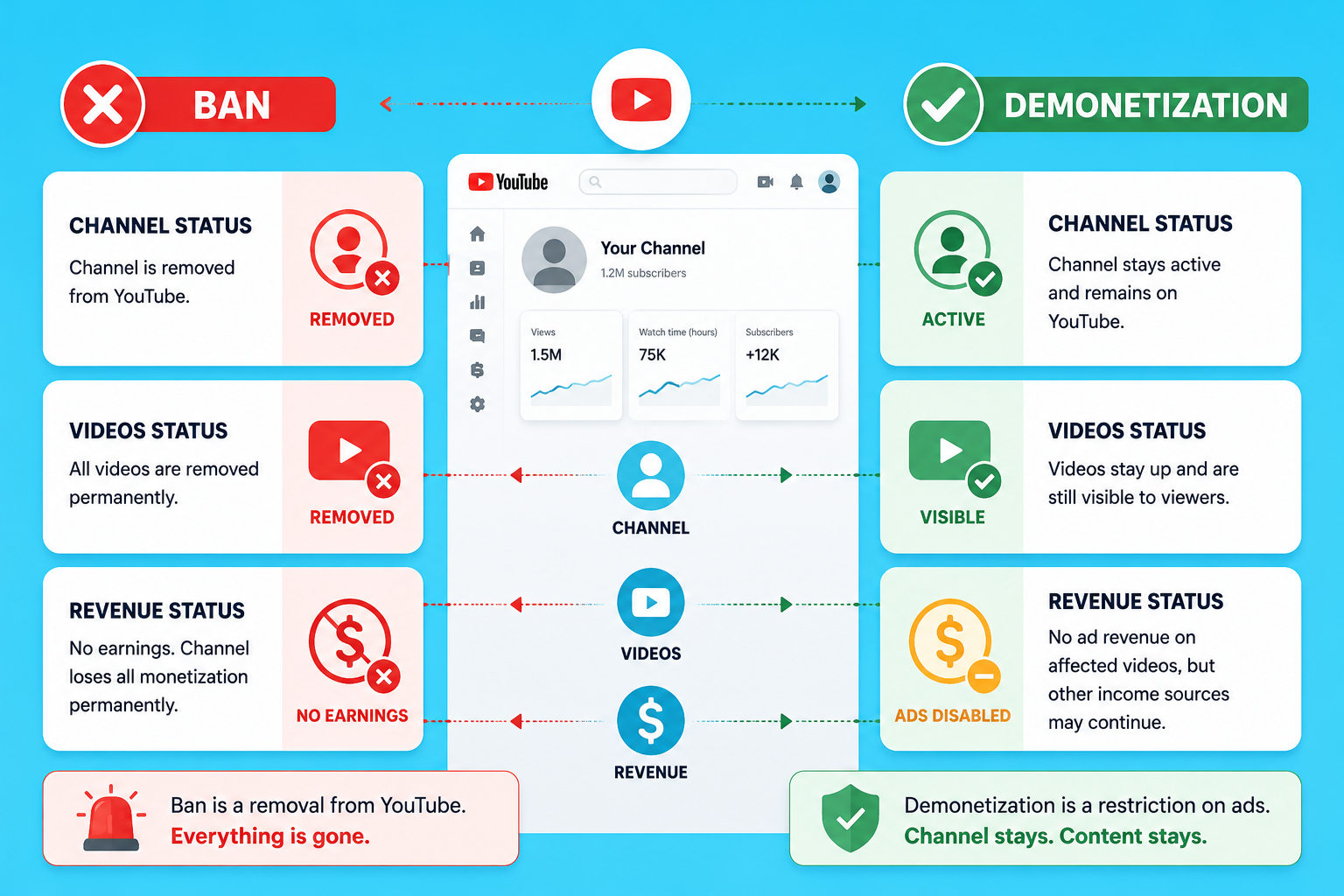
  • Ban or termination means your channel and videos are removed from YouTube entirely. That’s reserved for serious, often repeated violations: malicious deepfakes, content built to deceive viewers about real events, or a pattern of severe policy breaches.
  • Demonetization is a completely different outcome. Your channel stays live. Your videos stay up. You simply stop earning ad revenue on the flagged content, or in more serious cases, across the channel.


Demonetization is a far more common consequence than outright removal, and it’s the one that actually applies to most of the “AI content” concerns creators have. For most creators, the bigger real world risk isn’t video removal, it’s losing monetization access.

That reframes the whole question. You’re probably not one deepfake away from losing your channel. You’re more likely to be a few templated, low effort uploads away from losing ad revenue on them. Understanding this difference changes how you should actually think about risk: it’s less about “will I get banned” and more about “is my content original enough to stay monetized.”

This distinction matters because the two outcomes call for completely different fixes:

  • If you’re worried about termination: don’t fabricate realistic scenes of real people or real events, and don’t build content designed to deceive viewers about what actually happened. Very few channels are anywhere near this line.
  • If you’re worried about monetization: focus on quality and originality. Vary your formats, add real editorial input to every upload, and make sure your channel doesn’t blend into a wall of near-identical AI content.

Can AI Generated Videos Actually Be Monetized?

Yes. AI generated content is fully eligible for monetization through the YouTube Partner Program, provided you meet the standard requirements. As of now, that typically means 1,000 subscribers and 4,000 watch hours in the past 12 months, though it’s worth checking YouTube’s current requirements page directly, since these thresholds have seen periodic updates.
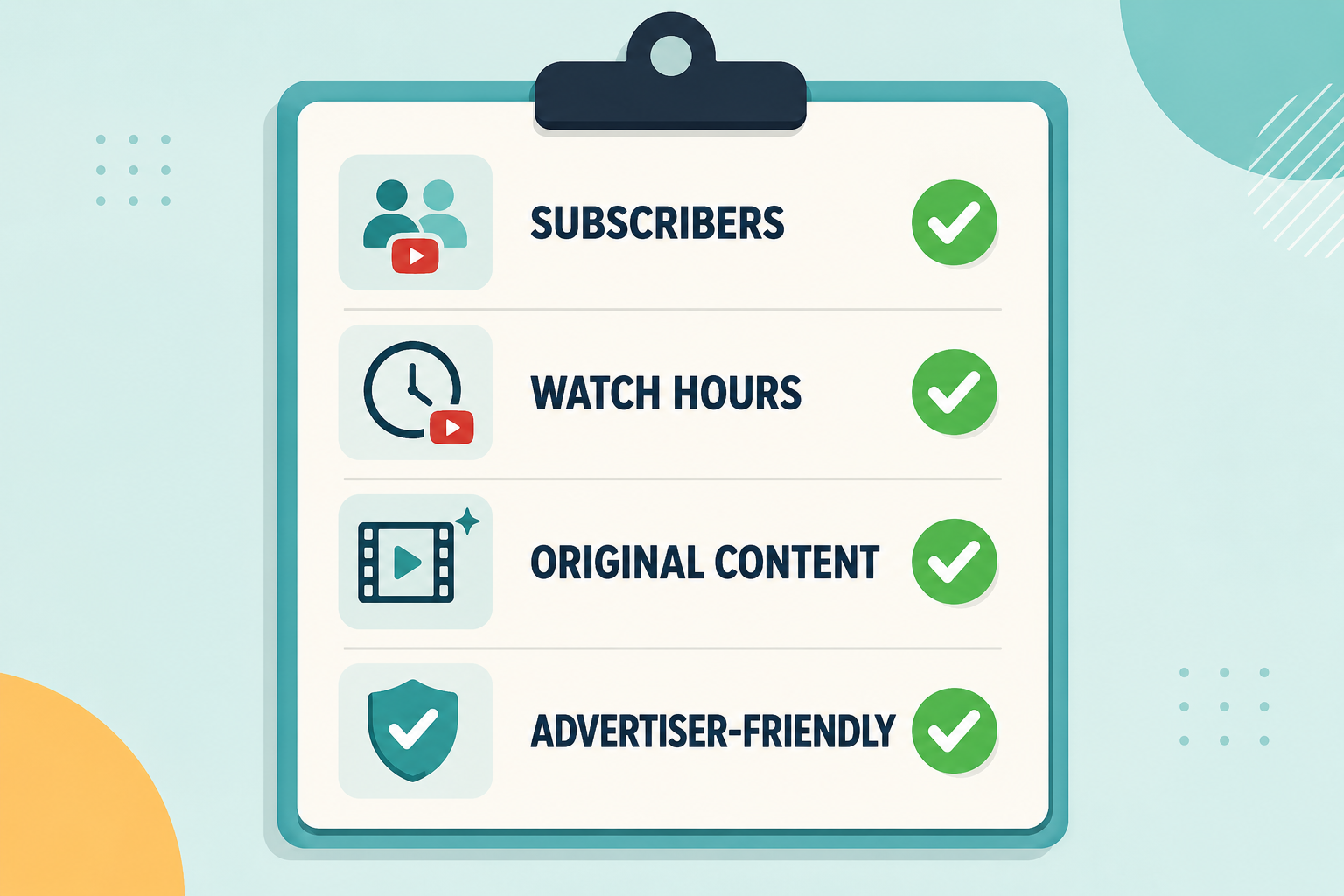
Meeting those numbers gets you into the program. It doesn’t automatically make every video profitable. Monetization eligibility depends on more than just hitting subscriber and watch hour milestones, your content also has to be original, advertiser friendly, and genuinely valuable to the people watching it. Simply generating content through AI doesn’t guarantee approval. Even AI assisted content has to be unique to your channel, not a repackaged version of something already circulating everywhere else.

It’s also worth understanding what actually changed in mid 2026. The policy update that took effect around July 2026 tightened monetization rules; it didn’t ban AI videos from existing. Instead, it clarified what YouTube calls “inauthentic content” guidelines, giving creators a much more detailed picture of which videos no longer qualify for ad revenue. That’s a meaningful difference: the update reshaped who gets paid, not who gets to publish. If you’re still wondering does YouTube ban AI content after a policy shift like this, the answer stays consistent: monetization rules tightened, existence rules didn’t.

Why Channels Actually Get Suspended: The Real Enforcement Patterns

Numbers make this section land harder than vague warnings do, so here’s a real one: over 18,000 channels were suspended in a single enforcement wave in January 2026. Most of them were faceless AI channels that had skipped disclosure requirements entirely, not channels that simply used AI tools responsibly.

A documented real world case: One channel publicly cited in coverage of that enforcement wave, an operation referred to in industry reporting as “KH Studio,” produced a high volume of content using synthetic voiceover and AI generated visuals with minimal human editorial input. It followed a now familiar pattern: faceless format, text to speech narration, templated scripts, and an upload frequency built around volume rather than substance. That combination, not the use of AI by itself, is what enforcement actions target.

Inauthentic content specifically targets mass produced, generic, repetitive, or template based videos. This is the actual pattern YouTube’s enforcement is built around: a channel uploading dozens of near identical videos a day, built from the same script structure, the same stock visuals, and the same synthetic narration, with essentially no human creative input beyond hitting publish. 
That pattern fails YouTube’s originality standard whether a human wrote the repetitive script or an AI did.

In other words, the platform isn’t hunting for “AI” as a fingerprint. It’s hunting for volume without value: content engineered to farm views and ad impressions rather than serve an actual audience. A channel could theoretically get flagged for this pattern without touching AI at all; AI just makes it dramatically easier and faster to fall into that trap, which is why AI heavy channels show up disproportionately in enforcement waves.

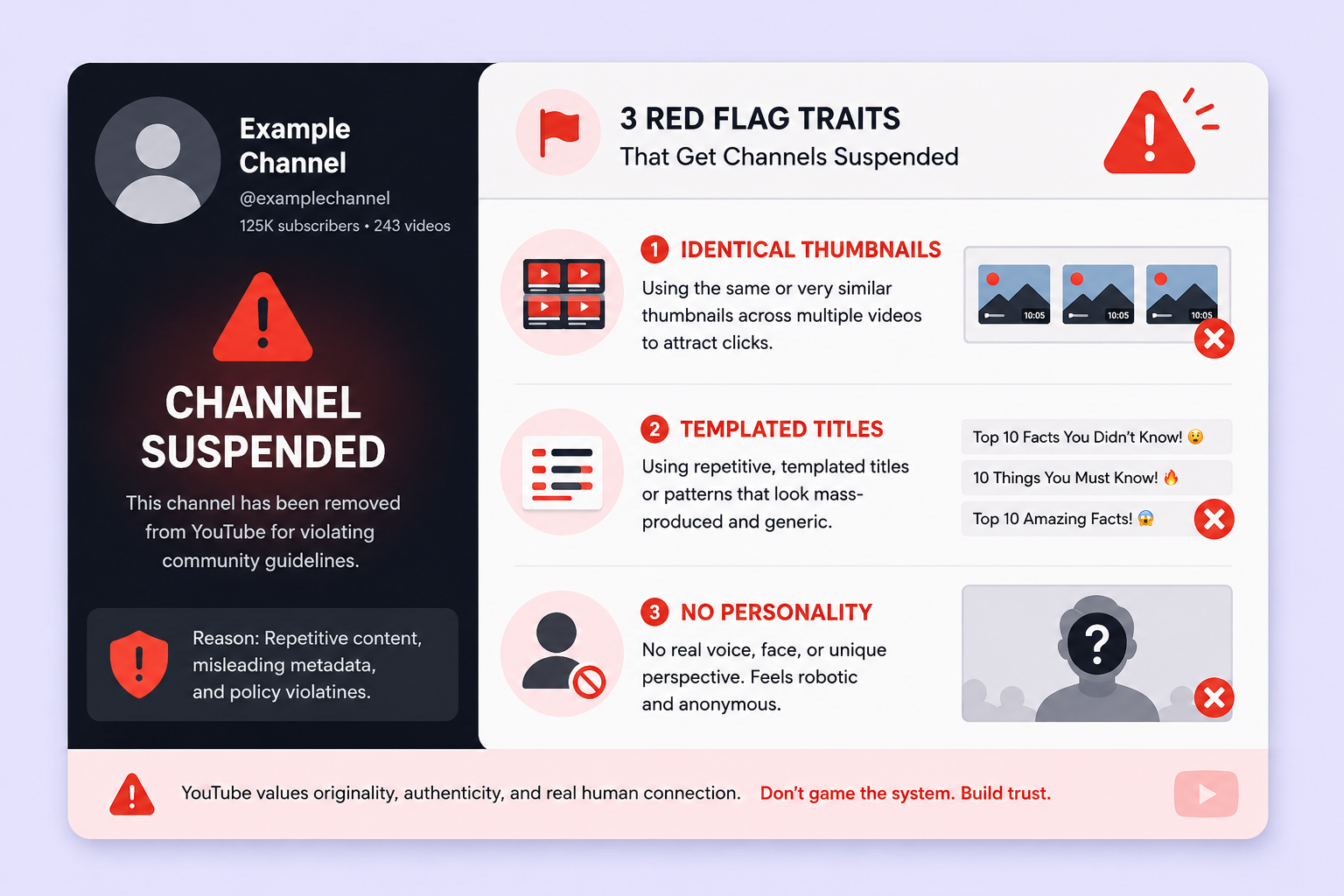
  • A flagged channel typically shares a recognizable set of traits:
  • Dozens of uploads with nearly identical thumbnails
  • Titles built from the same three or four templates, with only the subject swapped out
  • A narrator reading text off a screen with no personality, no opinion, no acknowledgment that a human made any creative decision at all


None of that requires AI specifically, but AI tools make it possible to produce that pattern at a scale and speed no single person could sustain manually.

How YouTube Detects AI and Inauthentic Content

Understanding the detection process helps demystify what can otherwise feel like a black box. YouTube uses both automated detection systems and human reviewers to identify AI generated and inauthentic content. Machine learning systems are trained to recognize patterns typical of synthetic media and mass produced formats: things like repetitive structure, formulaic pacing, and synthetic voice signatures.

Automated systems don’t catch everything on their own, though. Human reviewers step in for nuanced cases that require contextual judgment: situations where a channel might look automated at a glance but actually reflects genuine editorial decisions, or where disclosure was present but easy to miss. This human layer matters because it means context and intent still count, not just surface level pattern matching.

It’s also worth knowing that YouTube’s monetization review may scrutinize AI heavy channels more closely, particularly those producing content at high volume. If you’re running an AI assisted channel and publishing multiple videos a day, expect more attention on your account than a creator posting once a week with heavy editorial input. That’s not a punishment for using AI, it’s simply where the platform’s fraud and quality control attention naturally concentrates.

This closer scrutiny isn’t arbitrary, either. High volume channels are statistically where the mass produced, low originality content tends to cluster, so it makes sense that review systems weight upload frequency as one signal among several. A channel posting one carefully made video a week with genuine commentary is a very different risk profile than one publishing fifteen near identical uploads in the same period, even if both are using similar AI tools somewhere in their workflow.

How to Use AI Without Losing Your Channel

Here’s where all of this turns into something practical you can actually apply to your channel today.

  • Add your own voice to the process. Narrate content yourself, or maintain an on camera presence, so AI generated footage gets transformed through your own storytelling rather than published as raw, untouched output. The gap between “a channel using AI” and “an AI-generated channel” is almost entirely about how much of you is actually present in the final video.
  • Keep human judgment in the creative decisions. Even when AI helps execute the script, visuals, or editing, the angle, structure, and voice of the video should still come from real editorial choices you’re making.
  • Mention AI tools in your descriptions when it’s relevant. For educational or editorial content especially, a quick note about which parts were AI assisted builds trust with your audience and keeps you clearly on the right side of disclosure expectations.
  • Watch your copyright exposure. Some AI tools can incorporate protected material into their output without making that obvious to you. Before monetizing AI generated visuals, voices, or music, it’s worth verifying you actually have the rights to use them commercially.
  • Don’t chase volume over value. The upload 20 videos a day approach is exactly the pattern that triggers enforcement waves. A smaller number of genuinely useful, original videos will outperform a flood of templated ones.
  • Vary your format and structure deliberately. If every video follows the identical opening line, pacing, and visual template, that consistency can read to reviewers as the exact repetitive pattern the inauthentic-content policy targets.
  • Respond to comments and build a real presence. Channels flagged in enforcement waves tend to share little to no genuine audience interaction. A creator who visibly engages with viewers looks fundamentally different from an anonymous upload pipeline.

Where Explainer Video Formats Fit Into a Safe AI Workflow

If you’re using AI specifically to explain a product, service, or concept, rather than to fabricate realistic scenes, you’re already working in one of the safest and most viewer friendly categories on the platform. A well produced custom explainer video, even one built with AI generated visuals or voiceover, sits squarely in the “creative and educational” category YouTube says it wants to protect, not the deceptive category it’s cracking down on.

This is worth knowing if you’re building a channel around SaaS explainer video content, B2B explainer video breakdowns, or even 2D animated explainer video walkthroughs of complex topics. None of these formats resemble the deepfake or misleading real event content that triggers actual bans. As long as you’re narrating with your own perspective, disclosing AI involvement where it’s relevant, and avoiding the copy paste template trap, this is genuinely one of the more resilient content styles for creators worried about policy risk.

If you’re evaluating tools or partners for this kind of content, look at what established explainer video companies are actually producing. Strong ones combine AI efficiency with a clear, original point of view, which is exactly the combination YouTube’s guidelines reward.

Common Mistakes That Put AI Channels at Risk

A few recurring habits show up again and again among creators who run into trouble, and none of them are really about AI itself.

  • Treating disclosure as optional when it clearly applies. Some creators assume nobody will notice if they skip the label on a realistic AI recreation of a real event. Enforcement data suggests otherwise: undisclosed synthetic content aimed at real people or real events is one of the most consistently flagged patterns.
  • Publishing at a pace no human could realistically oversee. If your upload schedule requires you to personally review, edit, and approve dozens of videos a day, something in that pipeline is running without real human judgment.
  • Assuming disclosure will tank performance, so skipping it. As covered earlier, disclosed content isn’t penalized in recommendations. Skipping disclosure to protect your reach is based on a myth.
  • Ignoring copyright checks on AI generated assets. Some generative tools are trained on datasets that can surface recognizable copyrighted material in their outputs. Treating every AI output as automatically safe to monetize can create legal exposure well beyond YouTube’s own policies.
  • Letting the AI make the editorial decisions. The technology can draft a script, generate a voice, or assemble a rough cut. It shouldn’t be deciding your channel’s angle, opinion, or structure. The moment AI makes those calls instead of assisting with them, the content stops looking like your channel and starts looking like a template.

Does YouTube Ban AI Content? The Real Takeaway

So, does YouTube ban AI content? Not in the way most anxious creators fear. The platform isn’t hunting down every video touched by a generative tool. It’s filtering out content that’s mass-produced, undisclosed when it should be disclosed, or deliberately designed to deceive viewers about what’s real.

If you’re disclosing when it matters, keeping real creative judgment in your process, and building something genuinely useful for your audience instead of farming volume, you’re operating well inside the boundaries YouTube has actually drawn. The channels getting swept up in enforcement waves, like the “KH Studio” example above, are the ones skipping transparency and publishing at scale with zero human input, not the ones thoughtfully using AI as part of a real creative process.

Your channel isn’t one AI tool away from disappearing. It’s protected by the same thing that’s always protected channels on this platform: originality, honesty with your audience, and actual editorial judgment behind every upload.

Unlock the power of captivating visuals with our seasoned expertise! With 7 years of crafting compelling visual content, we’re ready to elevate your brand’s story. From stunning graphics to mesmerizing animations, we bring your vision to life. Let’s create engaging visuals that resonate with your audience and leave a lasting impression. Partner with us today for an unforgettable visual journey! 

Check out our work.Â