

How B2B Founders Can Stay Ahead in the AI Era

medical video marketing agency

Table of Contents

Your hospital just approved a budget for video content. Everyone’s excited. Then someone asks the obvious question: “Okay, but who’s actually going to make these?” That’s the moment most healthcare marketers freeze. Hiring the wrong medical video marketing agency isn’t just a wasted budget line. It’s a compliance risk, a brand risk, and a headache you don’t need on top of everything else running through a hospital or clinic’s marketing calendar.

Video isn’t optional anymore. Patients research providers on YouTube before they ever pick up the phone. Doctors watch explainer content to understand new devices before a sales rep even walks in the door. And yet, many healthcare organizations still hire agencies the same way they’d hire someone to design a brochure. That approach doesn’t hold up when you’re dealing with patient privacy laws, clinical accuracy, and content that has to build genuine trust instead of just looking pretty.

This guide walks you through exactly what to look for, what to ask, and what red flags should send you running in the opposite direction, so you can pick a medical video marketing agency that actually understands the stakes involved in healthcare storytelling.

Why Choosing the Right Medical Video Marketing Agency Actually Matters

A lot of agencies are great at making things look polished: nice color grading, smooth transitions, a trendy soundtrack. But healthcare video isn’t just about aesthetics. You’re often dealing with real patients sharing deeply personal stories, complex medical information that has to stay accurate, and legal frameworks like HIPAA that don’t forgive careless mistakes.
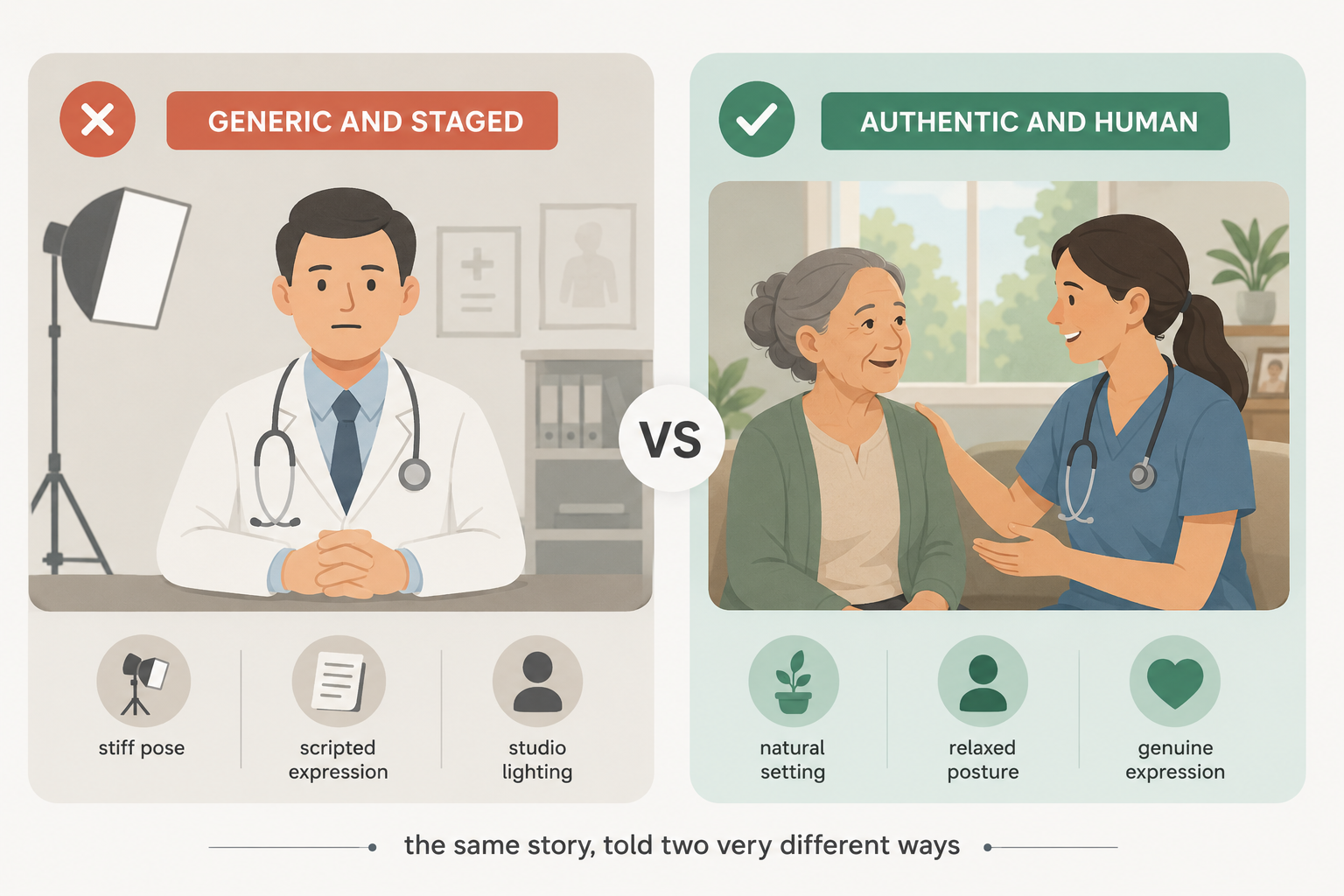
A general creative agency might nail the visuals and completely miss the compliance piece. For example, a lifestyle brand agency might produce a beautifully shot patient testimonial, only to realize afterward they never collected proper written consent for the patient’s diagnosis to be named on camera. That’s the kind of mistake a healthcare savvy agency wouldn’t make.

The right medical video marketing agency brings together three things at once:

  • Technical production skill
  • Genuine healthcare fluency
  • An understanding of how patients and providers actually make decisions


Miss any one of those, and the campaign underperforms, or worse, creates a compliance problem you’ll be cleaning up for months.

Start With Clear Goals and ROI Expectations

Before you even open a search engine to look for agencies, get specific about what you’re trying to achieve. Are you building general brand awareness? Educating patients about a new treatment option? Trying to reach healthcare professionals directly? Or are you chasing measurable lead generation, like actual appointment bookings or inquiry form fills?

For example, a regional urgent care chain might have a very different goal (drive walk ins for flu season) than a specialty oncology center (build long term trust with newly diagnosed patients). The agency’s approach should look different for each of those.
When you talk to prospective agencies, share your specific objectives and watch how they respond:

  • Do they connect their approach directly to your goals, or give a generic “we do it all” answer?
  • Do they ask followup questions about your audience and timeline?
  • Do they mention how similar goals played out for past clients?

Also ask about their ROI tracking systems before signing anything:

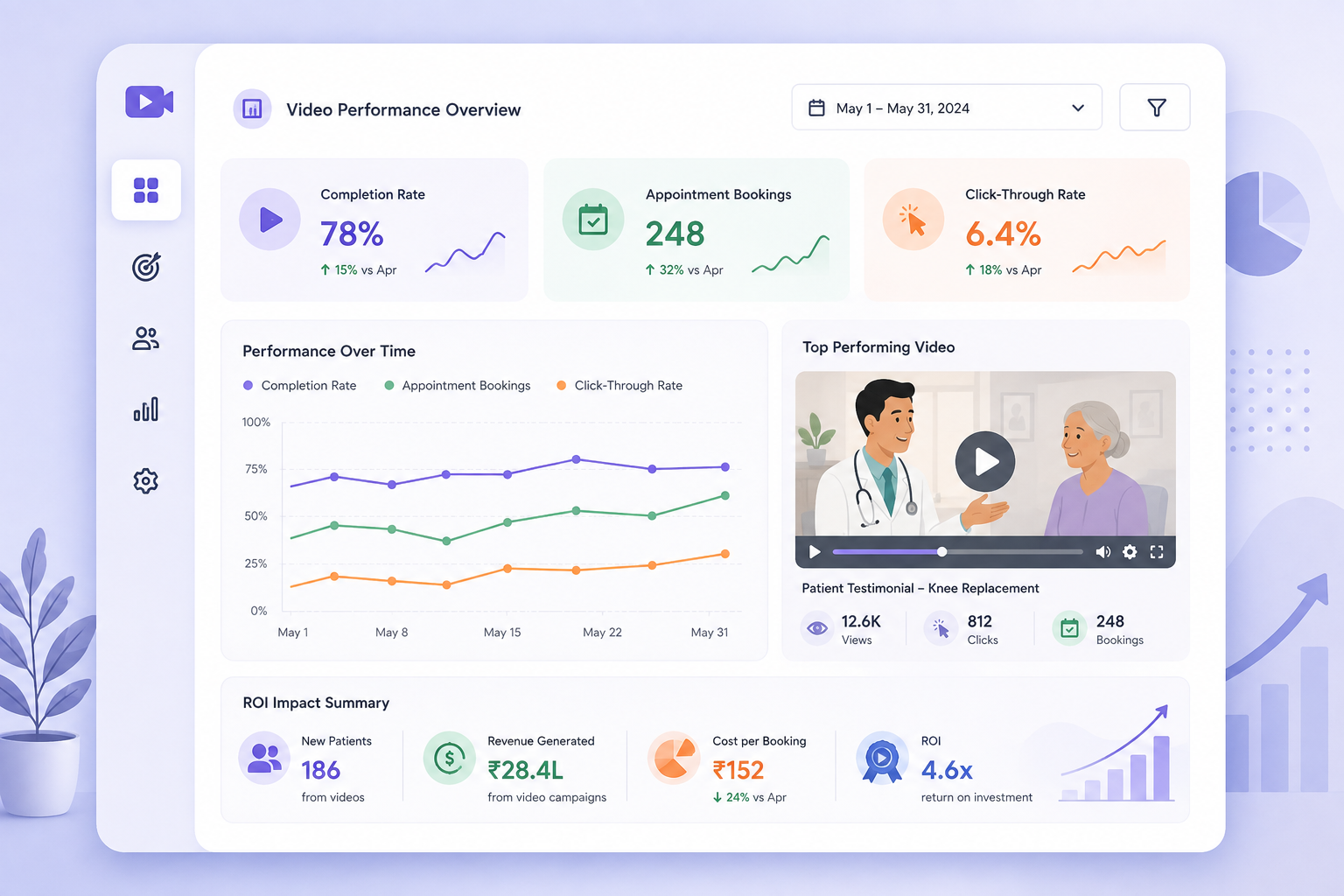
  • How do they measure success: completion rates, click throughs, appointment requests?
  • Do they report on vanity metrics like views, or on outcomes that tie back to your goals?
  • Can they explain their reporting process in plain language, without hiding behind jargon?


A capable medical video marketing agency should walk you through this clearly. If they can’t explain how they’ll prove the work is paying off, keep looking.

Prioritize Healthcare and VideoSpecific Experience

A common mistake is assuming that because an agency has an impressive video reel, they’ll automatically be good at healthcare content. Video production and healthcare marketing are two different skill sets, and you need an agency that’s genuinely strong at both.
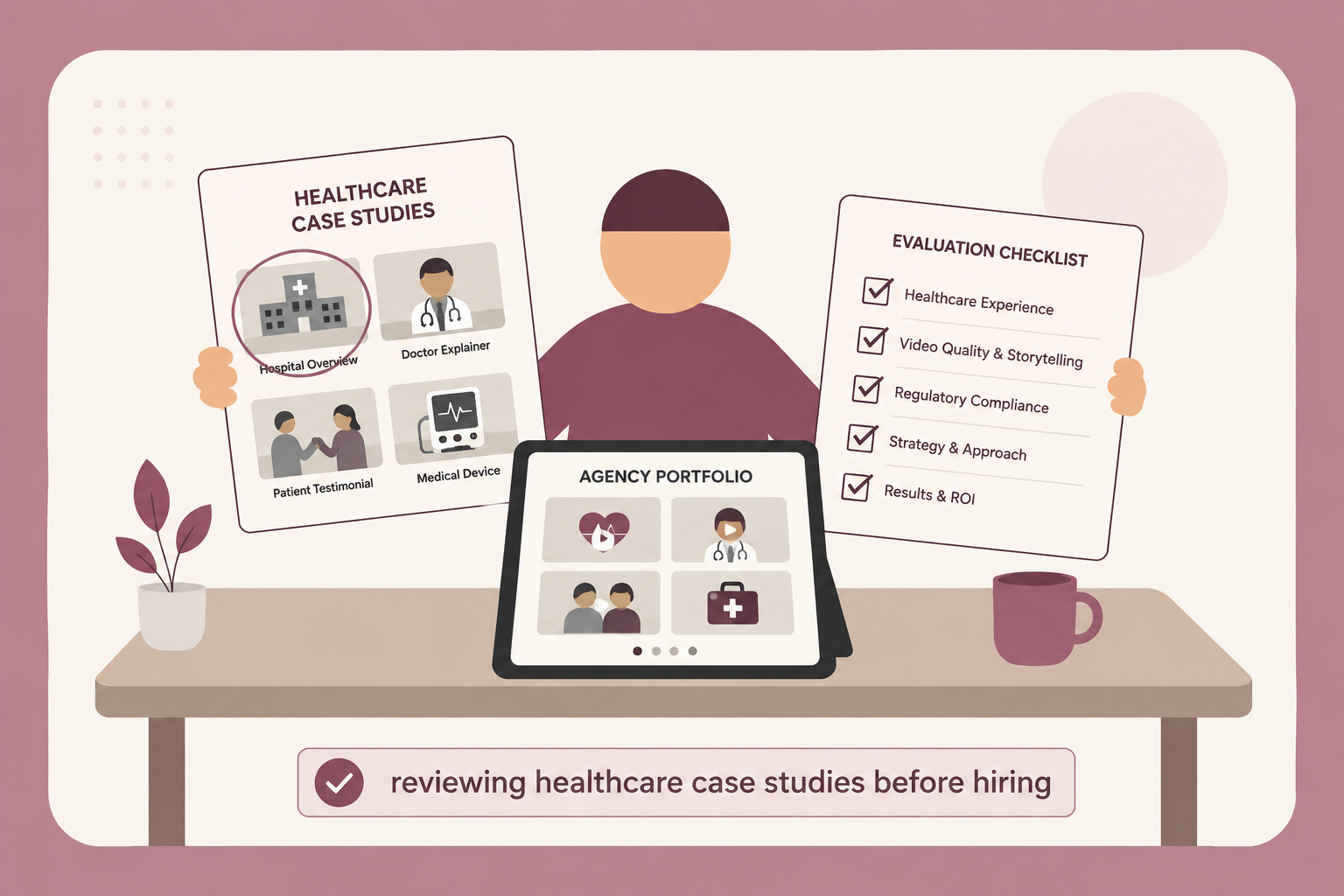
Ask to see their actual client list, not just logos on a website, but real case studies from hospitals, clinics, medical device companies, or health systems. For, an agency that’s produced content for a large multi location hospital system may not automatically know how to serve a small, single location dermatology practice with a tighter budget and a very local audience, and vice versa.

Questions worth asking:

  • Have they worked with organizations similar in size and specialty to yours?
  • Can they show real examples of medical or healthcare videos they’ve actually produced, not repurposed corporate content with a stethoscope added for effect?
  • Do they understand the specific regulatory environment of your subsector (hospital vs. device vs. private practice)?


This is where a genuinely experienced medical video marketing agency separates itself from an agency that’s simply chasing a new vertical.

Confirm Compliance Expertise (NonNegotiable)

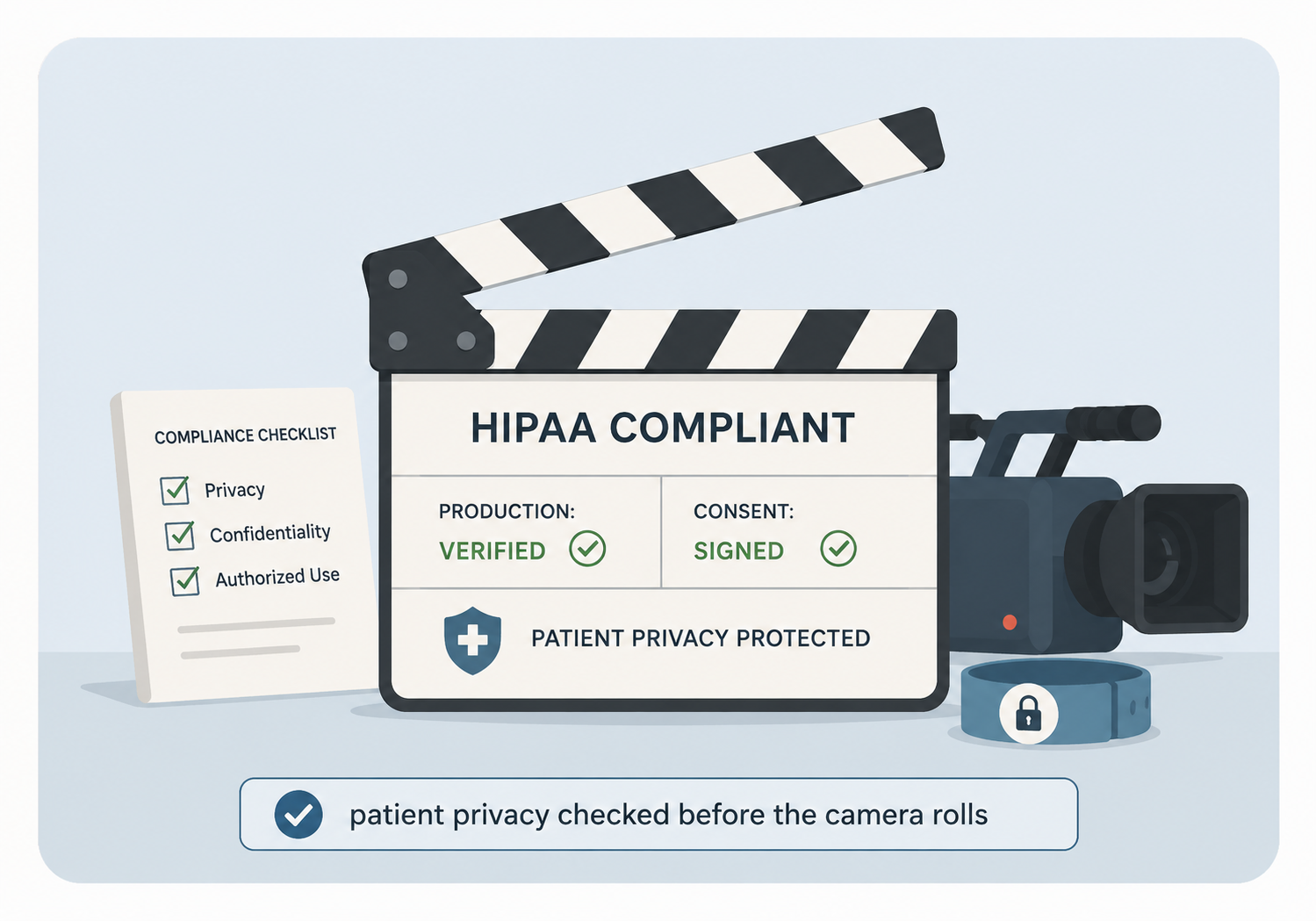
This is probably the single most important filter you’ll apply. Any agency working with your organization needs a working understanding of HIPAA, patient privacy regulations, and proper consent procedures, especially if you’re planning testimonial videos involving real patients.
Ask pointed questions such as:

  • How do they handle patient consent forms?
  • What’s their process for protecting patient identity during filming and in postproduction, if needed?
  • Who reviews the footage before it goes public to make sure nothing sensitive slipped through?


For example, imagine a patient testimonial video accidentally showing a whiteboard in the background listing other patients’ names and appointment times. A complianceaware production team catches that during filming; an inexperienced one might not notice until the video is already published.

If an agency gets vague or defensive when you ask these questions, that’s a clear signal to walk away. It’s also worth asking whether they’ve ever had a compliance issue in past projects, and if so, how they handled it. An agency that’s transparent about past challenges is often more trustworthy than one that claims a spotless record with no specifics to back it up.

Build Your Content Strategy Around the Patient Journey, Testimonials, and Education

Map Content to the Patient Journey

Good healthcare video maps onto where the viewer actually is in their decisionmaking process.

The journey generally moves through five stages:

  • Unaware
  • Problem aware
  • Solution seeking
  • Product aware
  • Decisionmaking

For example, someone who just noticed an unusual symptom and is searching “why does my chest hurt sometimes” needs a very different video than someone comparing two cardiology clinics before booking a consultation. Ask a potential agency how they’d structure awareness content differently from conversion focused content. If they only talk about one type of video, like a flashy brand spot, but can’t speak to nurturing or bottom of funnel content, that’s a gap worth noting.

Use Testimonials to Build Trust

Testimonial videos consistently perform well in healthcare marketing because nothing builds trust quite like hearing directly from someone who’s walked the same path a prospective patient is considering. But testimonials are also tricky to get right. Handled poorly, they feel exploitative or overly clinical instead of genuinely human.

Look at how an agency has approached patient stories before:

  • Do the videos feel warm and authentic, or like a checklist of talking points read off a script?
  • Have they worked with patients dealing with serious diagnoses, and how did they handle that sensitively?
  • How do they balance authenticity with respect for the patient’s privacy and emotional state?

Prioritize Educational Video Done Well

Educational video remains one of the most effective ways to inform patients, far more engaging than a static brochure or a wall of text on a webpage. But that’s only true when it’s actually well made. A confusing or overly technical video can do more harm than good.

When reviewing a prospective agency’s portfolio, look for educational content and ask whether it simplifies complicated medical concepts clearly. This could be:

  • A simple 2D animated explainer video covering a common procedure
  • A more detailed video explaining a complex treatment pathway
  • A custom explainer video built specifically around your organization’s process

If an agency is also strong at broader formats like infographics explainer video content or B2B explainer video work for medical device companies selling to hospitals, that’s usually a good sign they know how to simplify complexity for different audiences.

Ask About Their Digital Distribution Strategy

Producing a beautiful video is only half the job. If nobody sees it, or if it’s uploaded to YouTube with no promotion plan, the production budget is essentially wasted. A capable agency should have clear answers about distribution:
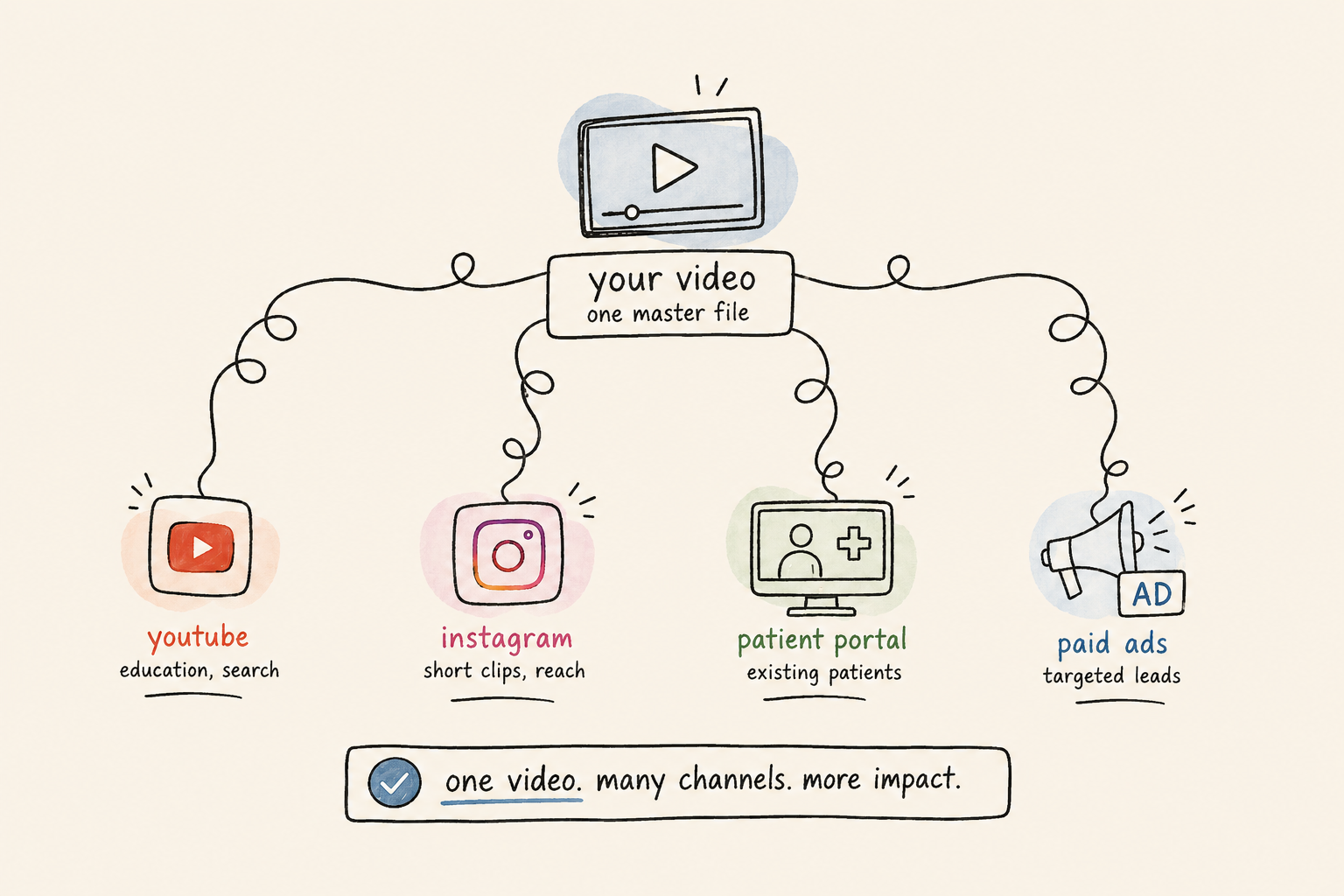
  • Where will the content live: website, social channels, patient portals, paid ads?
  • What’s their experience running targeted video ads, particularly on platforms like Meta, where specific audience targeting can generate qualified patient leads?
  • How does distribution tie back to the goals defined at the start of the process?


If you’re planning to expand into a new geographic market, ask how they’d approach regional nuances, such as local filming talent, region appropriate locations, and native language translation for a multilingual patient population. For example, a clinic expanding into a new metro area with a large Spanish speaking population would need content translated and culturally adapted, not just subtitled.

Evaluate Their Approach to AI (2026 Relevance)

AI is now part of nearly every production workflow, and healthcare video is no exception. There’s a real difference between agencies using AI thoughtfully and ones just riding the hype. Ask specifically how AI factors into their process:

  • Research and script drafting support
  • Editing efficiency
  • Content optimization for discoverability

Watch for red flags:

  • Vague answers like “we use AI for everything”
  • Heavy reliance on generative tools without human medical review

In healthcare content, accuracy always comes first. AI generated drafts need a knowledgeable human checking the details before anything goes live. The agencies worth hiring treat AI as a tool that supports strategy and speeds up production, not a replacement for human expertise. If you ask how they balance AI efficiency with clinical accuracy and they give a clear, thoughtful answer, that’s a strong signal you’re talking to a serious medical video marketing agency.

If You’re Targeting Healthcare Professionals (HCPs)

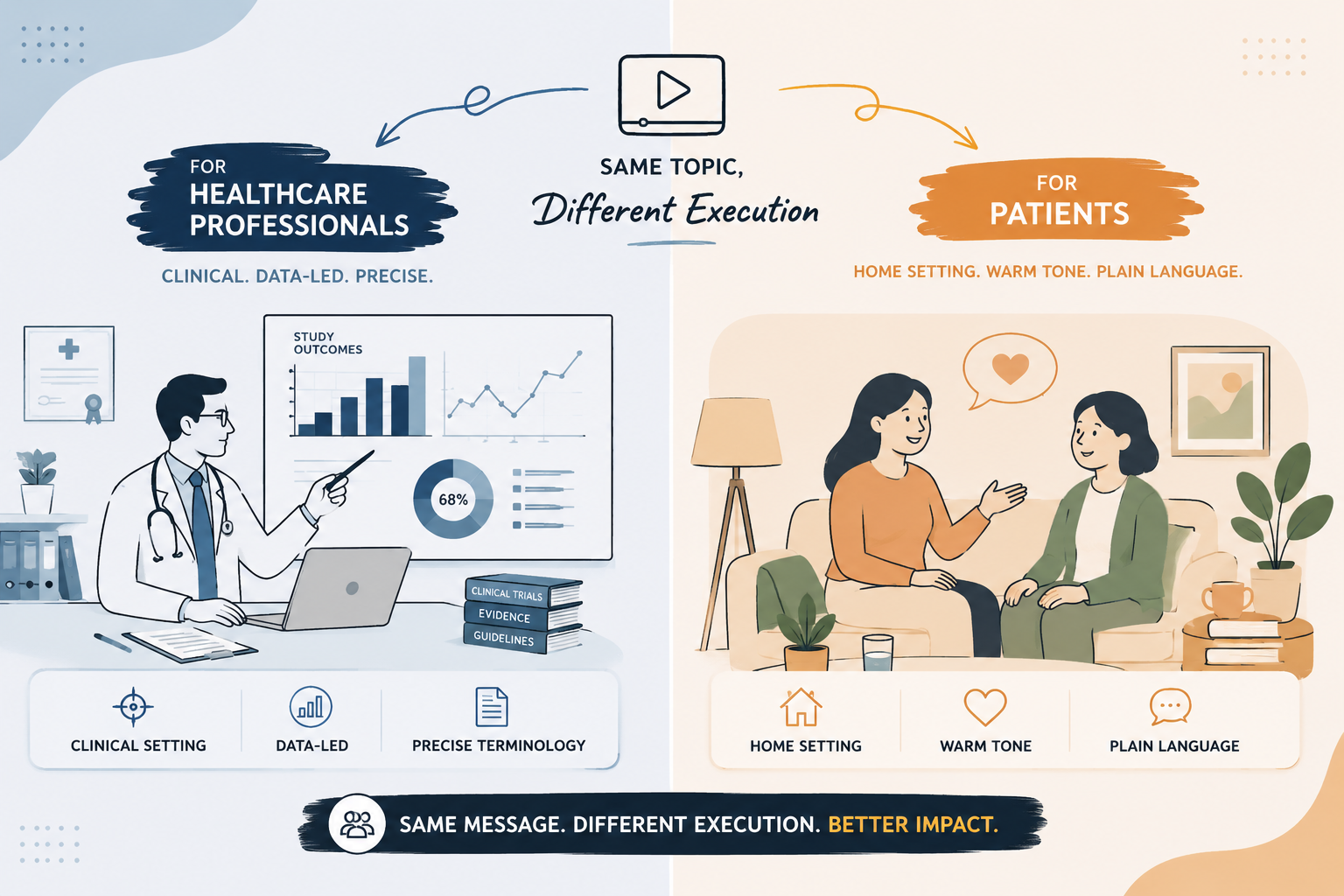
Not every healthcare video campaign is aimed at patients. If part of your strategy involves reaching healthcare professionals such as doctors, nurses, or hospital administrators, you need an agency that understands how differently that audience consumes content. HCPs respond to precise language, credible data, and a communication style that respects their time.
Ask directly:
  • Have they created content for an HCP audience before?
  • Do they understand medical terminology well enough to use it correctly without oversimplifying?
  • Do they use data analytics to personalize outreach to professional audiences while staying compliant?

For example, a video explaining a new medical device to hospital procurement teams needs technical precision and databacked claims, while a patient facing video about the same device would focus on comfort, safety, and outcomes in plain language. Plenty of agencies do excellent patient facing content but stumble when asked to speak credibly to a room full of physicians. If HCP outreach is part of your plan, ask this early.

Understand Pricing and Process Transparency

Nothing sours a new agency relationship faster than surprise costs on an invoice. Before committing, get complete transparency on:
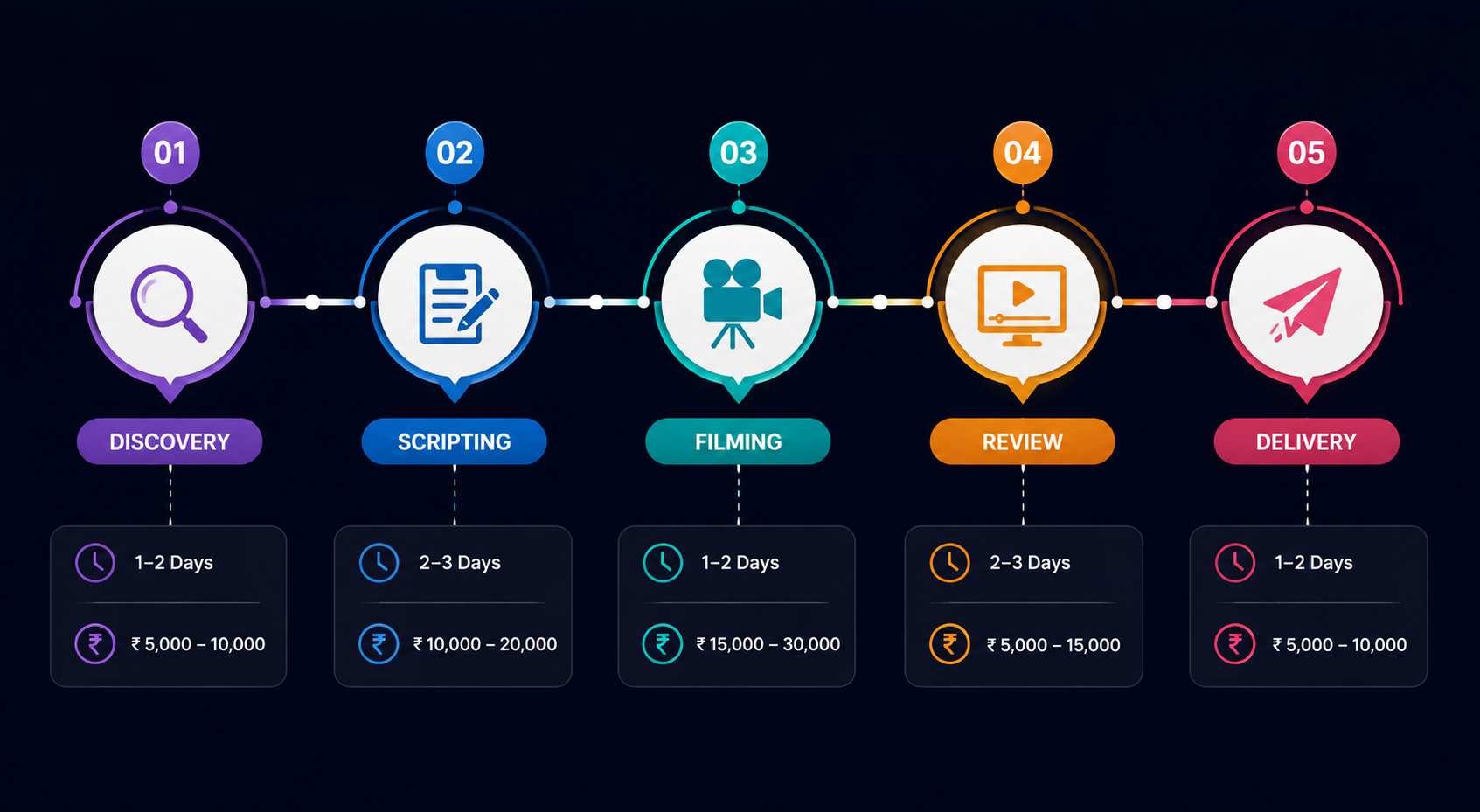
  • Retainer structure and perproject rates
  • What counts as an “extra” that triggers additional fees
  • Typical production timeline from kickoff to final delivery
  • Revision process, including how many rounds are included before extra charges apply


This matters a lot in healthcare, where campaigns are sometimes tied to time sensitive events, such as a new treatment launch, an open enrollment period, or a public health initiative with a fixed deadline. Getting this in writing upfront protects both sides and sets realistic expectations from day one.

Ask for Real, Measurable Results, Not Just Pretty Portfolios

A polished showreel is easy to produce. What’s harder, and far more telling, is a track record of actual, measurable outcomes. Ask for case studies that go beyond “here’s a video we made” and show what happened afterward:

  • Did patient inquiries increase?
  • Did lead conversions improve?
  • Was there a measurable lift in brand awareness or referral growth tied to the campaign?

Agencies that can back up their creative work with real numbers, rather than simply branding themselves among the many self proclaimed best explainer video companies online, are the ones worth trusting with your budget. Before any work begins, define clear performance metrics together. What does success actually look like for this specific campaign, and how will it be tracked and reported?

Bringing It All Together

Choosing the right medical video marketing agency comes down to finding a partner who understands three things equally well: the craft of great video storytelling, the specific realities of healthcare compliance, and the way patients and professionals actually make decisions. Skip any one of those, and you’re rolling the dice with your brand’s reputation and your budget.

Whether you need a simple explainer piece from a reliable explainer video company, a fullscale SaaS explainer video for a healthtech product, or a deeply personal patient testimonial series, the same core principles apply:

  • Ask direct questions
  • Demand real examples over vague promises
  • Don’t sign anything until you’re confident the agency treats healthcare content with the seriousness it deserves

The right agency won’t just make your videos look good. They’ll make your patients trust you a little more, one story at a time. And in healthcare marketing, that trust is really the whole point.

Does YouTube Ban AI Content? The Real Takeaway

So, does YouTube ban AI content? Not in the way most anxious creators fear. The platform isn’t hunting down every video touched by a generative tool. It’s filtering out content that’s mass-produced, undisclosed when it should be disclosed, or deliberately designed to deceive viewers about what’s real.

If you’re disclosing when it matters, keeping real creative judgment in your process, and building something genuinely useful for your audience instead of farming volume, you’re operating well inside the boundaries YouTube has actually drawn. The channels getting swept up in enforcement waves, like the “KH Studio” example above, are the ones skipping transparency and publishing at scale with zero human input, not the ones thoughtfully using AI as part of a real creative process.

Your channel isn’t one AI tool away from disappearing. It’s protected by the same thing that’s always protected channels on this platform: originality, honesty with your audience, and actual editorial judgment behind every upload.

Unlock the power of captivating visuals with our seasoned expertise! With 7 years of crafting compelling visual content, we’re ready to elevate your brand’s story. From stunning graphics to mesmerizing animations, we bring your vision to life. Let’s create engaging visuals that resonate with your audience and leave a lasting impression. Partner with us today for an unforgettable visual journey! 

Check out our work.Â