
How Brands Use YouTube as More Than an Advertising Channel

Table of Contents
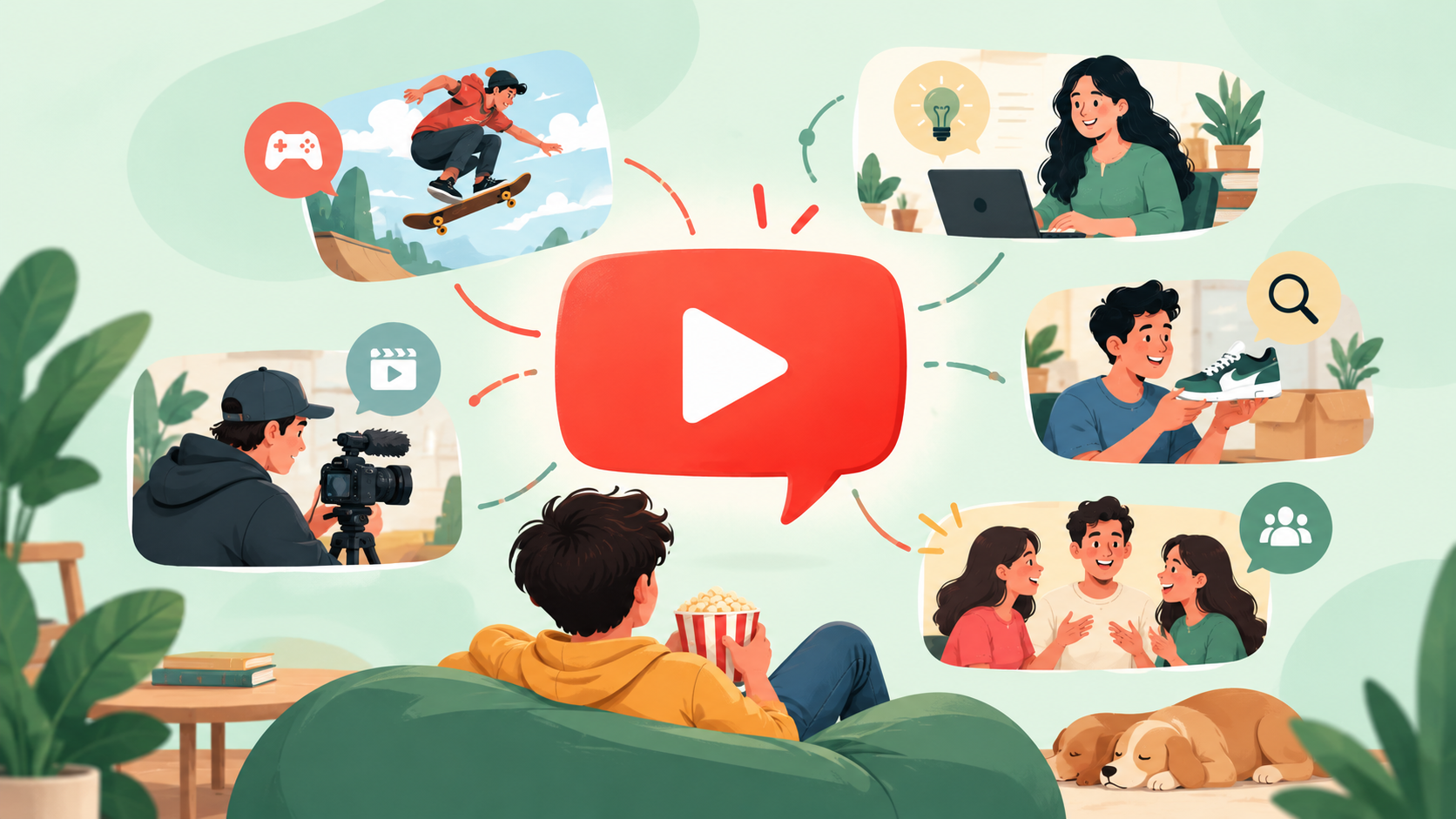
Open YouTube on any evening and you’ll notice something odd. Between the preroll ads, people are watching a sneaker brand’s documentary, a software company’s full tutorial, or a car maker walking through every button on a dashboard. Nobody forced them to. They clicked because they wanted to.YouTube looks like an advertising platform from the outside, but brands are increasingly using it like a media, education, community and discovery platform.
That’s the quiet shift behind how brands use YouTube today. A few years ago the platform was mostly a place to buy ad slots and hope people didn’t hit “skip.” Now brands use it to entertain, teach, demonstrate, answer questions, build communities and help people decide what to buy. Advertising is still part of the mix, but it’s no longer the whole story.
In this guide, I’ll show you what’s changing and why, and how well known brands are doing it. I’ll also cover the risks, so you can decide what makes sense for your own channel.
How Brands Use YouTube Beyond Traditional Advertising
Let’s start with the basic problem. Traditional advertising still works. It builds reach fast, it puts a message in front of lots of people, and it’s great for launches and seasonal pushes. But it’s mostly oneway communication. You talk, the audience maybe listens, and when the budget runs out, the conversation ends.
YouTube offers something different. It gives a brand room to explain, demonstrate, entertain and respond. A thirty second ad tells someone your product exists. A ten minute video shows them why it might matter in their life. Better still, that video keeps working. People can search for it, share it, or stumble on it through a recommendation two years later. A paid campaign stops when the money does, but a good video can keep earning attention long after the campaign ends.
The audience size helps, too. One 2026 roundup says YouTube reaches more than 2.7 billion logged in users every month and works as the second largest search engine. That’s a lot of people typing questions and expecting video answers.
One thing needs to be said clearly: brands aren’t abandoning ads. They’re expanding what they do on the platform. They still buy reach when they need it, but they’ve realised people don’t only want to be interrupted. They want to choose something worth watching. That’s the real move, from showing ads to creating content people actively pick.
This broader approach includes five important uses of YouTube: entertainment, education, product demonstrations, sharing expertise, and answering customer questions. Each offers a different reason for viewers to engage with a brand.
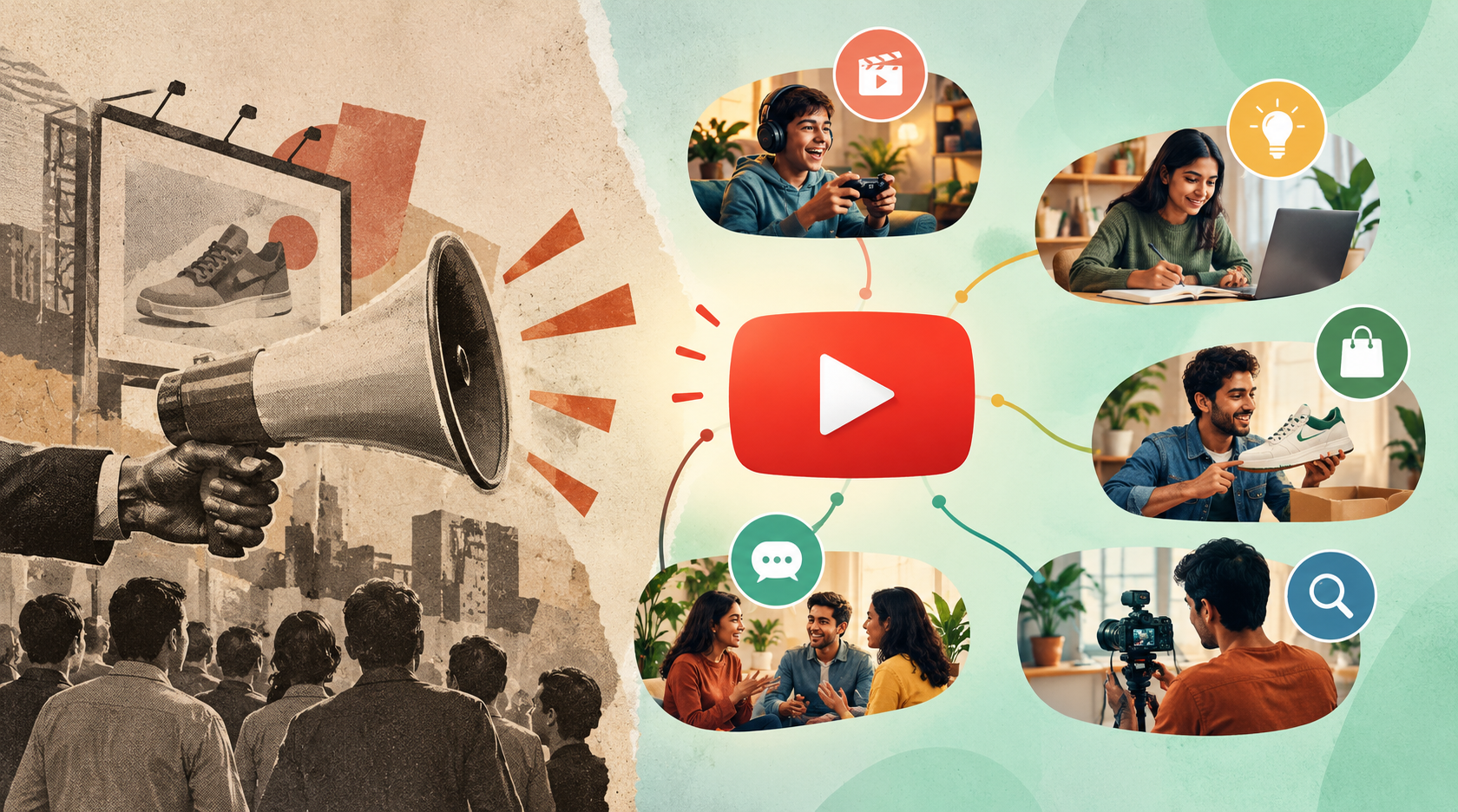
The following examples show how companies use these approaches to create content that people actively choose to watch.
Brands Are Using YouTube for Entertainment
Some brands treat YouTube less like a shop window and more like a TV network. They give people something worth watching, with no sales pitch attached.
Red Bull
Red Bull’s channel feels more like a sports broadcaster than a drinks company. You’ll find extreme sports, live events, documentaries and athlete stories, all made with real production value. Watch for a few minutes and you’ll realise the drink barely appears. The brand is the force behind the spectacle. People come for the adrenaline, and Red Bull becomes linked with energy and adventure without ever saying so.
LEGO
LEGO tells stories. Its videos use characters, humour and imagination, and many stand on their own even if you’ve never bought a brick. That reaches kids and adults who simply enjoy the content. The brand stays in the background of the story instead of interrupting it, which builds an affection a product ad rarely can.
Nike
Nike’s videos often feel like short films. They focus on athletes, struggles, triumphs and cultural moments, and they tend to make you feel something before they make you think about shoes. That emotional pull is the strategy. When people connect with the story, the brand becomes part of how they see sport and effort.
Why entertainment works: most people, most of the time, aren’t shopping. They’re bored, curious or unwinding. Entertainment gives them a reason to spend time with you without pressure. You stay familiar, so when the buying moment arrives months later, you’re not a stranger. The catch is that it has to be genuinely entertaining. A “fun” video that’s secretly a long ad gets spotted in seconds.
How Brands Use YouTube Shorts to Reach New Audiences
Not every viewer has time for a ten minute video. YouTube Shorts gives brands another way to reach people through quick, focused content that is easy to watch and share. A short video can introduce a product, highlight one useful tip, show a behind-the-scenes moment, or give viewers a preview of a longer video.
For example, a fitness brand could share a quick exercise tip, while a software company could show one shortcut that saves users time. A food brand might share a recipe in under a minute, giving viewers a useful idea without requiring them to watch a full cooking tutorial.
The key is to make each Short valuable on its own. If every clip feels like a shortened advertisement, viewers have little reason to watch the next one. Brands should focus on one clear idea, use an engaging opening, and make the message easy to understand on a mobile screen.
Shorts can also introduce viewers to a brand’s longer content. Someone who discovers a company through a quick tip may later watch its detailed tutorials, product demonstrations, or interviews. This is one practical example of how brands use YouTube successfully across different video formats.
Brands Are Using YouTube to Educate
If entertainment gets people to stay, education gets them to trust you. These brands teach the skills their customers need, and the product naturally becomes part of the solution.
HubSpot
HubSpot teaches marketing, sales and business topics in a way that’s useful whether or not you ever use its software. It covers areas like email, content and customer service in practical, step by step ways. That generosity builds authority. When someone later needs a platform, the brand that taught them is the one they already trust.
Semrush
Semrush explains SEO and digital marketing to people trying to improve their online visibility. It helps viewers understand the craft first, such as keyword research, content planning and site health, and the tools arrive as a natural next step. That positions the brand as an expert you can learn from.
Autodesk
Autodesk walks people through software and design workflows, which is exactly what new and experienced users search for. Technical tools can be intimidating, so clear tutorials reduce the friction. Someone who learns a workflow from the brand’s own videos is far more likely to keep using the product.
Why education works: It builds two things before anyone buys. The first is usefulness, because people remember who solved their problem. The second is expertise, because a brand that explains its field clearly answers an important question: “Can I trust these people?”
Education also comes in many formats. Animated explainers, screen recordings, step by step walkthroughs, and short lessons can all make complex topics easier to understand. The format matters less than the value it provides. The goal is simple: help viewers understand something useful, and they’ll have a reason to remember your brand.
Brands Are Using YouTube to Share Expertise
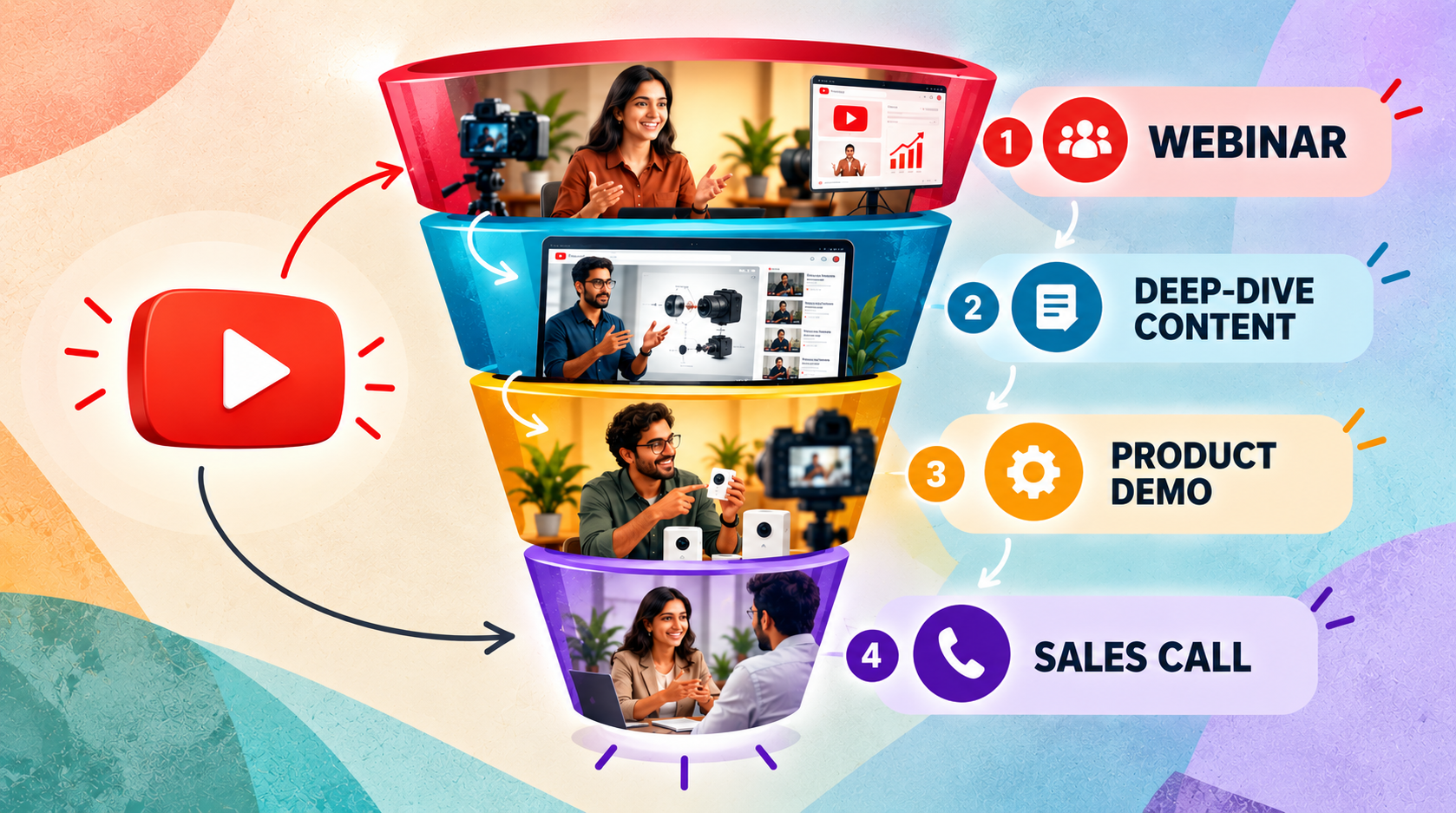
Not every brand sells sneakers or phones. Some sell enterprise software, cloud infrastructure or consulting. For them, the sales cycle is long, many people are involved in the decision, and trust matters before anyone signs anything.
IBM
IBM shares technology explanations and thought leadership that help buyers understand complex topics like cloud, AI and security. These videos let the company show how it thinks, not just what it sells. A decisionmaker who has watched a clear explanation is better prepared for a sales conversation.
Microsoft
Microsoft uses interviews, webinars and product deepdives to speak to both technical and business audiences. One recording can answer the same questions for years, so the content keeps working long after it’s published.
Salesforce
Salesforce publishes industry discussions and customer stories that show how its tools solve real business problems. Hearing a peer describe a challenge is often more convincing than hearing the vendor describe a feature.
Cisco
Cisco explains networking and security topics through talks and technology walkthroughs. These subjects are hard to describe in an ad, but a calm, wellstructured explanation builds confidence in the people behind the technology.
Intel
Intel uses interviews and technology explainers to make highly technical subjects easier to follow. Putting engineers and experts on camera adds a human voice to a very technical field.
Why it works for B2B: a buyer researching a purchase wants proof that the vendor understands the problem, and they’ll watch a panel or demo long before filling in a contact form. A wellmade B2B explainer video can turn a dense topic into something a busy decisionmaker absorbs in minutes and forwards to a colleague. It also gives sales teams something helpful to send instead of pitching cold. Just avoid buzzwordheavy slides, because nobody finishes those.
Brands Are Using YouTube to Answer Customer Questions
Here’s a question that changes how you plan content: are you making videos about what you want to say, or about what customers want to know?
Much of what people search on YouTube starts with “how to,” “why isn’t,” “best way to” or “is it worth it.” They have a problem and want an answer. Brands that notice this build content around the questions people actually ask, instead of the messages the marketing team wants to push. A few formats work especially well.
How to videos
These walk through a task step by step. They’re simple, searchable and useful, which is a good combination.
Product tutorials
Tutorials help new customers get set up and make the most of what they bought. That reduces frustration and keeps people using the product.
Troubleshooting videos
Fixing common problems on camera saves customers time and saves support teams a huge number of repeat tickets.
Beginner guides
A friendly intro makes a complicated product feel approachable, especially for people who are nervous about getting started.
Comparison and explanation videos
These help people understand the differences between options, or what a feature really does. A brand that explains this openly looks confident rather than defensive.
A good starting point: check your own inbox and support tickets. What do customers ask again and again? Each repeated question is a video waiting to be made. Sales calls, social comments and search suggestions point the same way. You don’t have to guess what people want to know, because they’re telling you constantly.
How Brands Use YouTube for Product Discovery
YouTube helps people discover products they didn’t know they wanted. People find products through tutorials, reviews, demonstrations, creators and search. These videos can guide viewers from initial interest to a purchase decision.
According to Google’s 2025 announcement about creator led shopping, 89% of surveyed beauty shoppers in India said YouTube helps them make more confident purchase decisions. The research also found that 96% of surveyed shoppers were likely to reuse a product after starting their purchase journey on YouTube.
Festive shopping shows a similar trend. Google and Ipsos research found that 80% of consumers who shopped during a sale or festive moment researched online video, and 9 in 10 of them used YouTube. This survey dates from 2023, so treat it as an indicator rather than a current figure.
These findings are surveys, not proof that videos directly caused sales. However, they show how people use YouTube to research products before buying.
For brands, product discovery isn’t limited to paid ads. It can happen through a creator’s review, a useful tutorial or a comparison video. Brands that provide helpful content during these moments can reach people who are already researching their options.
A video may not lead to an immediate sale, but it can be the first step in a longer buying journey. Measuring only last-click sales can miss that contribution.
Pros and Cons of How Brands Use YouTube Beyond Ads
Moving beyond ads has real upsides and real costs, so let’s keep this practical.
The upsides
- Long term content value. A strong video can keep attracting viewers for years.
Search visibility. YouTube is searchable, and videos can also appear in Google results. - Education. You can explain complex ideas at whatever depth people need.
- Product discovery. Reviews, tutorials and demos put you in front of researching shoppers.
- Community. Comments, creators and fans can turn an audience into something lasting.
- Creator partnerships. Trusted voices can extend your reach and add credibility.
- Multiple formats. Longform videos, Shorts, live streams and tutorials reach different people in different ways.
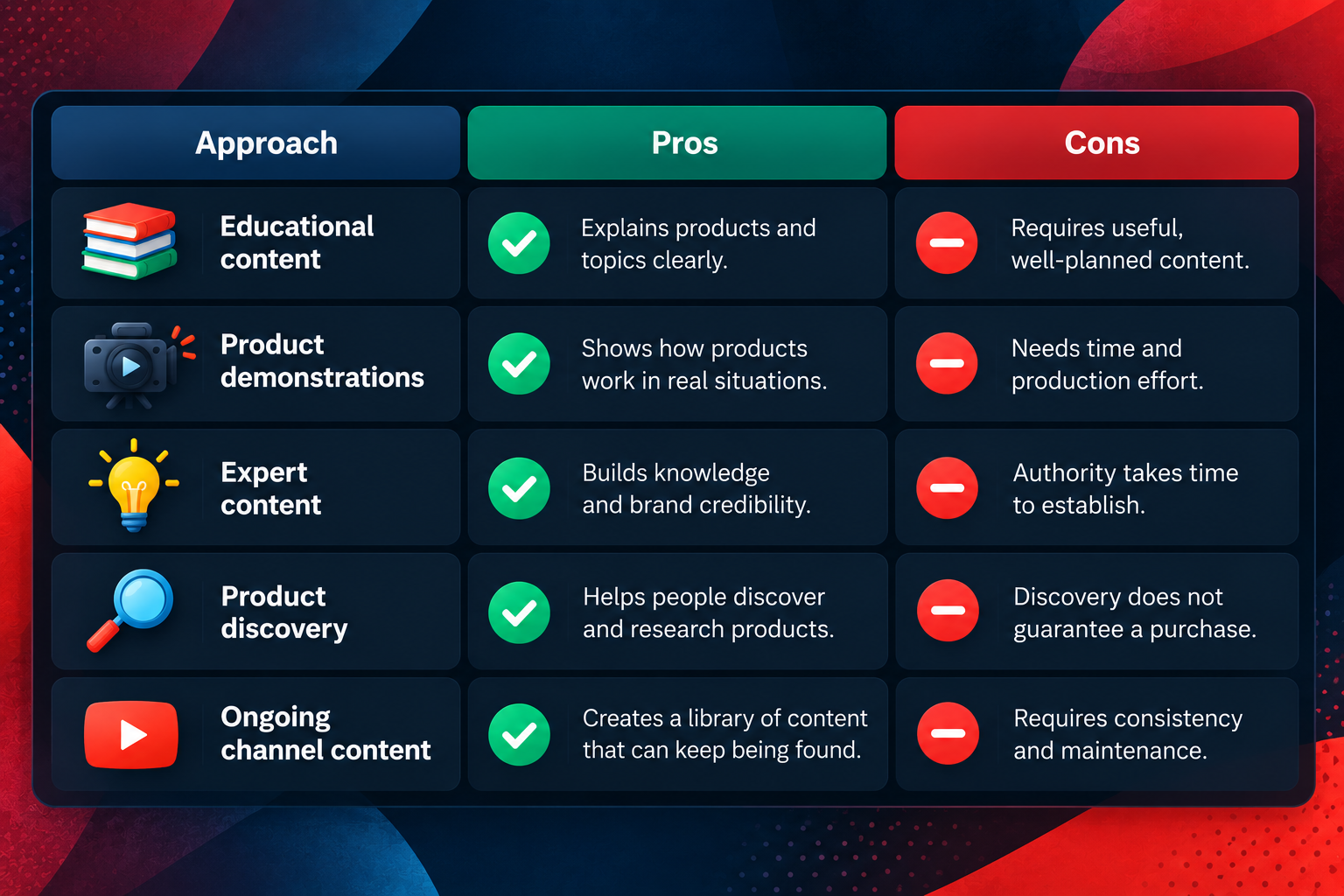
The downsides
- Production costs. Good video takes time, skill and money, even when it’s simple.
- Consistency. One great video isn’t a strategy, and showing up regularly is tiring for small teams.
- Competition. Everyone else has noticed YouTube too, so you need a clear angle.
- Algorithm changes. A format that worked last year may not work next year.
- Negative comments. Open platforms invite criticism, so you need a plan for handling it gracefully.
- Views aren’t sales. A video with a million views can still do nothing for revenue if it attracts the wrong audience or lacks a next step.
My honest take: the downsides are manageable if you start with realistic expectations. Pick one or two content types you can sustain, and measure more than view counts. Watch time, subscriber growth, search traffic and assisted conversions say far more than vanity numbers.
How Brands Use YouTube Analytics to Improve Content
Publishing videos is only one part of a YouTube strategy. Brands also need to understand what people watch, where viewers lose interest, and which topics encourage them to return. YouTube Analytics can help answer these questions and guide future content decisions.
Views provide a useful starting point, but they don’t tell the whole story. Watch time and audience retention help brands understand whether a video holds attention. Click through rate can show whether a title and thumbnail encourage people to watch, while returning viewers can indicate whether the channel is building a regular audience.
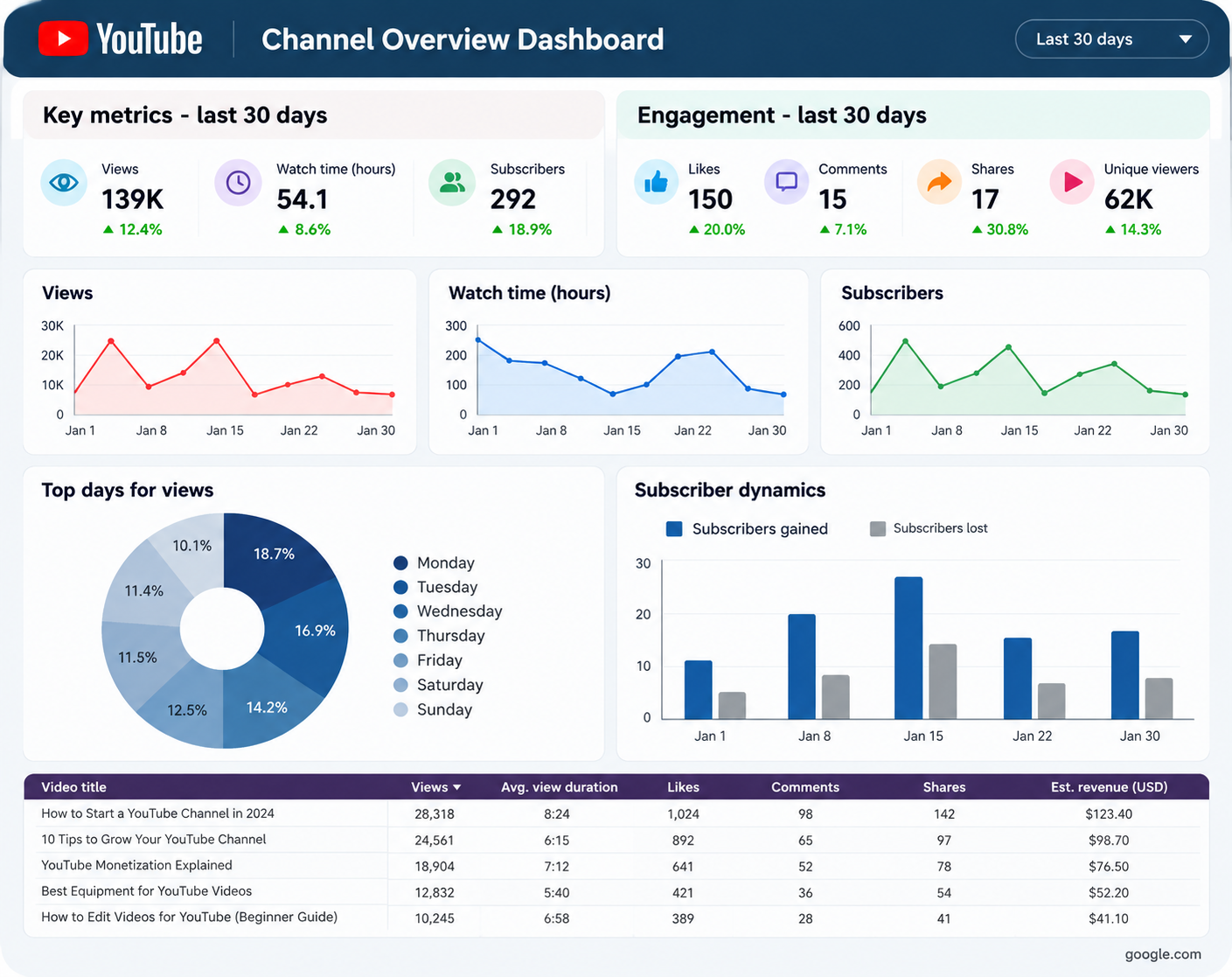
Imagine a company publishes two tutorials. One receives more clicks, but viewers leave after the first minute. The other attracts fewer people but keeps them watching until the end. Rather than judging only by total views, the company can examine what made the second tutorial more useful and apply those lessons to future videos.
Brands should also connect performance to their actual goals. A product tutorial might be valuable because it reduces customer confusion, while an industry interview might attract relevant business leads. Not every video needs to generate immediate sales.
The most effective approach is to review performance regularly, test improvements, and learn from real audience behaviour. This turns YouTube from a place where brands simply upload videos into a channel they can improve over time.
YouTube Isn’t Replacing Advertising, It’s Expanding What Brands Can Do
If you only remember one section, make it this one.
Nothing above means advertising is dead. Ads are brilliant at one thing: reach. When you need a message in front of lots of people quickly, paid placement is hard to beat.
What content adds is everything else. Advertising can create reach. Content can create attention, knowledge and relationships. They do different jobs, and the real opportunity is that YouTube lets you combine them instead of treating them as separate worlds.
Picture how it might play out. An ad introduces a product to a new audience. A curious viewer searches for a tutorial and finds a clear, friendly guide from the brand. They watch a review from a creator they trust and join the conversation in the comments. A few weeks later they return for a story the brand published, and eventually they buy. No single piece did everything, but together they built something an ad alone never could.
That’s why the strongest brands on the platform ask a different question. They don’t only ask, “How can we advertise here?” They ask, “What can we create that people actually want to watch?” That one change affects the topics you pick, the tone you take, the length of your videos and how you measure success. It moves you from buying attention to deserving it.
How Brands Use YouTube Well Is About Giving People a Reason to Return
Here’s the big picture. YouTube has grown into a content channel, an education channel, an entertainment channel, a community space and a commerce platform, all at once. Red Bull entertains, Canva teaches, GoPro demonstrates, IBM shares expertise and Nike builds culture. The approaches differ, but the idea underneath is the same.
When you look closely at how brands use YouTube successfully, the pattern is clear. They’re not simply buying attention. They’re building reasons for people to keep coming back, whether that’s a useful answer, a great story, an honest demo or a community worth belonging to.
If you’re thinking about your own channel, you don’t have to do everything at once. Pick one thing your audience genuinely needs, whether that’s a clear tutorial, a product walkthrough or a short animated explainer, and make it really good. Then make the next one. Consistent, useful, credible content compounds in a way single campaigns rarely do.
Advertising will keep its place. But the brands that win on YouTube will treat it as a place to be useful, interesting and human. Start by asking what your audience would love to watch, and let the rest follow.
Unlock the power of captivating visuals with our seasoned expertise! With 7 years of crafting compelling visual content, we’re ready to elevate your brand’s story. From stunning graphics to mesmerizing animations, we bring your vision to life. Let’s create engaging visuals that resonate with your audience and leave a lasting impression. Partner with us today for an unforgettable visual journey!

