

Why Animation Is More Than Just Eye Candy
Let’s face it—animated videos are everywhere, and there’s a good reason why. They’re visually appealing, versatile, and incredibly effective at holding attention. But there’s more beneath the surface. Beyond their colorful characters and dynamic transitions lies a strategic powerhouse for marketing and communication. Animation has evolved into one of the most impactful forms of engaging video content, helping businesses tell their stories, simplify their messages, and ultimately achieve real business outcomes.
The Rise of Animated Content in Digital Marketing
Over the past decade, animated content has gained serious traction across the digital landscape. Whether it’s YouTube explainer videos, animated ads on social media, or instructional content embedded on websites, marketers have realized the power of animation in capturing user attention. A primary driver for this shift is the changing behavior of digital consumers. With reduced attention spans and increased content fatigue, audiences now crave content that is both informative and visually stimulating—animation fits that need perfectly.
Animated videos are also highly adaptable. They can easily be formatted for different platforms and devices, making them ideal for today’s multi-channel marketing strategies. From simple motion graphics to detailed 3D renderings, animation opens up a world of creative possibilities that other content formats struggle to match.
Why Brands Are Investing in Animation Today

Brands are increasingly investing in animation because it offers a unique blend of clarity, flexibility, and measurable impact. Unlike traditional formats that may require elaborate production setups or heavy writing, animation can convey complex ideas in seconds through visuals that inform and delight. This streamlined communication makes it ideal for fast-paced digital environments where audience attention is limited.
Animation accelerates the buyer journey by simplifying value propositions, building trust through professional polish, and guiding users through the funnel with visual cues. Whether it’s explaining a new feature, demonstrating a workflow, or highlighting customer benefits, animation helps move prospects from interest to action faster.
Another major driver is flexibility. Animated videos can be easily updated or localized for different regions without reshooting. This is especially important for global brands or those undergoing frequent product changes. Furthermore, animations are well-suited for A/B testing, allowing marketers to experiment with different messages, visuals, and formats to see what performs best.
Cost-efficiency also plays a role. While high-quality animation does require investment, it often delivers a better return over time due to its longer shelf life, reusability, and cross-channel adaptability. A single animated video can serve on a landing page, in social ads, sales emails, webinars, and onboarding flows—multiplying its impact.
Ultimately, brands—from nimble startups to established enterprises—are allocating more budget to animation because it doesn’t just look good; it performs. It bridges gaps in understanding, engages viewers at every stage of the funnel, and delivers the data-driven results modern marketers need to justify spend and scale success.
The Importance of ROI in Content Decision-Making

In today’s results-driven marketing environment, every piece of content must prove its worth. Marketing teams are expected to drive measurable business outcomes while managing tighter budgets and increased competition for attention. That’s why ROI (Return on Investment) has become the north star for content decision-making.
It’s no longer enough to judge content based on vanity metrics like views or likes. Decision-makers are now asking the hard questions: Does this piece of content bring qualified traffic? Does it convert? Does it contribute to the bottom line?
Animation answers these questions with a strong value proposition. Its versatility, scalability, and capacity to explain complex concepts clearly make it one of the most efficient content formats across the funnel. From product education and brand storytelling to customer onboarding and sales enablement, animated videos align well with performance goals.
To make informed decisions about investing in animation—or any content format—marketers must track the right metrics, connect them to business objectives, and evaluate performance regularly. The clearer the connection between your animated content and business results, the easier it becomes to defend budgets, allocate resources, and refine strategy for continuous growth.
In short, ROI is not just a marketing buzzword—it’s a strategic framework for making smart, sustainable content investments that actually move the needle.
Understanding ROI in the Context of Video Animation
What Does ROI Mean for Animated Content?
When we talk about ROI—Return on Investment—in the context of animation, we’re not just looking at financial return. ROI in animation includes the tangible and intangible benefits that a brand receives from using animated videos. This includes improved brand awareness, better customer understanding, higher engagement rates, and ultimately, increased revenue.
For example, an animated explainer video on a product page might reduce bounce rates and improve conversion rates. Meanwhile, a tutorial animation can lead to fewer support requests and improved customer satisfaction. Each of these outcomes contributes to the broader return on investment.
Direct vs. Indirect ROI (Brand Awareness vs. Conversion)
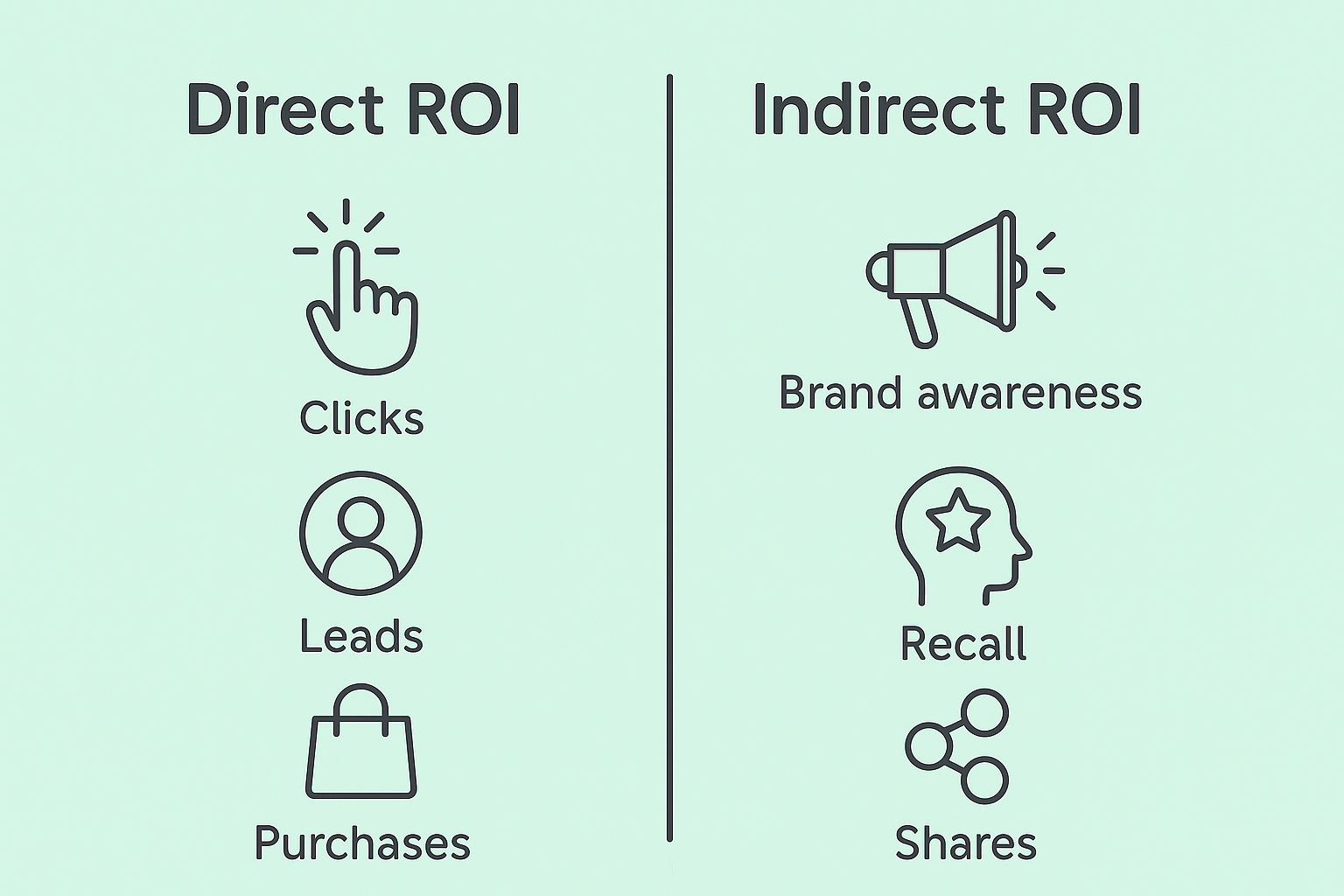
It’s important to distinguish between direct and indirect ROI. Direct ROI refers to measurable actions like lead captures, product purchases, or downloads that result from a viewer watching an animated video. These are clear, attributable metrics that tie video views directly to business goals.
Indirect ROI, on the other hand, includes softer metrics such as brand recognition, message recall, and user engagement. While harder to quantify, these indicators are equally important. They help build the foundation for future conversions and create lasting impressions that support long-term business growth.
Metrics That Matter: Views, Engagement, Leads, Sales
Measuring the impact of animated video content isn’t just about how many people hit the play button. It’s about understanding what happens before, during, and after they watch. Here are the key performance indicators that truly matter:
Views: Views give you a surface-level metric of interest—how many people started watching your video. But don’t stop here. A high view count doesn’t mean much unless it translates to meaningful actions.
Watch Time: This is a stronger indicator of engagement. If people are watching most or all of your animated video, it means your content is resonating. High watch time suggests that your message is clear and compelling.
Engagement: Metrics like likes, shares, and comments reflect how your audience emotionally connects with your video. Shares, in particular, are powerful because they amplify your reach organically—turning viewers into advocates.
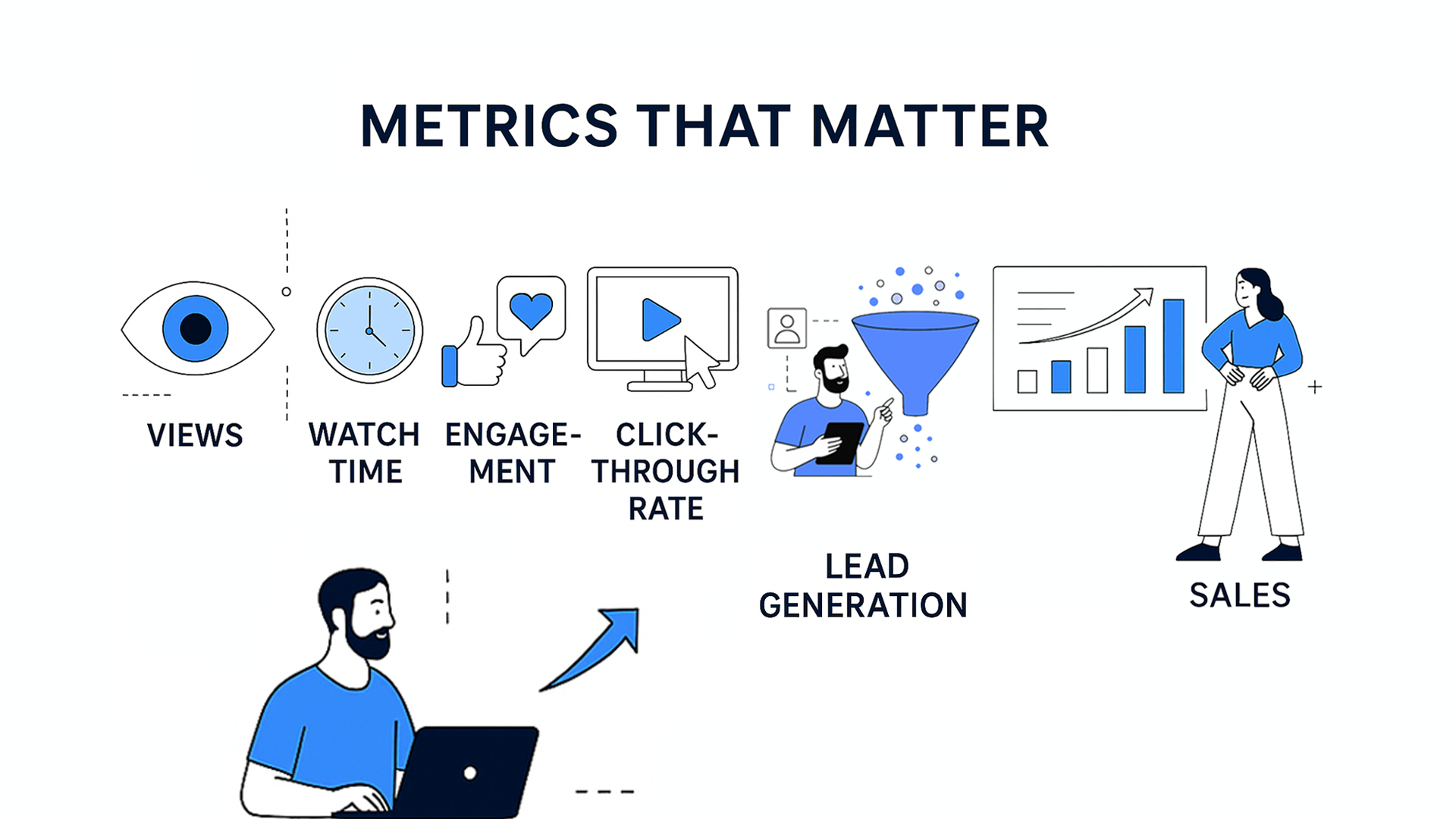
Click-Through Rate (CTR): A high CTR shows that your call-to-action is effective. Whether it’s driving traffic to a landing page or encouraging a demo sign-up, CTR connects your creative to a tangible next step in the customer journey.
Lead Generation: Animated videos can be highly effective at nudging viewers into lead funnels. Track actions such as form completions, newsletter subscriptions, and webinar registrations that occur directly after someone watches your video.
Sales: Ultimately, the bottom line matters. Are people buying because of your animated content? Use UTM parameters, conversion pixels, or integrated analytics tools to directly tie video views to revenue-generating actions.
Mapping Metrics to the Funnel
Each of these metrics aligns with different stages of the marketing funnel:
- Top of Funnel: Views and shares help you build awareness.
- Middle of Funnel: Watch time and CTR demonstrate interest and intent.
- Bottom of Funnel: Leads and sales show conversion and ROI.
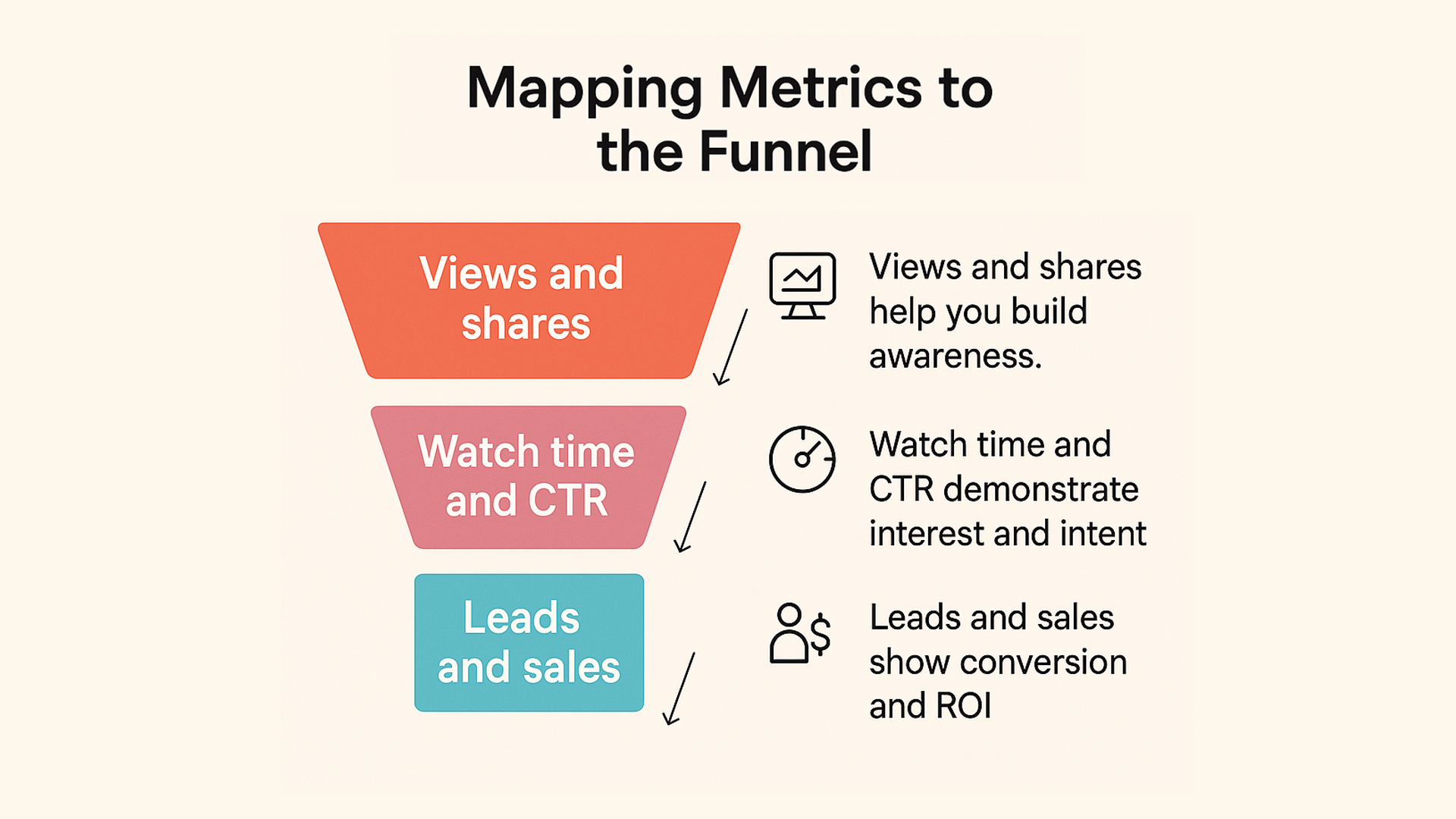
By aligning these KPIs with your business goals, you gain a clearer picture of animation’s real value. Tracking metrics across the entire funnel ensures that your animated videos aren’t just entertaining—they’re driving results.
Business Benefits of Animated Explainer Videos

Simplifying Complex Ideas for Faster Understanding
One of animation’s greatest strengths is its ability to simplify complexity. Whether you’re explaining how an AI-powered tool works or outlining a complicated workflow, animation helps break down intricate ideas into digestible visuals. It speeds up comprehension and reduces the cognitive load on viewers, which is essential in today’s fast-paced digital environment.
Enhancing Retention and Recall Among Viewers
Animated content sticks. Studies have shown that people retain significantly more information when it’s presented in a visual and auditory format compared to text alone. The combination of visuals, voiceovers, and storytelling in animation activates multiple areas of the brain, making it easier for viewers to remember the content long after they’ve watched it.
Boosting Conversion Rates on Landing Pages and Campaigns
Embedding an animated video on a landing page can lead to substantial improvements in conversion rates. Why? Because it provides instant clarity. A potential customer landing on your page doesn’t have to read through paragraphs of text—they get the core message in 60 to 90 seconds, increasing the likelihood that they’ll take action.
Cost-Effective Scalability Across Platforms
Unlike live-action videos that often require reshooting to make changes, animation is inherently modular. You can easily tweak scenes, update voiceovers, or change languages without starting from scratch. This makes animated content highly scalable across different platforms, markets, and use cases, enhancing its overall ROI.
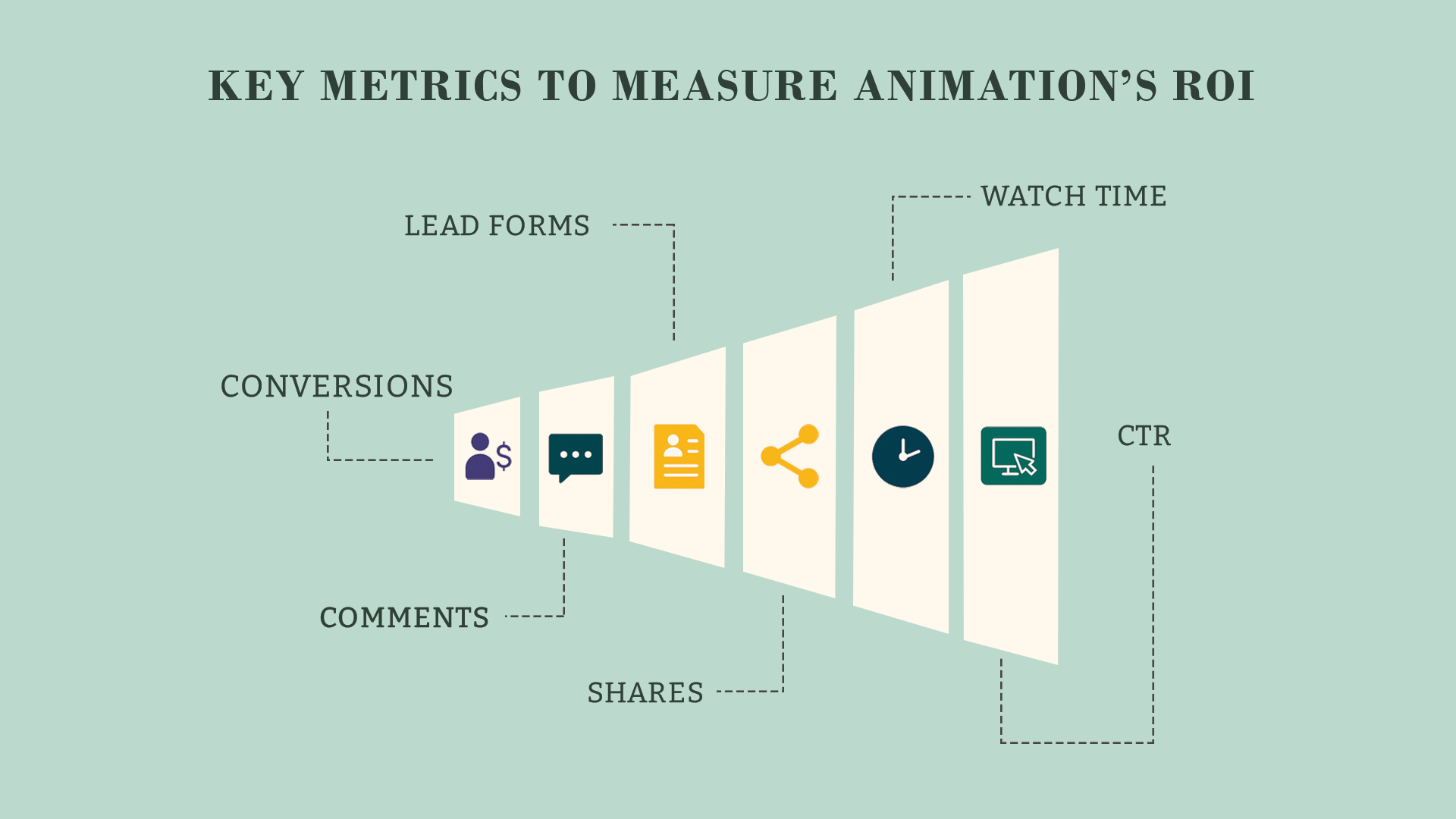
Key Metrics to Measure Animation’s ROI
Engagement Metrics: Watch Time, Click-Through Rates (CTR), Shares
These metrics show how your audience is interacting with your content. Watch Time tells you whether your message is holding attention—longer times suggest viewers find your animation relevant and engaging. Click-Through Rates (CTR) highlight how effectively you’re guiding viewers to take action, often influenced by compelling storytelling and strong visual CTAs. Shares are a powerful trust signal; when someone shares your content, they’re endorsing it to their network, amplifying your message without spending extra on distribution.
You can improve these metrics by focusing on a compelling hook in the first 5 seconds, storytelling that builds emotional resonance, and animated elements that reinforce your brand.
Lead Generation and Customer Acquisition
Track how many leads your videos are generating through forms, gated content, or direct CTAs. For instance, a product demo animation might prompt viewers to sign up for a free trial or book a call. Integrate your video platform (like Wistia, Vidyard, or YouTube) with your CRM or marketing automation tools to capture this data. This lets you see which videos contribute most to pipeline development and conversion.
Additionally, track behavioral cues—how many users return after watching a video? Do they engage with more content or move deeper into the funnel? These signals indicate how animation supports your acquisition journey.
Customer Feedback and Qualitative Insights
Numbers tell part of the story—but user comments, feedback surveys, and social mentions can reveal why your animation worked. Look for comments like “This made things so much clearer” or “Now I finally get it!” These insights help you understand emotional impact, message clarity, and areas for improvement.
You can also collect qualitative feedback through post-viewing polls or A/B testing different animation styles or messages. Combine these insights with your data to build stronger, more empathetic content strategies.
Sales Lift and Conversion Tracking
Did your animated video contribute to a spike in purchases or demo bookings? Compare user behavior and sales metrics before and after your video campaign goes live. Use unique URLs, UTM parameters, and conversion tracking tools to measure the specific actions viewers take after watching.
Sales lift might not always be immediate—but effective animations create long-term benefits like reduced friction, faster deal closures, and higher-quality leads. You can even measure attribution by assigning weights to various touch points across a multi-step funnel.
SEO Benefits from Animated Content On-Site
Animated videos enhance on-site SEO by increasing dwell time, reducing bounce rates, and improving content interactivity. Visitors are more likely to stay and explore when a video captures their attention immediately. Google considers these engagement signals when ranking pages.
Also, hosting your video on YouTube or embedding it with schema markup boosts visibility in video search results. Include optimized titles, descriptions, tags, and closed captions to increase discoverability, both on search engines and within platform-native search bars.
Animations also generate backlinks when they’re informative and shareable—another SEO boost. By making your animated content central to blog posts, landing pages, and product overviews, you improve your chances of ranking and driving organic traffic.