
healthcare marketing videos

Table of Contents

The healthcare industry is evolving fast—and so are the ways we communicate within it. Patients today expect clarity, compassion, and credibility. Static brochures and complex jargon aren’t cutting it anymore.

That’s why forward-thinking healthcare brands are turning to video.

In this article, we’re diving into ten brilliant video campaigns that nailed the brief. We’ll explore what makes each campaign stand out, how they deliver value to viewers, and why video is your secret weapon in a competitive and ever-evolving industry. Whether you’re a hospital marketer, startup founder, or part of a global pharma brand, there’s something here for everyone.

Why Healthcare Needs Video Marketing More Than Ever

Let’s face it—healthcare isn’t what it used to be. The aftermath of the COVID-19 pandemic has drastically changed how we communicate in this sector.

In an industry where trust, clarity, and compassion are key, the old-fashioned ways of advertising no longer resonate. Today’s patients want transparency and human connection—fast.

That’s where healthcare marketing videos come in. They blend emotion, education, and engagement, helping organizations connect with audiences on a deeply personal level. Whether it’s demystifying a complex procedure or simply sharing a patient’s story, video makes it easier for brands to inform and inspire at scale.

In this article, we’ll explore 10 brilliant healthcare marketing video campaigns that show how storytelling, education, and innovation can all come to life on screen. From patient testimonials to animated explainers, you’ll see how top healthcare organizations use video to build trust, drive engagement, and deliver results.

1. Apollo Hospitals: Trust Through Testimonial

Apollo Hospitals has long been a trusted name in Indian healthcare, and their video marketing strategy proves exactly why.

Instead of going with flashy ads or scripted stories, Apollo chose a route that’s refreshingly honest—real patients telling real stories.

In this campaign, viewers meet individuals who faced serious medical challenges and found hope and healing through Apollo’s care. You see their journey from diagnosis to recovery, interwoven with genuine emotion and gratitude. These testimonials were not only heartwarming—they were a strategic trust-building move.

The production is minimal, letting the stories shine. You see the patient’s vulnerability, the doctor’s dedication, and the family’s relief—all packaged in short, powerful narratives.

Why it works:

In a field where trust and transparency are non-negotiable, testimonial videos hit the sweet spot. They offer an unfiltered, unscripted look into the healthcare journey. Viewers see someone they can relate to, which instantly makes the content more credible. Healthcare marketing videos like this one help remove skepticism and make the audience feel secure choosing the brand.

2. NHS England: Let’s Talk About Testosterone

Tackling taboo topics in healthcare isn’t easy, but the NHS teamed up with Kartoffel Films to take on one that’s rarely addressed—testosterone deficiency in older men.

Before the campaign, awareness was shockingly low. Despite over one million British men suffering from low testosterone, only 8% were receiving help or treatment. The video shattered silence around the issue with a low-budget, human-centric approach.

Rather than relying on intimidating facts, the video showcased relatable older men talking honestly about fatigue, depression, and other symptoms they had silently suffered. The tone was empathetic, informative, and free of shame—making it easier for men to self-identify with the issue and seek help.

Why it works:
This campaign is a prime example of how healthcare marketing videos can change behavior. By tapping into emotional storytelling and removing stigma, NHS encouraged men to take ownership of their health. And by using conversational, non-clinical language, the video made an intimidating topic approachable. A small budget, but a huge impact.

3. Mayo Clinic: Medical Expertise in Motion

Mayo Clinic is one of the most respected names in global healthcare, and their video series reinforces that trust. Their expert interview series features top-tier medical professionals breaking down complex medical procedures, diagnoses, and treatments for the everyday viewer.

Picture a neurologist calmly explaining epilepsy or a cardiologist simplifying heart valve surgery—all with clear visuals, real settings, and a calm, authoritative tone. There’s no fluff, just genuine knowledge—served up in a way anyone can understand.

But this isn’t just about patient education. These videos double as brand positioning. They subtly remind the viewer: “We’re not just here to treat you—we’re here to empower you.”

Why it works:
In the post-COVID world, transparency and clarity are everything. Patients want to know what to expect, what’s involved, and who’s caring for them. These healthcare marketing videos build credibility, reassure patients, and showcase Mayo’s commitment to informed care.
They also help establish Mayo as a thought leader in the industry—an essential trait for attracting both patients and partners.

4. Sahyadri Hospital – Empathy Through Storytelling

Empathy is more than a buzzword in healthcare—it’s the heartbeat of meaningful patient care. Sahyadri Hospital understands this well. Through emotionally-driven videos and digital campaigns, the hospital brings the patient journey to the forefront, showcasing not just treatments but the human experiences behind them.

Whether it’s a caregiver comforting a worried family, a nurse sharing a moment of joy with a recovering patient, or a cancer survivor reflecting on their journey, Sahyadri’s video storytelling focuses on connection over clinical procedures. Their approach reminds viewers that hospitals are not just places of treatment—they’re places of hope, healing, and human compassion.

One of their most moving campaigns echoed the spirit of “Empathy: The Human Connection to Patient Care,” where subtle visuals, patient voices, and ambient music delivered an emotional punch without needing heavy narration. These moments help viewers see beyond lab coats and diagnoses—into the hearts of real people helping real people.

Why it works:

Sahyadri’s storytelling is built on truth and emotion. By prioritizing patient perspective, the hospital builds trust, relatability, and deeper community engagement. It’s not about promoting a service—it’s about showing the soul of care.

5. Pfizer: Animated Education

Pfizer took a clever approach when rolling out educational material during the COVID-19 pandemic: animated explainer videos. Instead of white papers or dense documents, they partnered with a leading 2D animated explainer video company to create a series of short, vibrant, and easy-to-understand clips explaining the science behind mRNA vaccines.

These videos tackled topics like how vaccines work, why boosters are needed, and how side effects occur—all in a style that felt friendly, not frightening. Bright illustrations, characters, and infographics made complex information digestible for a global audience.

Why it works:
Let’s be honest—most people won’t read a five-page PDF about vaccine trials. But they’ll watch a 60-second custom explainer video. Pfizer’s animated strategy made scientific content more accessible, more engaging, and more inclusive, especially for audiences with low health literacy.

Plus, animation carries huge logistical advantages0—it’s reusable, scalable, and easy to localize across different regions and languages.

6. Mount Sinai: Careers in Healthcare Recruitment Video

Mount Sinai put out a powerful recruitment video showing why healthcare professionals should work with them. Real employees, real stories, and authentic workplace visuals.

Why it works: In today’s candidate-driven market, showcasing your culture through video attracts top talent. It also helps communicate values, benefits, and purpose.

7. Bupa: Wellness Series on Social Media

In an age where social media is often blamed for declining mental health, Bupa flipped the script. Their ongoing Instagram and TikTok video series focuses on promoting mental wellness, healthy routines, and everyday self-care—delivered in a tone that feels approachable, friendly, and inclusive. From mindfulness prompts and five-minute breathing exercises to tips for managing anxiety and burnout, each clip is crafted with care and purpose.

The videos are short—often under 60 seconds—but pack a punch in terms of emotional resonance and practical takeaways. What really sets this campaign apart is its consistency and platform-specific optimization. The visuals are mobile-first, featuring bright colors, animated icons, and relatable scenarios. Captions are always included, making the content accessible for everyone, including users watching without sound.

Bupa’s strategy taps into the scrolling behavior of modern audiences. By meeting users where they already spend their time—on Instagram Reels and TikTok—they ensure maximum visibility and engagement. The use of hashtags like #MindfulMondays and #SelfCareSunday encourages user participation and organic reach.

Beyond brand awareness, these videos reinforce Bupa’s positioning as a health and wellness partner, not just an insurance provider. It’s a subtle but powerful shift in narrative—from transactional to transformational.

Why it works:

  • Platform-first thinking: Bupa didn’t repurpose TV ads—they created content tailor-made for social media consumption.
  • Emotional micro-content: Bite-sized videos deliver value fast, tapping into trending topics and emotional needs.
  • Community building: Through regular posting and relevant hashtags, Bupa fosters an ongoing dialogue around wellness.

8. GE Healthcare: Inside Innovation

GE Healthcare knows that complexity can be a barrier to trust—especially when it comes to cutting-edge medical equipment. That’s why they launched a behind-the-scenes B2B explainer video series aimed at showcasing how their technologies power the future of medicine. From high-precision MRI machines and ultrasound systems to advanced ventilators and imaging software, GE pulls back the curtain on how these tools are built and used.

Each video is sleekly produced, combining high-definition factory footage, engineering walkthroughs, and real-world hospital settings. GE doesn’t just talk features—they show why each innovation matters to doctors, nurses, and, most importantly, patients.

These videos are a masterclass in turning technical jargon into visual storytelling. Instead of throwing specs at the viewer, they contextualize innovations in real scenarios—helping hospital administrators, healthcare tech buyers, and policymakers understand ROI and long-term impact.

Why it works:

  • Thought leadership: GE positions itself not just as a manufacturer but as a visionary in med-tech innovation.
  • Visual context: Explainers that walk through use-cases make complex ideas simple.
  • B2B meets B2C storytelling: Even professional buyers respond to human-centered storytelling.

9. Medlife: Infographic Explainers for the Win

Medlife carved a niche for itself by translating medical knowledge into snackable, shareable animations. Their infographic explainer videos are designed for everyday viewers—especially those managing chronic conditions like diabetes, hypertension, and thyroid disorders.

Each video follows a consistent visual language: flat vector design, bold color palettes, and easy-to-read typography. Data points are animated into flowcharts, bar graphs, or checklist visuals, making health literacy easier for viewers from all walks of life. The voice overs are clear and concise, often accompanied by multilingual subtitles to widen accessibility.

These videos are frequently hosted on YouTube and embedded into blogs, mobile apps, and email newsletters—allowing Medlife to engage users across their digital ecosystem. What’s more, the videos serve not just educational but conversion goals: many end with CTAs like “Consult a doctor now” or “Order medicine online.”
Why it works:

Data + design: Infographics strike the perfect balance between medical accuracy and visual appeal.

Multi-platform use: The videos can be reused across channels with little modification.

Trust through education: Medlife becomes a reliable resource for patients seeking simple explanations.

10. Healthline: The Power of Personal Narratives

Healthline has mastered the art of human-centered video storytelling. In its ongoing video campaign series, the platform gives voice to individuals living with chronic illnesses—ranging from autoimmune disorders to mental health challenges. These aren’t polished commercials or doctor-led explainers. They’re raw, vulnerable stories, often filmed in participants’ homes or personal environments.

Each video is structured around real-life moments: the struggle of managing flare-ups, the emotional toll of stigma, or simply what a “good day” feels like. Healthline often integrates minimalist visuals, gentle background music, and first-person voiceovers to keep the focus on the individual.

This personal documentary style allows viewers—whether they’re patients, caregivers, or medical professionals—to see beyond the diagnosis. The videos humanize conditions that are often misunderstood or invisible. They also foster community and empathy, as many viewers recognize themselves in the narratives.

Why it works:

  • Authenticity above all: There’s no corporate polish—just human stories, unfiltered and powerful.
  • Relatability: Viewers feel less alone when they see their own journey reflected on screen.
  • Community-building: These videos often lead to meaningful comments, shares, and support threads.

Why Healthcare Marketing Videos Work So Well

Here’s a little brain science: we process visuals 60,000 times faster than text. That’s why healthcare marketing videos stick.
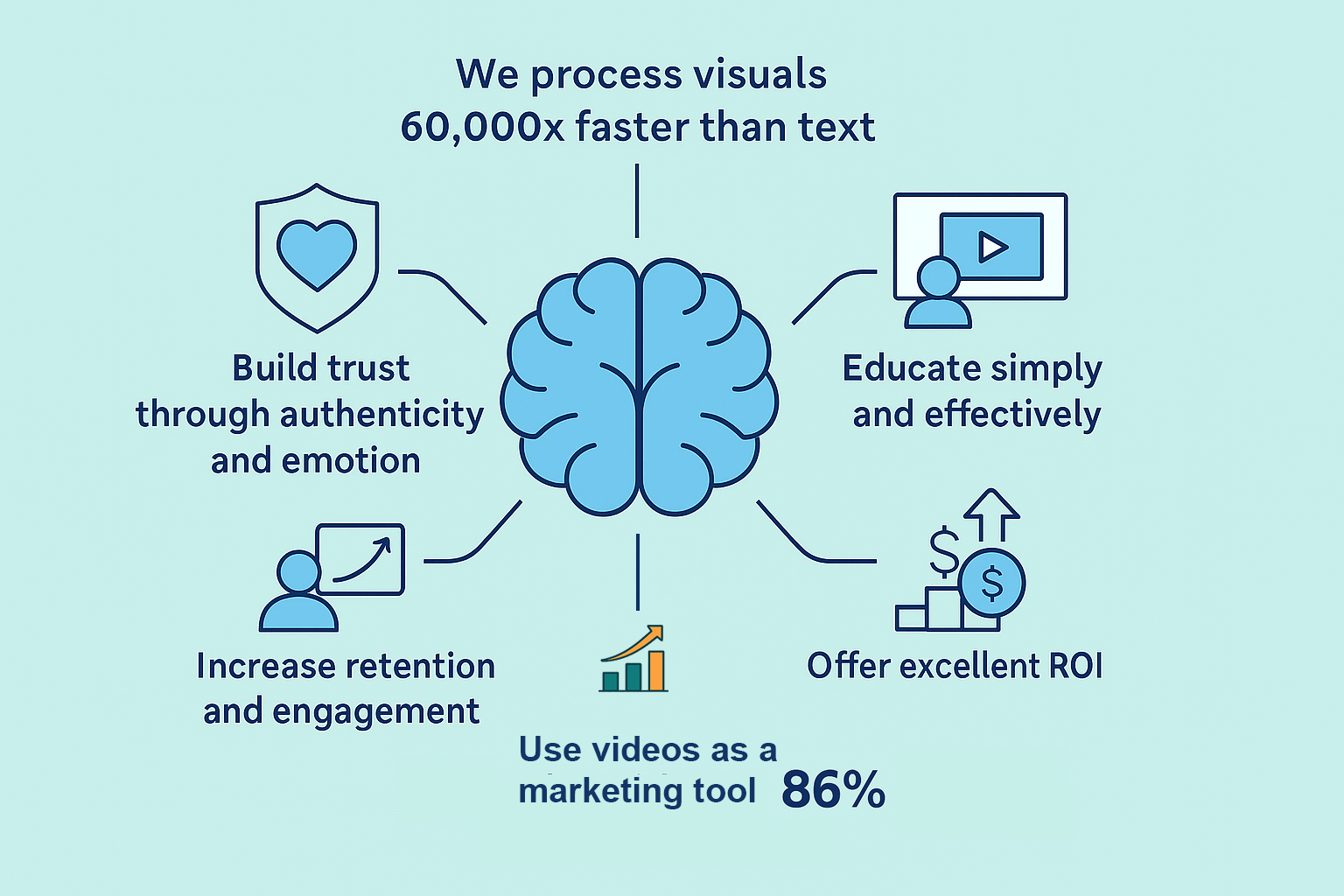

When done right, they:

  • Build trust through authenticity and emotion
  • Educate simply and effectively
  • Increase retention and engagement across platforms
  • Offer excellent ROI, with higher click-through and conversion rates

What makes video even more powerful in healthcare is its versatility. It can demystify complex procedures, introduce new treatments, or highlight caregiver compassion—all while being accessible to audiences of varying education levels. Subtitles, voiceovers, animations, and real-life footage offer flexible ways to engage viewers.

Video also boosts search engine visibility, especially when hosted on YouTube (the second-largest search engine). Well-optimized videos improve SEO rankings, attract traffic, and increase dwell time on websites.

Plus, 86% of businesses already use video as a marketing tool. And in healthcare, where trust and clarity are paramount, those numbers continue to grow because video simply delivers.

Different Styles of Healthcare Marketing Videos to Consider

Choosing the right video format can make or break your healthcare marketing campaign. Each type serves a unique purpose and resonates differently with specific audiences. Here’s a breakdown of the most effective styles—and how they can fit into your strategy:
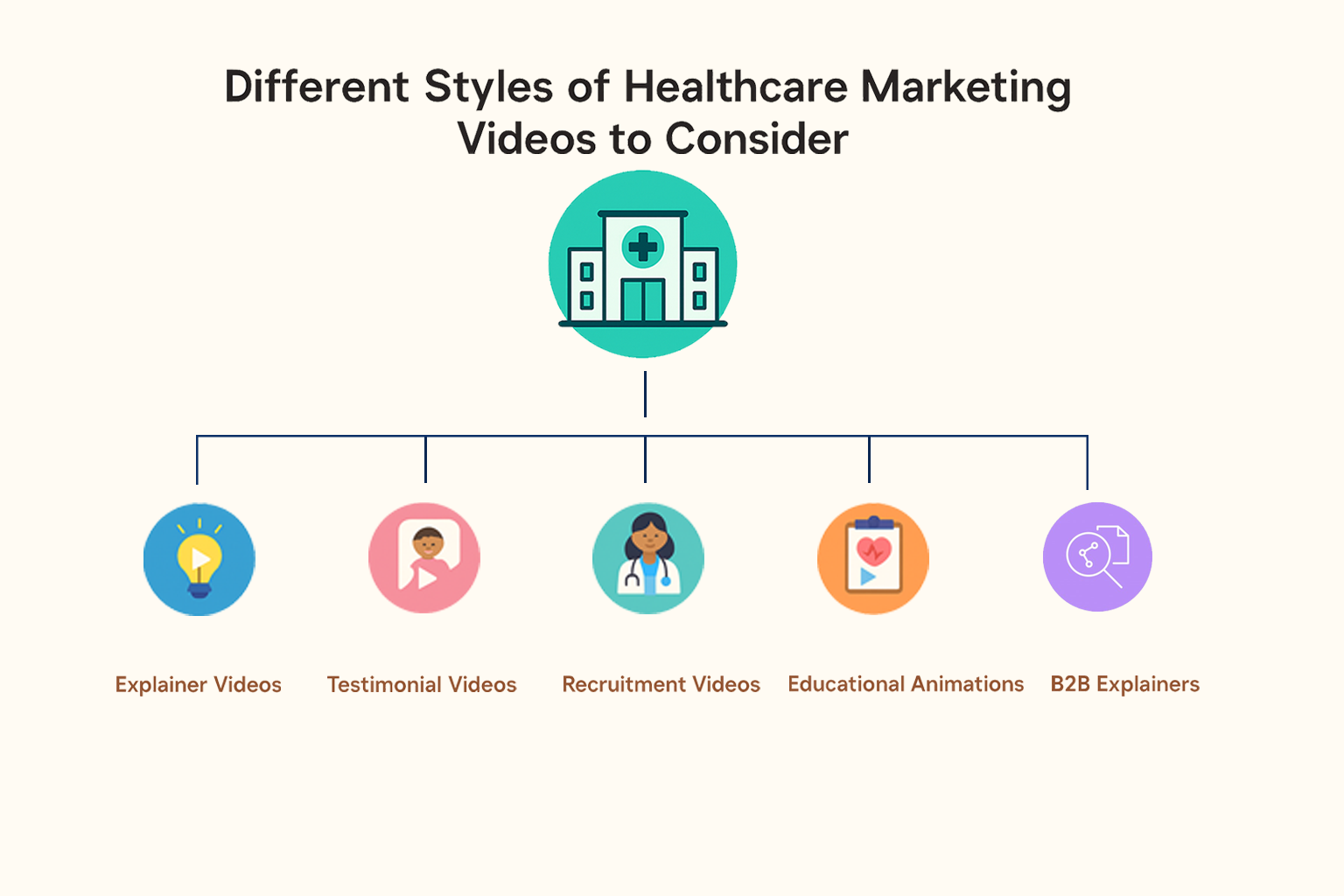
1. Explainer Videos

Purpose: Simplify complex procedures or services.

Use Case: Explain how a new cancer treatment works or how to schedule an appointment online.

Why it works: These videos use visuals and narration to break down confusing topics into easily digestible content. Animated explainers are especially useful for procedures that can’t be filmed live or are too technical to explain through text.

2. Testimonial Videos

Purpose: Build trust through real-life stories.

Use Case: Feature a patient who overcame a serious condition thanks to your hospital’s care.

Why it works: Authentic storytelling creates emotional connections. Testimonial videos humanize your services and provide powerful social proof to prospective patients.

3. Recruitment Videos

Purpose: Attract top-tier healthcare professionals.

Use Case: Showcase your hospital culture, facilities, and team dynamics to potential hires.

Why it works: Behind-the-scenes glimpses and real employee voices can paint an honest and appealing picture of your workplace, helping candidates see themselves in your team.

4. Educational Animations

Purpose: Educate patients in an accessible, visual format.

Use Case: Explain how to manage chronic conditions like diabetes or hypertension.

Why it works: Especially useful for audiences with low literacy or language barriers, animated educational videos increase comprehension and retention while remaining engaging.

5. B2B Explainers

Purpose: Promote complex medical products or services to a professional audience.

Use Case: Introduce hospital buyers to your AI-powered radiology software or biotech innovations.

Why it works: These videos strike the right balance between technical depth and digestibility, helping decision-makers understand your value proposition quickly and clearly.

Tips for Creating Impactful Healthcare Videos

Creating healthcare videos isn’t just about having good visuals—it’s about building trust, delivering clarity, and showing authenticity. Follow these proven tips to ensure your content resonates with patients, professionals, and caregivers alike:
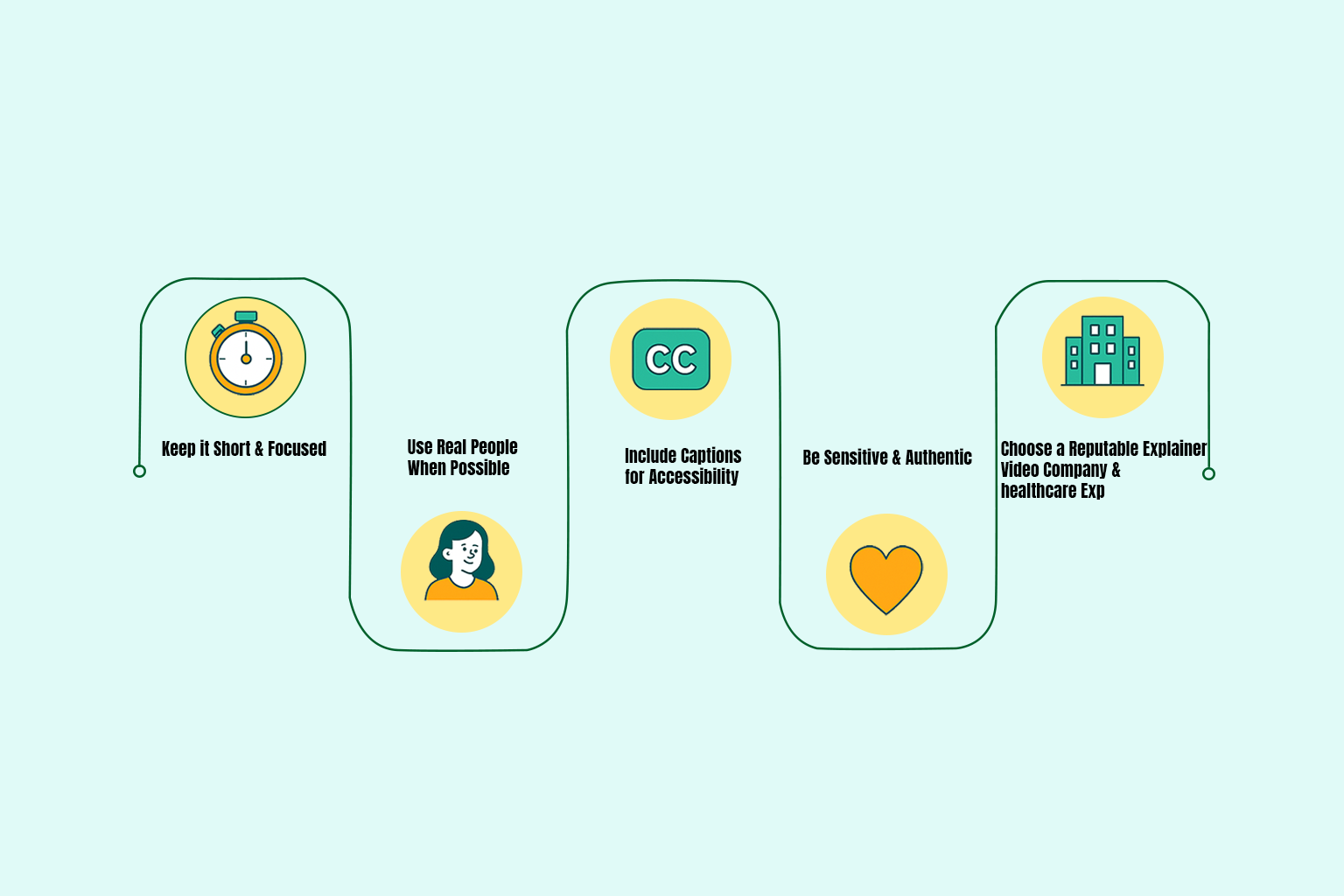
1. Keep It Short and Focused

Ideal Length: 60–120 seconds for social media; up to 3 minutes for web.
Healthcare audiences are often busy or overwhelmed. Get to the point quickly—focus on one clear message per video. Whether you’re explaining a procedure or highlighting a patient story, brevity boosts retention and completion rates.

2. Use Real People When Possible

Featuring actual patients, doctors, or caregivers adds authenticity that actors can’t replicate. Real faces and voices foster emotional connection, making the message more relatable and trustworthy.

3. Include Captions for Accessibility

Over 85% of social videos are watched without sound. Captions make your content accessible to those who are deaf, hard of hearing, or watching in silent environments.

4. Be Sensitive and Authentic

Healthcare topics often involve pain, vulnerability, or sensitive issues. Avoid fear-based messaging or overly clinical language. Speak with empathy, warmth, and clarity.

5. Choose a Reputable Explainer Video

Company with Healthcare Experience
Don’t cut corners—healthcare content requires accuracy and compliance. Work with professionals who understand the regulatory landscape, tone, and visual style required for medical communication.

The Future of Healthcare Marketing Is Visual

As attention spans shrink and skepticism grows, healthcare marketing videos are no longer optional—they’re essential. Whether it’s to build brand trust, explain a new treatment, or attract new hires, video delivers results that traditional content just can’t match.

So, take a cue from these 10 brilliant campaigns and start thinking about how you can use video to humanize your healthcare message.

Need help getting started? Look for companies that specialize in custom explainer videos—especially those with experience in healthcare. The right team can transform your message into something powerful, personal, and unforgettable.

Final Thoughts

From emotional patient stories to animated explainers and slick recruitment videos, the world of healthcare marketing has never been more dynamic. Get creative, stay authentic, and let video be the bridge that connects your organization to the people who need it most.

Healthcare isn’t just about treatment—it’s about trust. And nothing builds trust quite like a story well told on screen.

Unlock the power of captivating visuals with our seasoned expertise! With 7 years of crafting compelling visual content, we’re ready to elevate your brand’s story. From stunning graphics to mesmerizing animations, we bring your vision to life. Let’s create engaging visuals that resonate with your audience and leave a lasting impression. Partner with us today for an unforgettable visual journey! 

Check out our work.