

Why Personal Branding for Doctors Is No Longer Optional
There was a time when doctors didn’t need to think much about branding. A good reputation was built slowly through years of practice, patient satisfaction, and word of mouth recommendations. If a patient had a positive experience, they told family members, friends, neighbors, or colleagues. General physicians referred patients to trusted specialists, and local communities often knew exactly which doctor to visit for specific health concerns. Reputation spread offline and often stayed local.
That traditional system still exists, but it is no longer enough in today’s digital first world.
Now, word of mouth often starts online. Before calling a clinic or booking an appointment, many patients search their symptoms on Google, compare nearby specialists, read online reviews, visit clinic websites, and sometimes even browse social media profiles. In many cases, patients form an opinion within seconds, long before they speak to the receptionist or meet the doctor in person. This means your online presence has quietly become your first impression.
And in healthcare, first impressions carry more weight than ever.
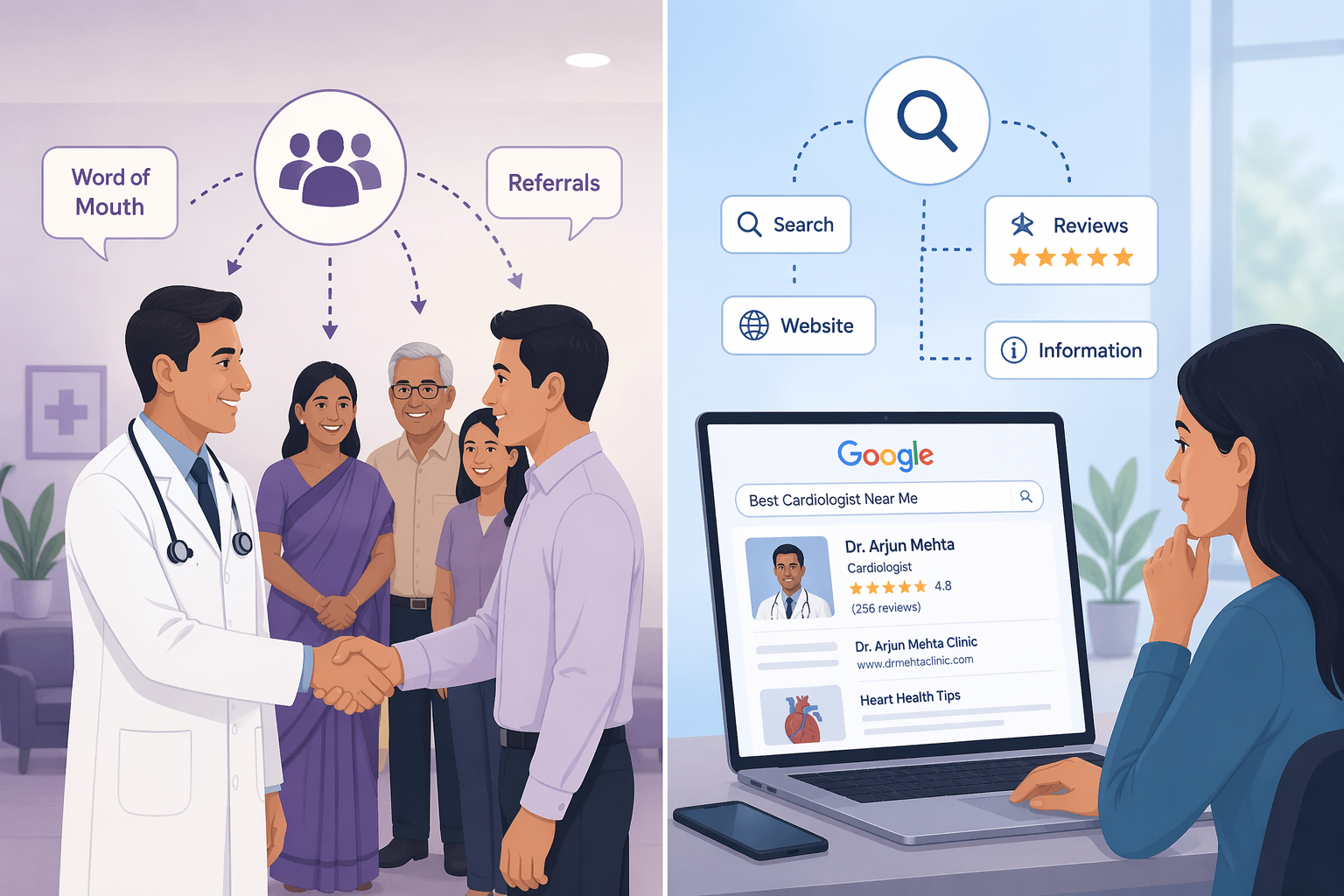
Patients are not casually browsing when they search for a doctor. Most are searching during moments of uncertainty, stress, or urgency. They may be worried about unusual symptoms, searching for second opinions, or trying to find someone they can trust with a serious medical issue. Unlike other industries, healthcare decisions are deeply emotional. People want reassurance before they take action.
This is where personal branding for doctors becomes incredibly valuable.
A strong digital identity helps doctors attract high intent patients people who are actively looking for expertise, guidance, and solutions. These are not random users scrolling for entertainment or casually consuming content. These are people with intent. When they come across a doctor with clear educational content, a professional website, positive reviews, and a trustworthy online presence, trust begins to build instantly.
That trust often becomes the deciding factor.
A strong personal brand can move a doctor from being just another option in search results to becoming the obvious choice. It creates recognition, builds familiarity, and helps patients feel more confident before they ever step into a clinic. In many cases, patients feel like they already know a doctor simply because they have consumed their content or explored their online presence.
Personal branding can also create opportunities beyond patient acquisition. Doctors who build visible expertise online often attract invitations for webinars, podcasts, media interviews, partnerships, speaking engagements, and referral opportunities from other professionals. A well-established online presence can position a doctor as not just a practitioner, but also a thought leader in their field.
In today’s competitive digital environment, visibility creates opportunities. However, not all visibility is valuable. The kind of visibility that matters in healthcare is professional, educational, and trustworthy. That’s what makes personal branding so powerful.
So no, personal branding is not vanity. It is not about collecting likes, chasing trends, or becoming an influencer. It is about becoming visible in a way that builds trust, authority, and credibility.
In simple terms, personal branding for doctors is visibility with purpose.
The Shift From Visibility to Credibility
One of the biggest mistakes people make online is confusing visibility with credibility. While both involve being seen, they serve very different purposes—especially in healthcare.
Visibility simply means people notice you. Credibility means people trust you. And when patients are choosing a doctor, trust matters far more than attention.
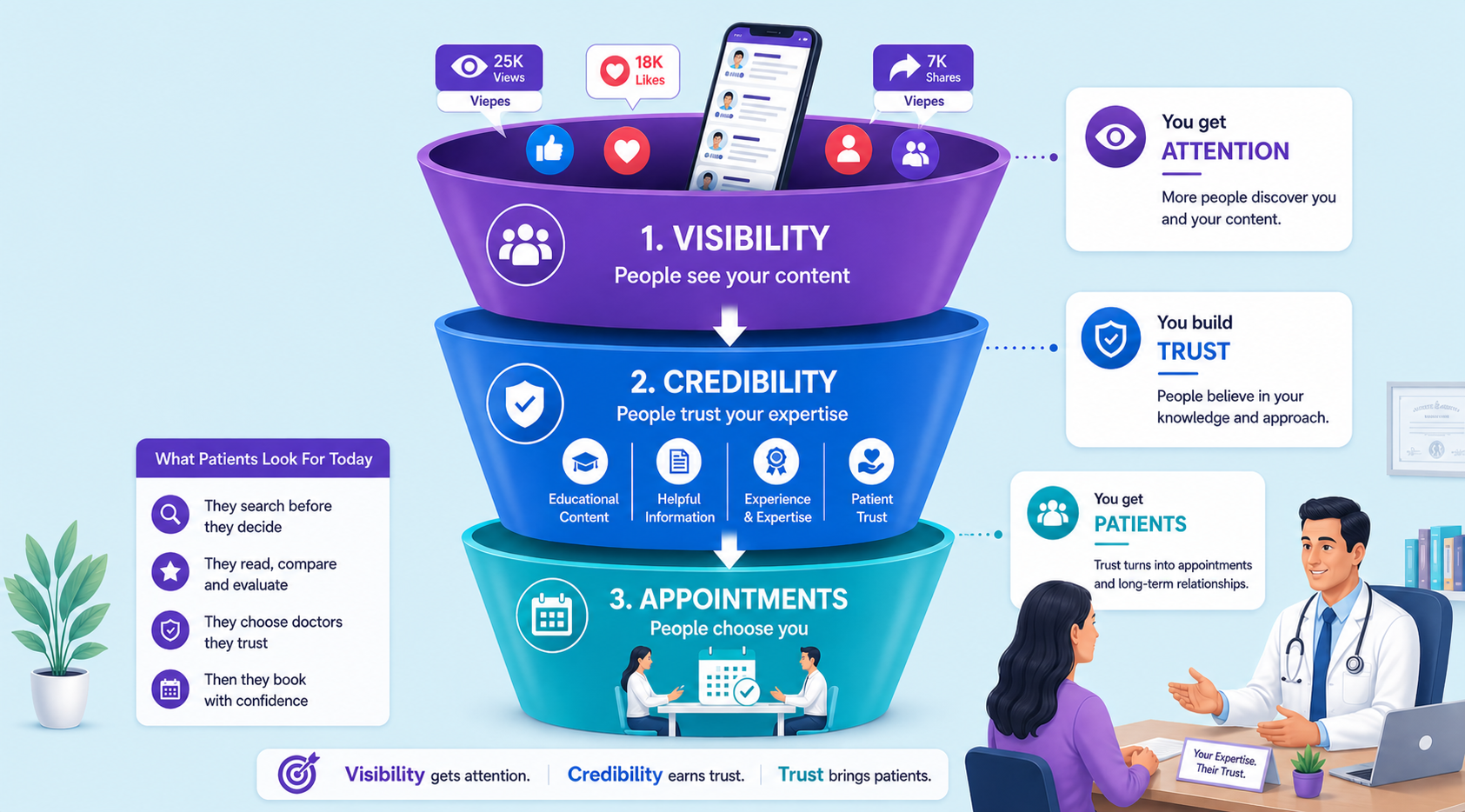
A doctor posting entertaining Reels, funny skits, or trending content may get views, likes, and shares. That kind of content can increase online reach and create temporary visibility. However, visibility alone does not always lead to consultations, long-term patient relationships, or trust.
On the other hand, a doctor posting educational, helpful, and reassuring content builds credibility. A video explaining the early signs of diabetes, a post busting myths about PCOS, or an article on preventive heart care can position a doctor as a trusted expert. This kind of content may not go viral overnight, but it creates something much more valuable—authority.
And in healthcare, authority often creates action.
This is where many doctors misunderstand social media strategy. The goal is not to become famous or gain millions of followers. The goal is to become trusted by the right audience.
Patients often search for doctors during moments of stress, uncertainty, or fear. In those moments, they are not looking for the most entertaining doctor online. They are looking for someone who appears knowledgeable, calm, professional, and reliable.
That’s why contextual authority matters. Contextual authority means becoming known for a specific type of expertise. For example, a dermatologist who regularly shares acne treatment advice may become the go-to expert for acne-related concerns. A gynecologist consistently posting about hormonal health and PCOS may build authority in women’s wellness. A cardiologist educating audiences about preventive heart care may become a trusted voice in cardiovascular health.
These doctors may not go viral in the traditional social media sense, but they become memorable over time—and memorable experts are often the ones patients choose first. In simple words, visibility gets attention, but credibility gets appointments.
Find Your Unique Value Proposition Online
Even within the same medical specialty, no two doctors are exactly the same. Two equally qualified professionals may have similar degrees and experience, yet offer completely different patient experiences. One may be known for explaining complex diagnoses in simple language, another for a compassionate bedside manner, and another for using the latest minimally invasive treatments. These differences shape how patients perceive and remember you online.
That difference is known as your Unique Value Proposition (UVP).
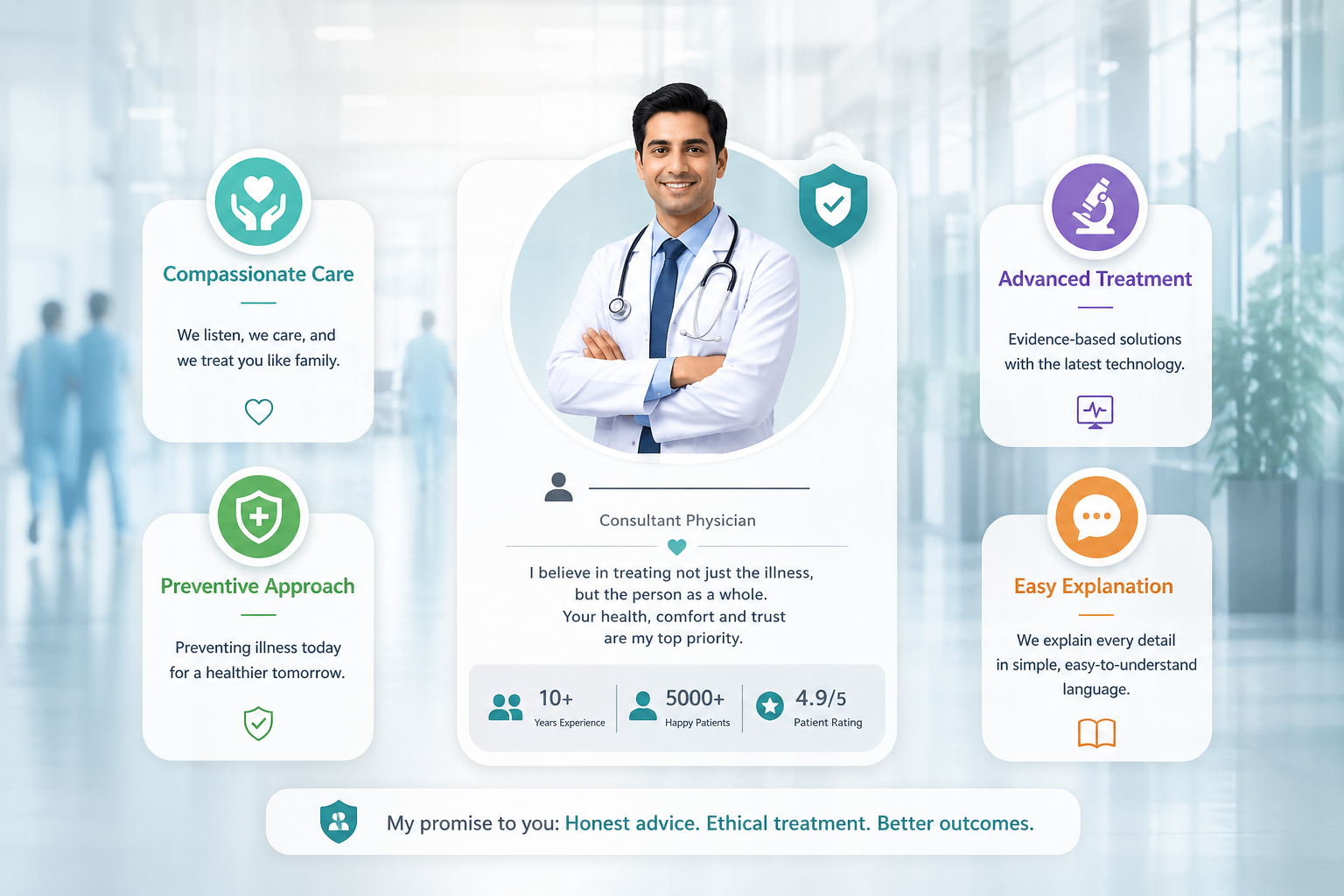
Your UVP is what makes your personal brand stronger, clearer, and easier to understand. In simple terms, it answers one important question: Why should someone choose you over another doctor?
In today’s competitive digital landscape, patients are not just searching for qualifications. They are looking for someone whose approach feels right for their needs. According to Forbes, a strong value proposition helps businesses and professionals communicate their unique strengths more effectively, and the same principle applies to personal branding for doctors.
Your UVP may come from your communication style, your treatment philosophy, or your unique area of focus. For example, you may simplify complex medical conditions in a way patients understand easily. You may focus on preventive care rather than over-medication. You may be known for compassionate and patient friendly treatment, or you may specialize in advanced procedures and modern healthcare solutions.
A clear UVP helps patients quickly understand what makes you different.
For Example,I help working professionals prevent lifestyle diseases through practical preventive healthcare.
This kind of statement creates instant clarity and helps position you in the minds of your audience. And in healthcare, clarity often builds confidence because patients are more likely to trust a doctor who clearly communicates their expertise and approach.
Your Digital Presence Is Your New First Impression
Today’s patients are more informed and digitally aware than ever before. Before they schedule an appointment, many of them do their own research online. They search for symptoms on Google, compare specialists, read reviews, and look for signs that help them decide whether a doctor feels trustworthy and professional. In many cases, patients form an opinion before they ever make a call.
That’s the reality of modern healthcare.
Patients Google before they book.
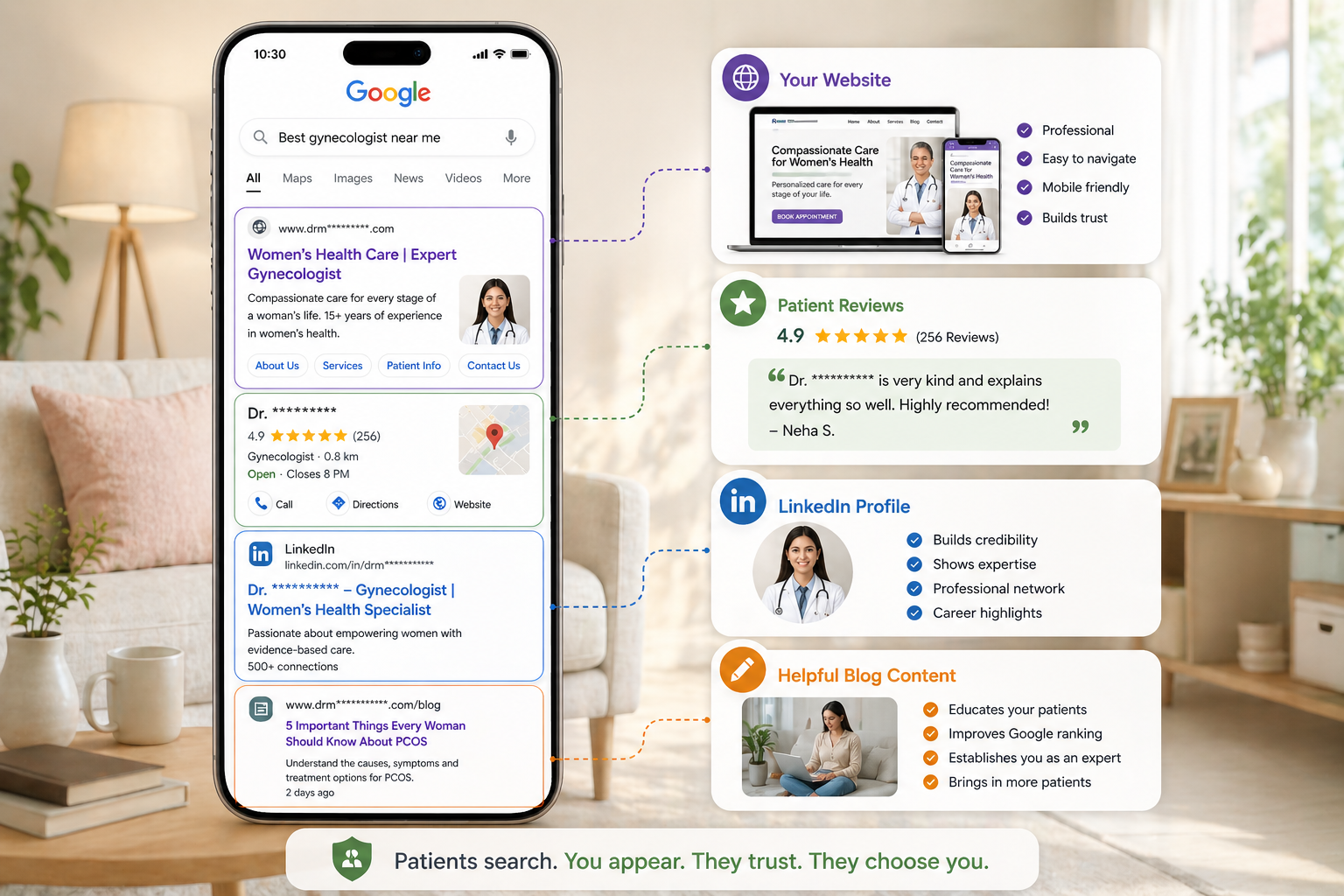
When someone searches for your name or clinic online, they are often looking for more than just your contact number. They may search for your qualifications, specialization, patient reviews, clinic website, published content, or even your social media presence. Everything they find contributes to how they perceive you.
This is why a professional digital presence has become essential in personal branding for doctors.
A strong online presence creates trust before the first consultation. According to Google, consumers increasingly rely on online search and reviews before making important decisions, and healthcare is no exception.
A doctor’s digital presence should ideally include a few important elements:
- a polished and professional website,
- active professional profiles,
- educational content, and
- updated contact or booking information.
Together, these create a stronger first impression and make it easier for patients to trust you.
A Personal Website Builds Instant Credibility
Social media can help with visibility, but your website is your true digital home.
Unlike social platforms, a website is an owned asset. It doesn’t depend on algorithms, trends, or platform changes. You control the message, design, and user experience.
A professional website should clearly showcase your:
- qualifications and certifications,
- areas of expertise,
- treatment philosophy,
- patient testimonials,
- blog articles or educational resources, and
- booking or contact details.
A clean, well designed website immediately makes a doctor appear more established, professional, and trustworthy. In many cases, a website is the difference between looking “available online” and looking truly credible.
Long-Form Content Builds Deeper Authority
Shortform videos may create attention quickly, but long form content creates authority over time. Blogs, newsletters, and in depth articles allow doctors to explain medical topics in a clear and detailed way. This helps patients understand complex issues while also improving your website’s visibility in search engines.
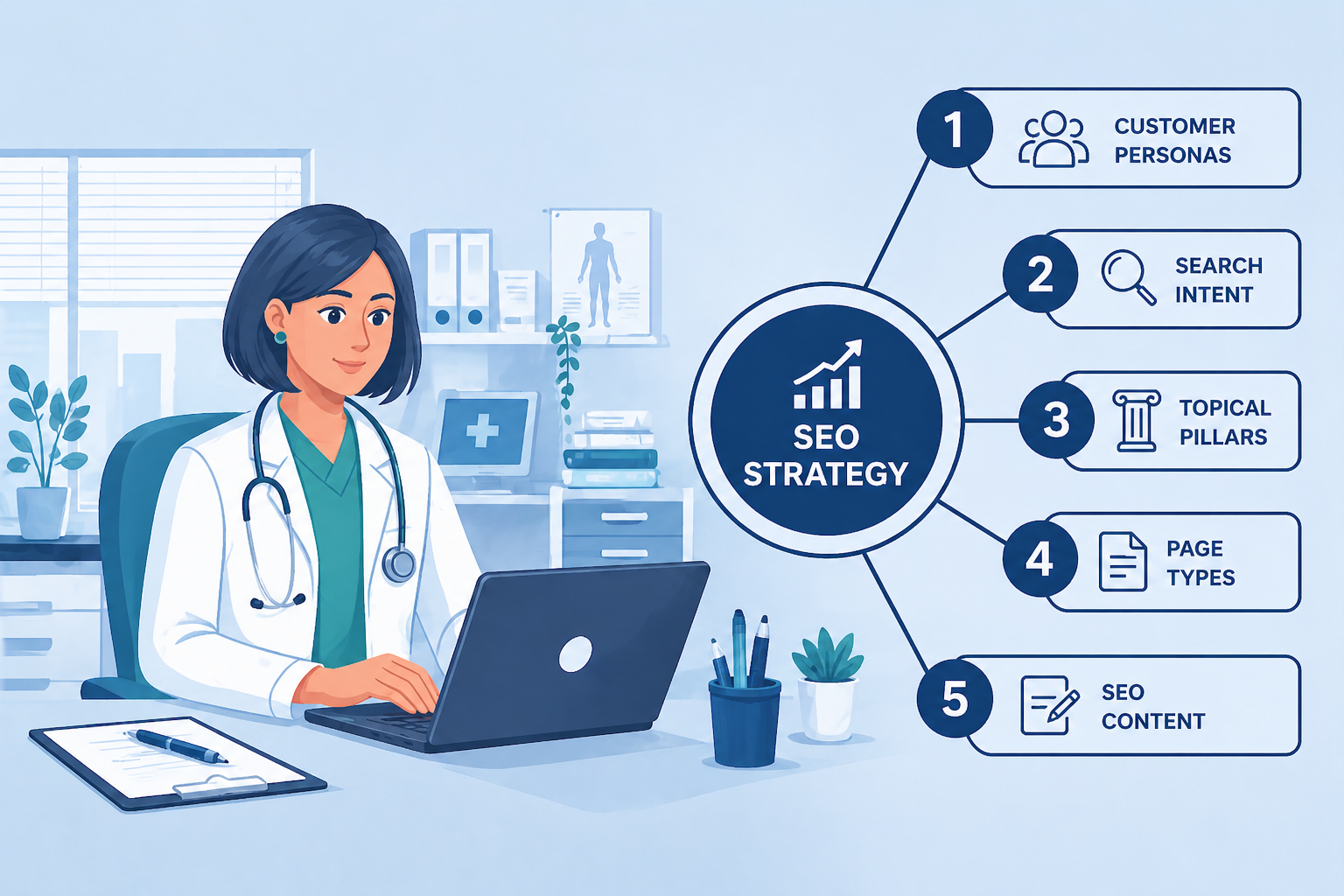
A detailed blog on “PCOS symptoms women often ignore” can rank on Google for years and bring consistent traffic. An article about “when knee pain becomes serious” can attract people actively looking for expert advice. A newsletter can keep patients informed and maintain trust over time.
A long-form content often performs better in search rankings because it provides depth and answers multiple related questions in one place. In simple words, depth builds credibility.
LinkedIn Helps Doctors Build Thought Leadership
Many doctors focus only on platforms like Instagram or YouTube, but LinkedIn is often underrated. It is one of the most powerful platforms for professional visibility and thought leadership.
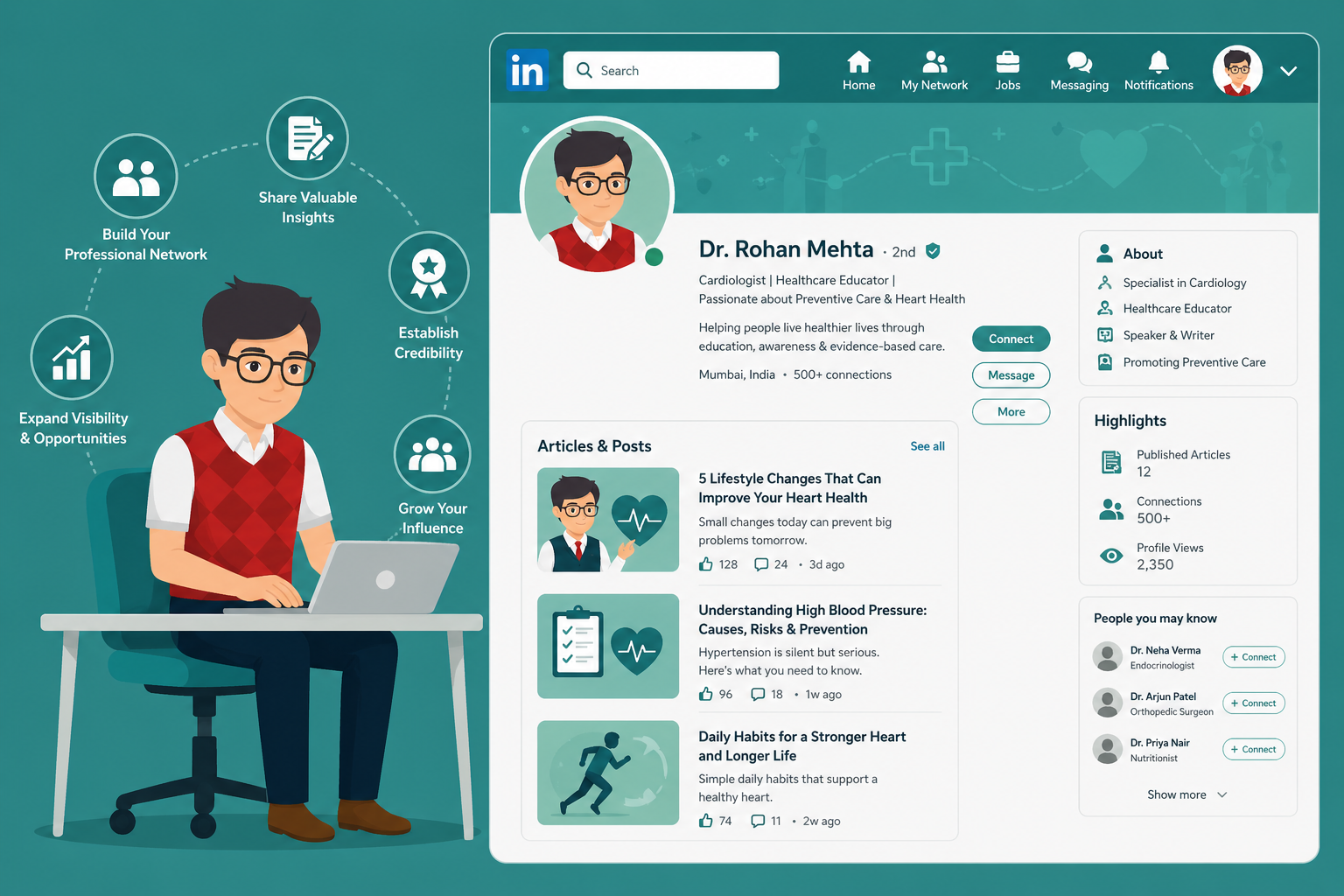
Doctors can use LinkedIn to share healthcare insights, explain new research in simple terms, discuss patient behavior trends, and build referral relationships with other professionals. Unlike entertainment focused platforms, LinkedIn allows doctors to present themselves in a more professional and authoritative way.
It can also create opportunities beyond patient acquisition, including speaking engagements, collaborations, media features, and networking opportunities.
A LinkedIn, professionals who consistently share valuable insights are more likely to build stronger networks and industry authority.
For doctors looking to strengthen personal branding for doctors, LinkedIn can become a valuable long-term platform for credibility and growth.
Consistency Matters More Than Virality
In the world of personal branding for doctors, consistency often delivers better long-term results than virality. While one viral post may bring temporary attention, it rarely builds lasting trust or meaningful patient relationships.
Patients trust familiarity.
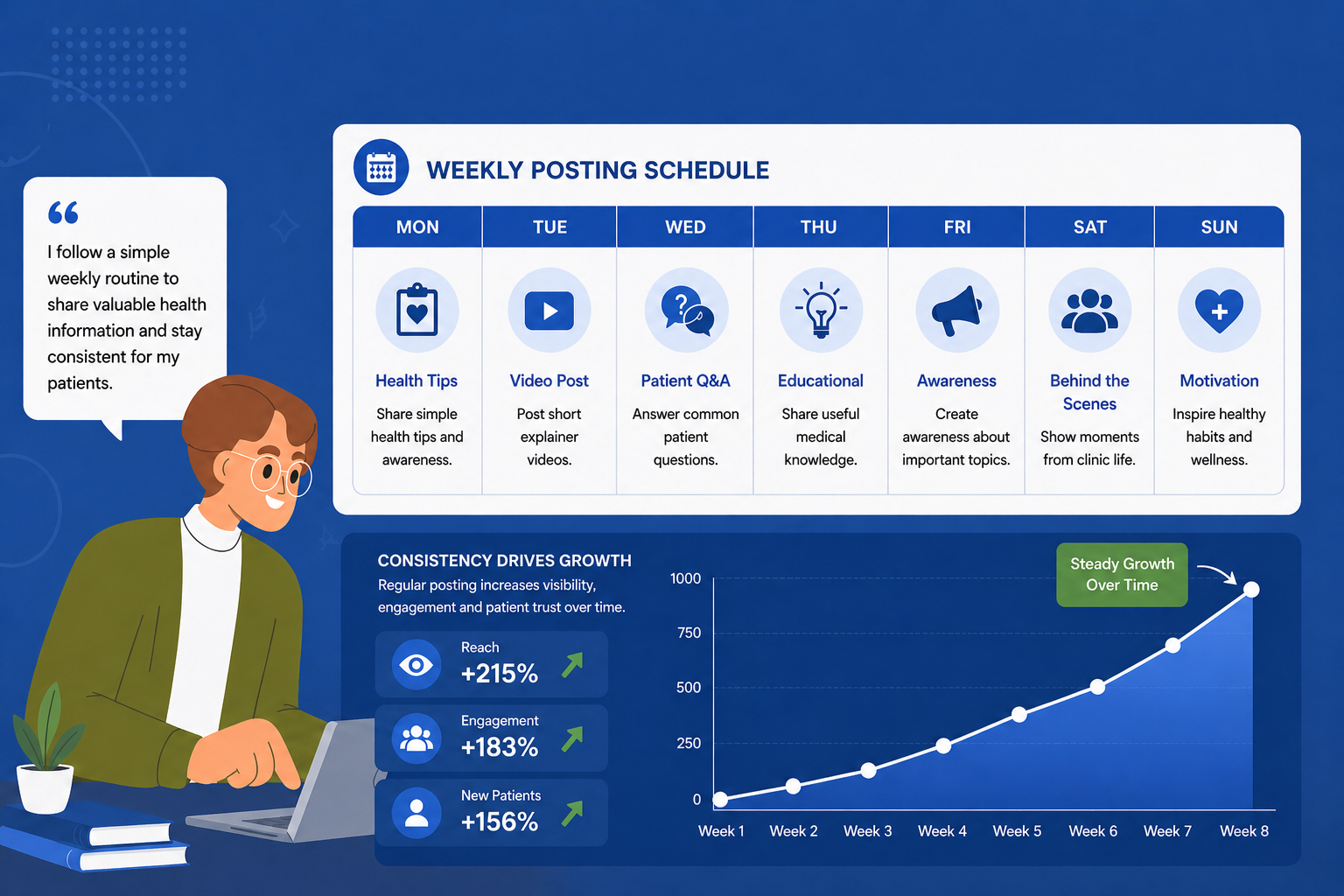
When people repeatedly see useful, educational, and reassuring content from the same doctor, trust builds naturally over time. Regular visibility creates recognition, and recognition creates confidence. A doctor who consistently shares valuable insights becomes more memorable than one who gets millions of views once and then disappears.
This is why consistency matters so much in healthcare marketing.
A doctor posting one helpful blog every week, sharing regular educational updates on social media, and staying active on professional platforms often builds a stronger and more credible online presence than someone relying on occasional viral content. Consistency signals reliability, and reliability is one of the most important qualities patients look for in a healthcare provider.
Consistent content creation also improves long term SEO and audience engagement. Search engines tend to reward websites that publish fresh, relevant content regularly. At the same time, audiences begin to expect and look forward to your updates. Whether it’s a blog post, an educational video, or a short health tip, every piece of content adds to your authority over time.
In simple terms, one viral post may create awareness but consistent content builds a brand.