
State Wise Air Quality Analysis for 2026
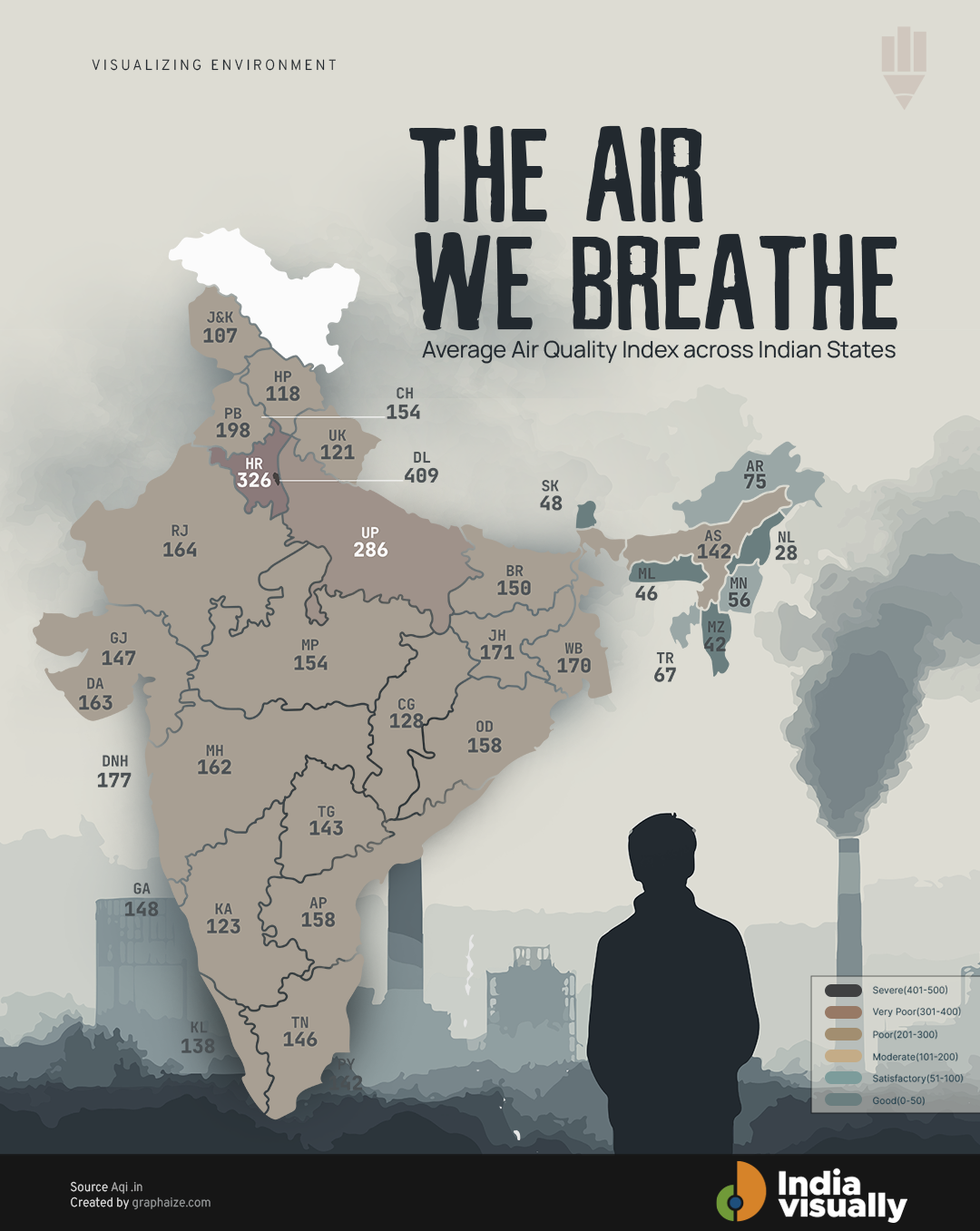
Air quality in India is becoming one of the country’s biggest environmental challenges. While pollution spikes during winter often dominate headlines, the broader reality goes far beyond seasonal smog. Across multiple Indian states in 2026, AQI data revealed a growing divide between highly urbanized regions struggling with pollution and cleaner states benefiting from lower industrial pressure and stronger ecological balance.
From Delhi recording an AQI above 400 to northeastern states remaining below 50, the numbers highlight major differences in urban planning, industrial density, traffic congestion, and environmental management.
The average air quality index across Indian states is no longer just an environmental metric. It has become a reflection of how development, infrastructure growth, transportation systems, and energy consumption shape everyday life across the country.
According to the official AQI framework developed by the Central Pollution Control Board, AQI levels are categorized from “Good” to “Severe” based on pollutant concentration and public exposure risk.
India’s Most Polluted States in 2026
Some Indian states continue to experience extremely high AQI levels driven by rapid urbanization, vehicle emissions, industrial expansion, and construction activity.
In January 2026, Delhi recorded an AQI of 409, placing it firmly within the severe pollution category. Haryana followed with AQI 326, while Uttar Pradesh recorded AQI 206. These numbers reflect far more than temporary weather conditions.
Delhi’s pollution burden is closely tied to extremely high vehicle density, heavy traffic congestion, large-scale infrastructure projects, and industrial emissions surrounding the NCR region. Construction dust remains another major contributor to poor air quality in India, particularly in expanding metro cities.
Seasonal crop residue burning in nearby agricultural states further worsens pollution levels when weather conditions trap pollutants near the surface.
Haryana and Uttar Pradesh face similar structural pressures. Rapid urban growth, increasing energy demand, freight transportation networks, coal dependence, and rising industrialization continue to push AQI levels upward.
The challenge is becoming increasingly year round rather than seasonal. Growing population pressure and expanding urban infrastructure mean many cities now experience persistent air quality stress across multiple months.
Why Some Indian States Still Have Cleaner Air
While northern urban centers struggle with rising pollution, several northeastern states continue to record some of the cleanest air in India.
Nagaland recorded an AQI of 28, Meghalaya 39, Mizoram 42, and Sikkim 48. These levels fall within the “Good” to “Satisfactory” AQI categories and show a sharp contrast compared to heavily polluted urban states.
One major reason is lower industrial concentration. These states have fewer heavy manufacturing zones, thermal power plants, and large scale industrial corridors contributing to airborne particulate matter.
Vehicle ownership is also significantly lower. Smaller urban centers naturally experience less traffic congestion, reducing emissions from fuel combustion.
Another important factor is forest cover. Northeastern states maintain stronger ecological balance due to dense greenery and lower levels of aggressive urban expansion. Forest ecosystems help improve overall environmental conditions and support cleaner air circulation.
Geography also plays a role. Hilly terrain improves natural air movement and reduces the buildup of pollutants near ground level, unlike flat northern plains where pollution often becomes trapped.
Lower construction activity further reduces dust pollution, which is one of the largest contributors to AQI spikes in major Indian cities.
This demonstrates that air quality in India is strongly linked to development patterns, infrastructure planning, industrial density, and environmental preservation.
How Poor Air Quality Affects Everyday Life
Poor air quality affects far more than environmental statistics. Rising AQI levels increasingly influence how people live, travel, work, and experience cities every day.
In highly polluted regions, smog reduces visibility and creates difficult outdoor conditions, especially during winter months. Traffic heavy roads, dust filled construction zones, and industrial emissions contribute to an increasingly uncomfortable urban environment.
People often reduce outdoor exercise, walking, and recreational activities during severe AQI days. Schools occasionally restrict outdoor programs, while tourism and city attractiveness can also suffer due to pollution concerns.
Air pollution additionally affects productivity and quality of life. Long exposure to polluted environments may lead to discomfort and environmental stress in densely populated cities.
PM2.5 particles remain one of the biggest concerns because they are small enough to remain suspended in the air for long periods. According to the United Nations Environment Programme, particulate pollution is one of the most serious environmental risks facing rapidly urbanizing countries.
Government Response and the Path Forward
India has introduced multiple initiatives to address worsening air pollution levels across major urban regions.
One of the most visible emergency measures is the Graded Response Action Plan (GRAP), implemented during severe pollution episodes in the National Capital Region. GRAP introduces restrictions on construction activities, diesel generators, and high emission operations when AQI crosses dangerous thresholds.
India has also launched the National Clean Air Programme (NCAP), which focuses on reducing particulate pollution across major cities through long term action plans.
India’s Air Quality Divide Is Growing
The AQI data from 2026 clearly shows that air pollution in India is becoming increasingly structural rather than seasonal.
Some states continue recording severe AQI levels driven by industrialization, traffic density, and rapid urban expansion, while others maintain relatively cleaner air through lower congestion and stronger ecological balance.
The difference reflects how regions manage infrastructure growth, transportation systems, industrial concentration, and environmental protection.
As India continues urbanizing at a rapid pace, maintaining cleaner air will become one of the country’s most important sustainability challenges.
Because ultimately, the air people breathe is becoming one of the clearest indicators of how balanced development truly is.
Unlock the power of captivating visuals with our seasoned expertise! With 7 years of crafting compelling visual content, we’re ready to elevate your brand’s story. From stunning graphics to mesmerizing animations, we bring your vision to life. Let’s create engaging visuals that resonate with your audience and leave a lasting impression. Partner with us today for an unforgettable visual journey!