
Obesity Rates in India: State-wise Data of the Heaviest States
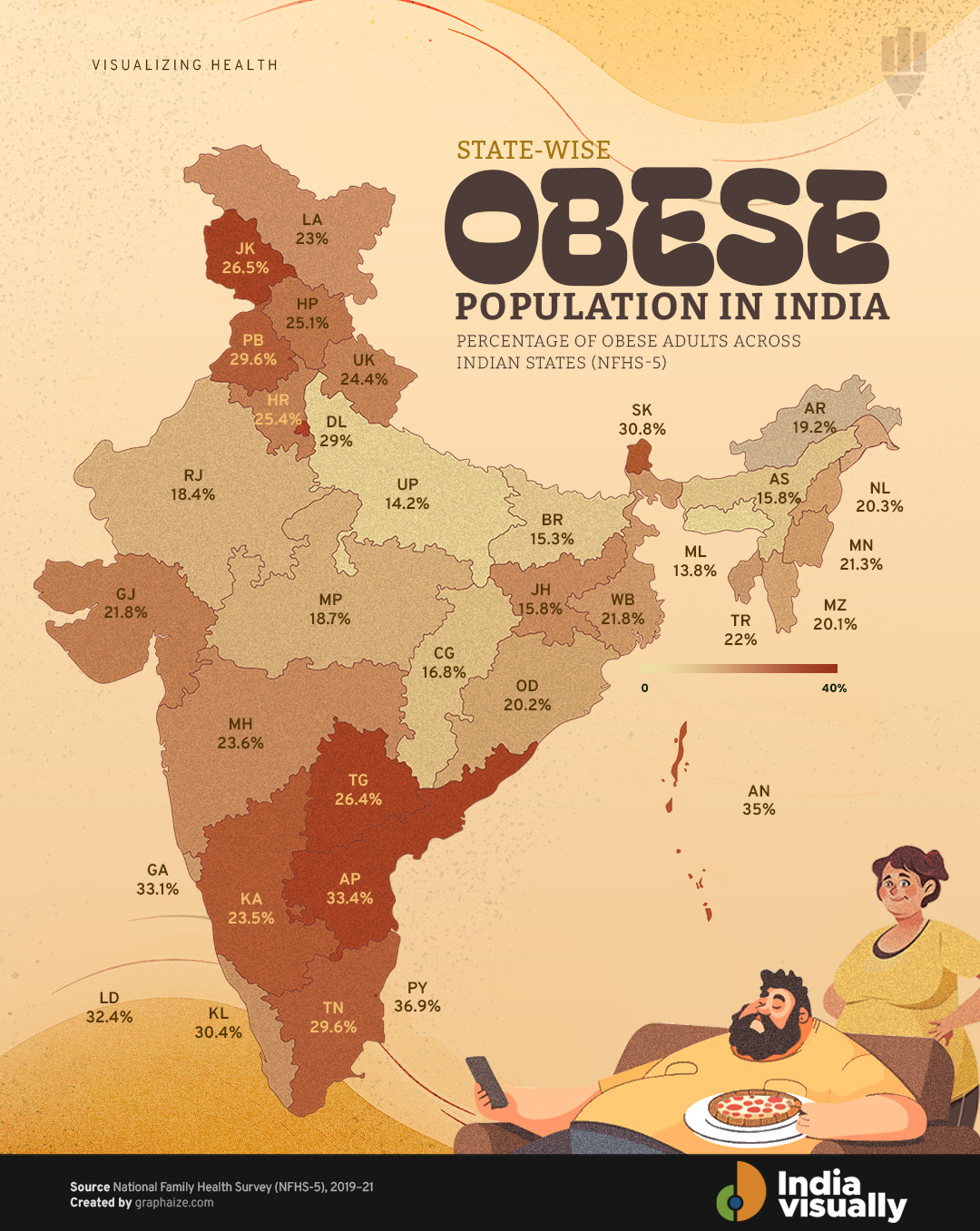
When we talk about India’s health story, the conversation often used to revolve around malnutrition. But over the last two decades, that story has dramatically changed. Today, the issue isn’t just about lack of food — it’s about too much of the wrong kind. The latest obesity in India state wise data paints a worrying picture: India is no longer a country battling only undernutrition; it’s also grappling with rising obesity levels across almost every state.
The National Family Health Survey (NFHS-5) reveals that nearly one in four Indians is obese. That’s a massive shift from just a decade ago. And this isn’t limited to metros — even smaller towns and rural areas are catching up fast. Let’s take a closer look at which states are leading this weighty race and what’s driving these numbers.
What Is Obesity and Why It Matters
Before diving into the numbers, let’s quickly understand what obesity actually means. Obesity is a condition where excess body fat accumulates to the point that it can harm your health. It’s measured using the Body Mass Index (BMI) — if your BMI is 25 or higher, you’re considered overweight, and if it’s 30 or higher, you’re obese.
According to the World Health Organization (WHO), obesity is officially classified as a disease, not just a lifestyle issue. Globally, over 1.9 billion adults were overweight in 2016, and more than 650 million were obese. The numbers have only grown since then, making obesity a pandemic in its own right.
Why does it matter so much? Because obesity isn’t just about looks — it’s linked to type 2 diabetes, heart diseases, high blood pressure, certain cancers, and even mental health issues. In India, where healthcare systems are already under pressure, rising obesity rates mean a ticking time bomb for public health.
A Nation in Transition: From Underweight to Overweight
For years, India was known for its struggle with undernutrition. But as the economy grew, so did our waistlines. Sedentary jobs, urban lifestyles, processed foods, and long screen hours have slowly tilted the balance. Today, India is experiencing an epidemiological transition — shifting from problems of underweight to those of overweight and obesity.
The NFHS-5 data clearly shows that obesity levels in India are high across all zones, from north to south and east to west. The reasons vary — diet, income, education, and even cultural habits — but the outcome is the same: rising obesity.
The Heaviest States: Who Tops the Chart?
Let’s dig into what the obesity in India state wise data actually shows. The numbers tell a story of regional contrasts — some states are leading in fitness, while others are clearly tipping the scales.| State / UT | Percentage of Obese Adults | Key Insight |
|---|---|---|
| Puducherry (PY) | 36.9% | Highest obesity rate in India; urbanized lifestyle and dietary changes. |
| Andaman & Nicobar Islands (AN) | 35% | Coastal region with rapidly urbanizing population and lifestyle shifts. |
| Goa (GA) | 33.1% | High standard of living and low physical activity contribute to rising obesity. |
| Lakshadweep (LD) | 32.4% | Limited mobility and changing diets fueling obesity rise. |
| Kerala (KL) | 30.4% | Urbanized population, sedentary jobs, and rich food culture. |
| Sikkim (SK) | 30.8% | Fast urban growth and processed food adoption among younger groups. |
| Tamil Nadu (TN) | 29.6% | High-income state with dietary excesses and less physical activity. |
| Punjab (PB) | 29.6% | Northern leader; rich cuisine and low physical activity levels. |
| Delhi (DL) | 29% | Capital city’s fast-paced, sedentary lifestyle contributing to obesity. |
The Leaner States: Who’s Still Keeping Fit?
Not all states are facing the same crisis level. According to the obesity in India state wise data, certain states, especially in the east and central zones, show relatively lower obesity rates. Jharkhand records around 15.8%, while Bihar follows closely at 15.3%. In the northeastern region, states like Assam and Meghalaya hover around 15 to 16%, indicating that these areas still maintain lower levels of obesity compared to the national average.
This could be due to higher physical activity levels, more traditional diets, and less dependence on processed or packaged foods. However, the gap is steadily closing — as urbanization, income, and lifestyle changes spread across these regions, waistlines are beginning to expand too.
Why Are Southern States So High on the Obesity Scale?
If we look at obesity in India state wise data, the southern states stand out as the heaviest. But why?
The answer lies in urbanization and lifestyle. States like Kerala, Tamil Nadu, and Karnataka have better economic indicators, which means more access to food, more sedentary jobs, and less physical labor. Add to that the popularity of calorie-rich foods and a strong culture of eating out, and you get a perfect recipe for rising obesity.
Another factor is education and awareness. While literacy rates are high in the South, awareness about healthy lifestyles hasn’t kept up. A common misconception is that obesity equals prosperity, which delays preventive action.
North India’s Weight Problem
The North tells a similar story. Punjab, Haryana, and Delhi have some of the highest obesity rates. Punjab alone has 29.6%, which isn’t surprising given its rich cuisine and high-calorie diets. From ghee-laden parathas to heavy dairy consumption, traditional diets that once fueled farm laborers now contribute to excessive fat gain in more sedentary urban lives.
Women in northern India are particularly affected — data shows that the odds of being obese are higher among women than men, especially in urban areas. This gender gap is partly due to limited outdoor activity for women and post-pregnancy weight gain that often goes unmanaged.
The Role of Physical Activity (or the Lack of It)
If there’s one modifiable factor that stands out across all studies, it’s physical inactivity. Sedentary lifestyles — whether it’s office work, long commutes, or binge-watching — are fueling India’s obesity problem. Experts say physical activity and aging are the strongest determinants of obesity in India.
In states with more urban populations, walking or cycling is often replaced by cars and screens. Meanwhile, gym memberships or sports participation remain low compared to global averages. Simply put, Indians are moving less than ever before.
Diet plays an equally big role. Traditional Indian meals were once balanced — with grains, pulses, vegetables, and minimal oils. But modern eating habits have flipped that script. The rise of fast food, sugary drinks, and ultra-processed snacks has drastically increased calorie intake.
Even in smaller towns, chains and delivery apps have made high-fat, high-sugar food widely available. Combined with low physical activity, it’s easy to see why obesity rates are skyrocketing.
Government and Policy Response
The rising obesity trend has caught the attention of policymakers. India’s National Programme for Prevention and Control of Cancer, Diabetes, Cardiovascular Diseases and Stroke (NPCDCS) aims to tackle obesity through awareness campaigns and screenings.
Schools are also being encouraged to promote physical activity and healthier meals, but implementation varies widely between states. More robust measures — like taxation on sugary drinks or stricter food labeling — are needed to make a lasting impact.
Reducing obesity isn’t just about individual choices — it’s about systemic change. The table below highlights key strategies India can adopt to tackle this growing health challenge.
| Strategy | Key Action |
|---|---|
| Public Awareness | Educate people about healthy eating, portion control, and the importance of physical activity. |
| Urban Planning | Design walkable cities with parks, bike lanes, and open fitness spaces to encourage movement. |
| Nutrition in Schools | Promote balanced meals and physical education from early childhood to build lifelong habits. |
| Healthcare Access | Ensure regular BMI screenings, counseling, and early intervention for at-risk individuals. |
| Cultural Shifts | Encourage positive attitudes toward fitness and body awareness, especially among women. |
Every small step — from swapping sugary drinks for water to walking 30 minutes a day — can make a big difference when done collectively.
Conclusion: India’s Weighty Challenge
The obesity in India state wise data gives us a clear message: India’s battle with obesity is real, widespread, and accelerating. From Puducherry’s 36.9% to Bihar’s 15.3%, the variation across states tells a complex story of lifestyles, income, and awareness.
While some states are more affected than others, no region is immune. Obesity is now a national health issue — one that demands both personal responsibility and public action.
The good news? It’s still reversible. With better food choices, active living, and consistent awareness, India can tip the scale back toward a healthier future.
So the next time you glance at your plate or choose the elevator over the stairs, remember — these everyday choices are shaping not just your body, but the country’s health story too.
Unlock the power of captivating visuals with our seasoned expertise! With 7 years of crafting compelling visual content, we’re ready to elevate your brand’s story. From stunning graphics to mesmerizing animations, we bring your vision to life. Let’s create engaging visuals that resonate with your audience and leave a lasting impression. Partner with us today for an unforgettable visual journey!