
B2B Marketing Fundamentals: Why AI Strategy Looks Different Here
B2B isn’t just “B2C with bigger invoices” it’s a fundamentally different game, and applying consumer-brand thinking to your AI strategy is a fast way to misfire.
B2B marketing is about promoting products or services from one business to another, and it’s built on three pillars: trust, long term relationships, and demonstrable ROI. Nobody is impulse buying a $50,000 software contract because an ad made them feel something. They’re comparing vendors, looping in their CFO, checking case studies, and asking their network for opinions.

That’s the other big difference B2B purchases usually involve multiple stakeholders and can take weeks or even months to close. A marketing director might love your product, but if the head of IT doesn’t trust your security posture, the deal stalls. Compare that to a B2C purchase, which might happen in the time it takes to scroll past an Instagram ad.
B2C brands win hearts; B2B brands win trust. In an AI saturated world where anyone can generate polished looking content in seconds, trust becomes even more valuable and even harder to fake convincingly over a months long sales cycle. That’s why staying ahead in AI era requires a B2B specific playbook rather than borrowed consumer tactics.
This also means the metrics you should care about look different. A viral social post might be a great outcome for a consumer brand, but for a B2B founder, a hundred thousand views mean very little if none of those viewers sit on a buying committee for a company that actually needs your product. The AI tools flooding the market right now are mostly optimized for reach and speed churning out more content, faster, for a wider audience. But B2B growth has always been a game of precision over volume: fewer, better qualified conversations that move a specific set of stakeholders toward a specific decision. Any AI strategy you build needs to be judged against that reality, not against consumer marketing benchmarks that simply don’t apply to your world.
AI Should Be Your Co-Pilot, Not Your Autopilot
This is also where a lot of founders get it wrong: generative AI has made content production absurdly easy. You can spin up a blog post, an email sequence, or a LinkedIn caption in minutes. But easy doesn’t mean effective, especially in B2B, where your buyer is sophisticated, skeptical, and can smell generic content from a mile away.
Great B2B marketing still needs context and empathy that AI, on its own, doesn’t have. The brands doing this well think Adobe, HubSpot, and Salesforce use AI to power their data and speed up execution, not to replace human decision-making. Their teams still craft the emotional narrative, the point of view, the thing that makes a prospect think “these people actually understand my problem.”

This is the co-pilot mindset. AI drafts, humans refine. AI surfaces patterns, humans interpret them. AI handles the grunt work of scale, humans handle the judgment calls that build trust.
And don’t underestimate the in-person layer either. Trade shows, live events, PR, real conversations at a conference booth these still matter enormously in B2B, precisely because they offer a human factor that no algorithm can replicate. If your entire strategy for staying ahead in AI era is “automate everything,” you’ll end up sounding exactly like every other AI-generated competitor in your space. Ironically, the more AI floods the market with generic content, the more valuable genuine human touchpoints become.
A practical way to think about the co-pilot mindset is to ask, for every piece of content or campaign, “which part of this actually benefits from AI’s speed, and which part needs a human’s judgment?” Drafting subject-line variations for an A/B test great use of AI. Deciding how to handle a sensitive objection from a skeptical enterprise buyer on a sales call that still needs a human who understands the account’s history and the person’s specific concerns. When founders blur that line and let AI make the judgment calls too, quality slips in ways that are hard to notice at first but show up later in weaker close rates and higher churn among customers who feel like they were sold to by a script rather than understood by a person.
Take a company like Gong, which built its entire product around AI analyzing sales call transcripts. The AI doesn’t decide how a rep should handle a tough objection it surfaces the pattern (say, that deals stall whenever pricing comes up in the first ten minutes of a call) and leaves the human rep and sales leader to decide what to actually do about it. That’s the co-pilot model working exactly as intended: AI finds the signal, a person interprets it and acts.
The New Discovery Layer: Getting Seen by AI Itself
A shift that’s catching a lot of founders off guard: ranking on Google isn’t the whole game anymore. Google’s Search Generative Experience (SGE) and similar AI driven search tools have changed how B2B buyers find vendors in the first place.
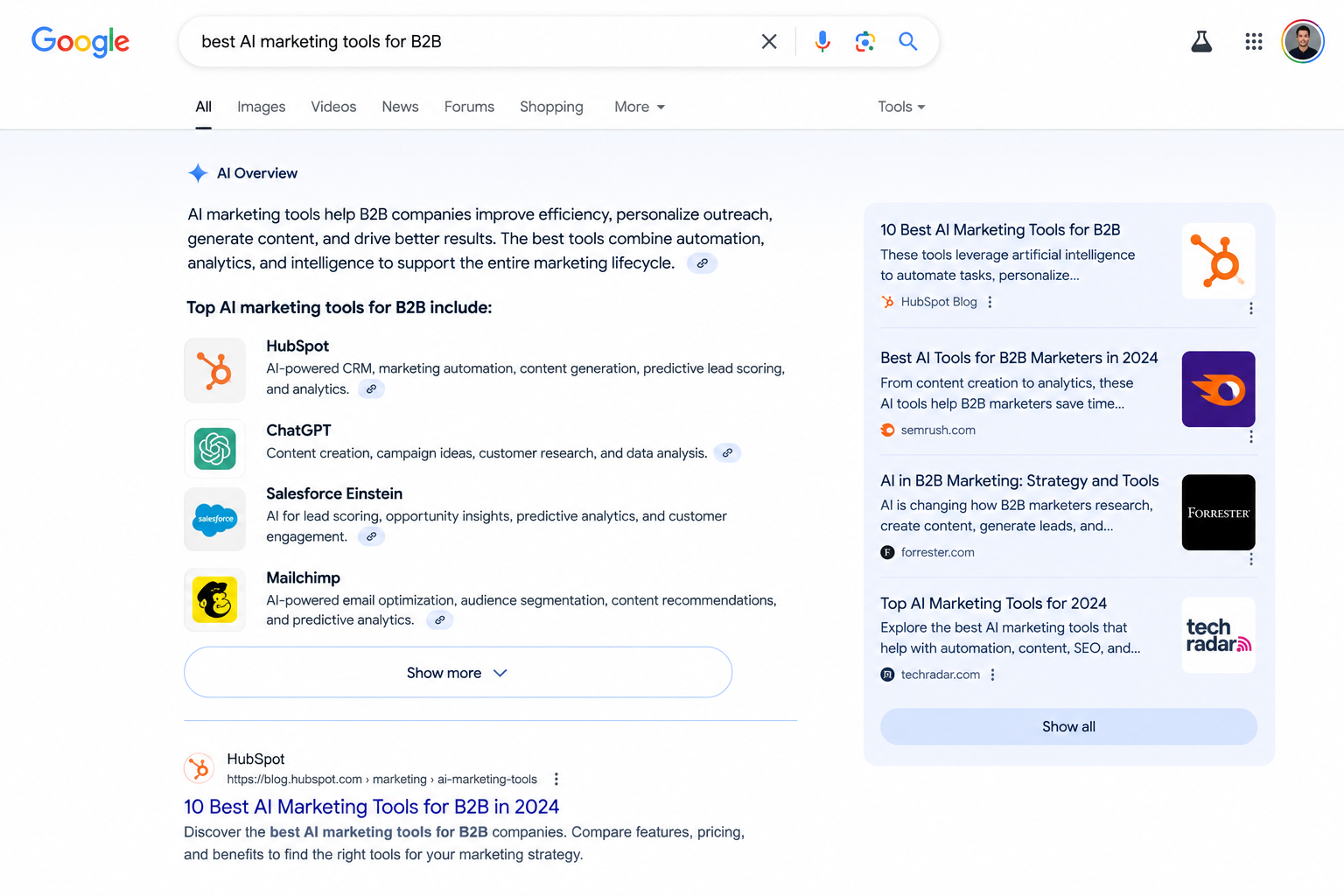
Buyers are increasingly asking AI assistants questions like “what’s the best CRM for a 50-person SaaS company” and getting synthesized answers pulled from across the web often without ever clicking through to a traditional search results page. That means the old goal of “rank on page one” is evolving into something bigger: being referenced by AI systems as a trustworthy, citable source.
This changes how you think about content. It’s no longer enough to stuff keywords and hope for clicks. You need to build genuine authority, well structured content, clear expertise signals, consistent thought leadership so that when an AI model is synthesizing an answer about your category, your brand is one of the sources it pulls from. That’s a subtle but massive shift in what “visibility” even means, and founders who understand it early have a real head start.
Practically speaking, this means your content needs to answer real questions clearly and directly, rather than dancing around a topic to pad word count for search engines. AI systems are increasingly good at recognizing which sources actually resolve a query versus which ones are just circling it. It also means consistency matters more than ever a single great article won’t move the needle, but a steady body of clear, well organized content across your blog, documentation, and case studies builds the kind of topical authority that AI systems learn to trust and cite. Think of it less like a one time SEO project and more like an ongoing reputation you’re building, one useful answer at a time
Building a Strategy Framework for Staying Ahead in AI Era
Putting this into practice starts with the basics understanding your audience before you touch a single AI tool. Who are they, what keeps them up at night, what does their buying committee look like? Skip that step and jump straight into “let’s use AI for everything,” and you’ll end up with marketing that’s technically efficient and strategically hollow.
From there, it helps to revisit a classic framework the 4Ps (product, price, place, promotion) but through a modern B2B lens shaped by AI capabilities. How does AI change how you position your product? How does it change your pricing conversations? How does it change where and how you promote?
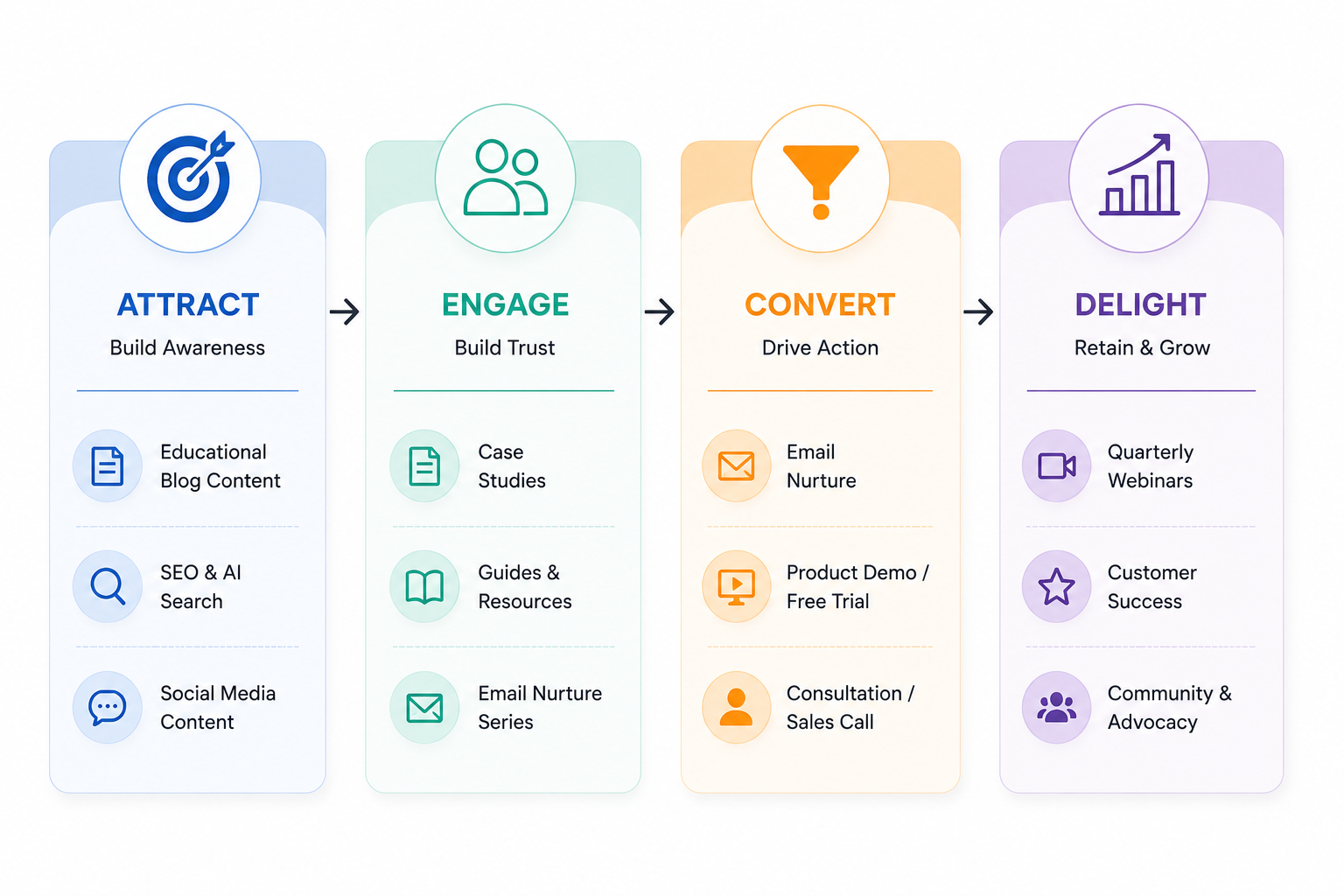
In practice, this usually means blending paid and organic channels thoughtfully: webinars that let prospects see real expertise in action, email nurturing sequences that respect the long B2B sales cycle, case studies that provide the proof multiple stakeholders need to sign off, and thought leadership content that builds the kind of authority AI search systems are now looking for.
Executing a specialized B2B strategy well genuinely takes expertise, bandwidth, and systems most founders don’t have spare capacity for while running the actual business. This is often where a specialized B2B marketing agency becomes less of an expense and more of a strategic multiplier, giving you access to experience and execution capacity you can’t easily build in-house overnight.
A Simple Cadence You Can Actually Sustain
If bringing in outside help isn’t realistic yet, at minimum build a cadence you can maintain without burning out your small team. It doesn’t need to be elaborate what matters is consistency, because B2B buying committees often circle back to a vendor multiple times over weeks before making a decision. A workable starting cadence looks like:
- One strong piece of long form, thought leadership content per month
- A case study every time you land a notable customer win
- A consistent email nurture touchpoint for leads who aren’t ready to buy yet
- A quarterly webinar or live session that puts a real person in front of prospects
You want to be the name a buying committee keeps recognizing over those weeks, not the one they vaguely remember from a single ad they saw once.
The Workflow First Approach to Winning with AI
A model worth internalizing: most current AI use is narrow, not transformative. Despite the hype, AI isn’t replacing “knowledge workers” wholesale, it’s mostly improving one specific step inside an existing workflow. It drafts the first pass of an email. It summarizes a call. It flags an in market account. It’s a really good assistant, not a replacement employee.
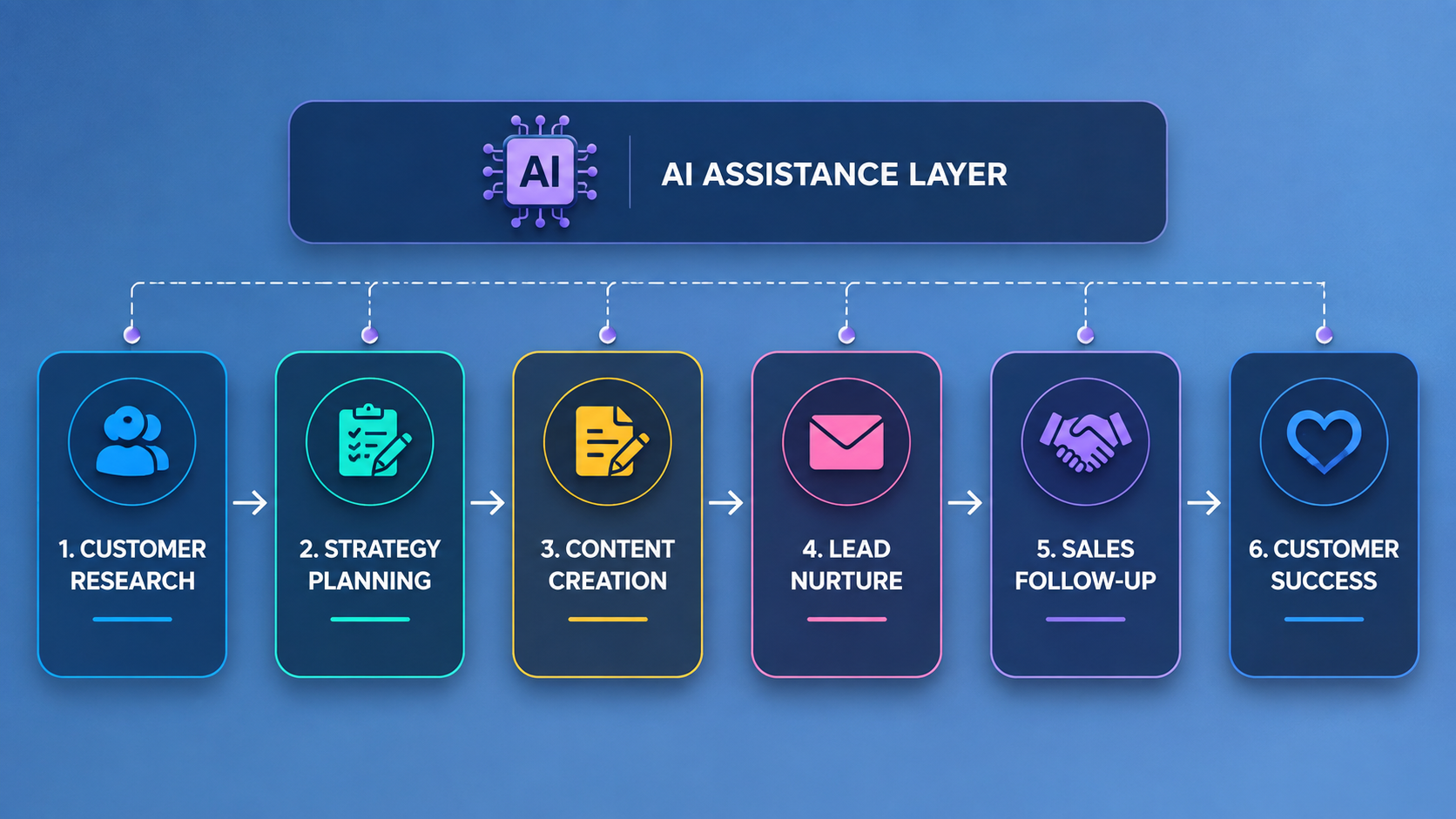
Understanding this changes how you build product and go to market strategy. It’s far easier to meet your users where they already are than to force them into an entirely new way of working. The founders who try to reinvent someone’s entire workflow around AI tend to face brutal adoption friction; people don’t want to relearn how they work, even for a shiny new capability.
The real opportunity, especially if you’re building or marketing a SaaS product, is making your users’ lives 10x easier within their existing habits, not reinventing those habits from scratch. That’s a much easier sell, and it compounds into loyalty over time.
It’s also worth remembering that all breakthrough technology eventually becomes commoditized. Yes, even large language models will become standard, cheap, and widely accessible. The novelty wears off fast. So if your entire competitive moat is “we use AI,” that moat is temporary. As a B2B company, you actually win through timing, not ownership by surfacing the right AI capability, to the right person, inside the right workflow, at the right moment.
The true differentiator, then, isn’t the AI itself. It’s the convenience layer you wrap around it. Absorb the commodity the AI capability everyone will eventually have and wrap it in a layer of convenience nobody else has bothered to build yet. That’s what creates a genuinely delightful product experience, and it’s a much more durable form of staying ahead in AI era than chasing whatever model is trending this month.
Think about the companies that have won in past technology waves. They rarely won because they had exclusive access to the underlying technology cloud computing, mobile, even the internet itself eventually became table stakes. They won because they figured out how to package that technology into something that removed friction from a specific person’s day, inside a workflow that person was already using. The same pattern is playing out with AI right now, just faster. Your job as a founder isn’t to out build the foundation model companies you can’t, and you shouldn’t try. Your job is to be relentlessly obsessed with the five or ten minutes of friction your specific customer deals with every day, and to be the one who removes it first.
A good example of this convenience-layer thinking is Superhuman’s use of AI for email triage. The underlying AI capability summarizing and prioritizing messages isn’t proprietary or unique to them. What made it valuable was wrapping that commodity capability inside the exact workflow busy professionals already had: checking email. They didn’t ask anyone to change how they worked; they just made the existing habit dramatically faster. That’s the model to copy, regardless of your product category.
Common Mistakes Founders Make When Chasing AI Advantage
A few patterns show up again and again with founders trying to move fast on AI, and it’s worth naming them so you can avoid the trap.
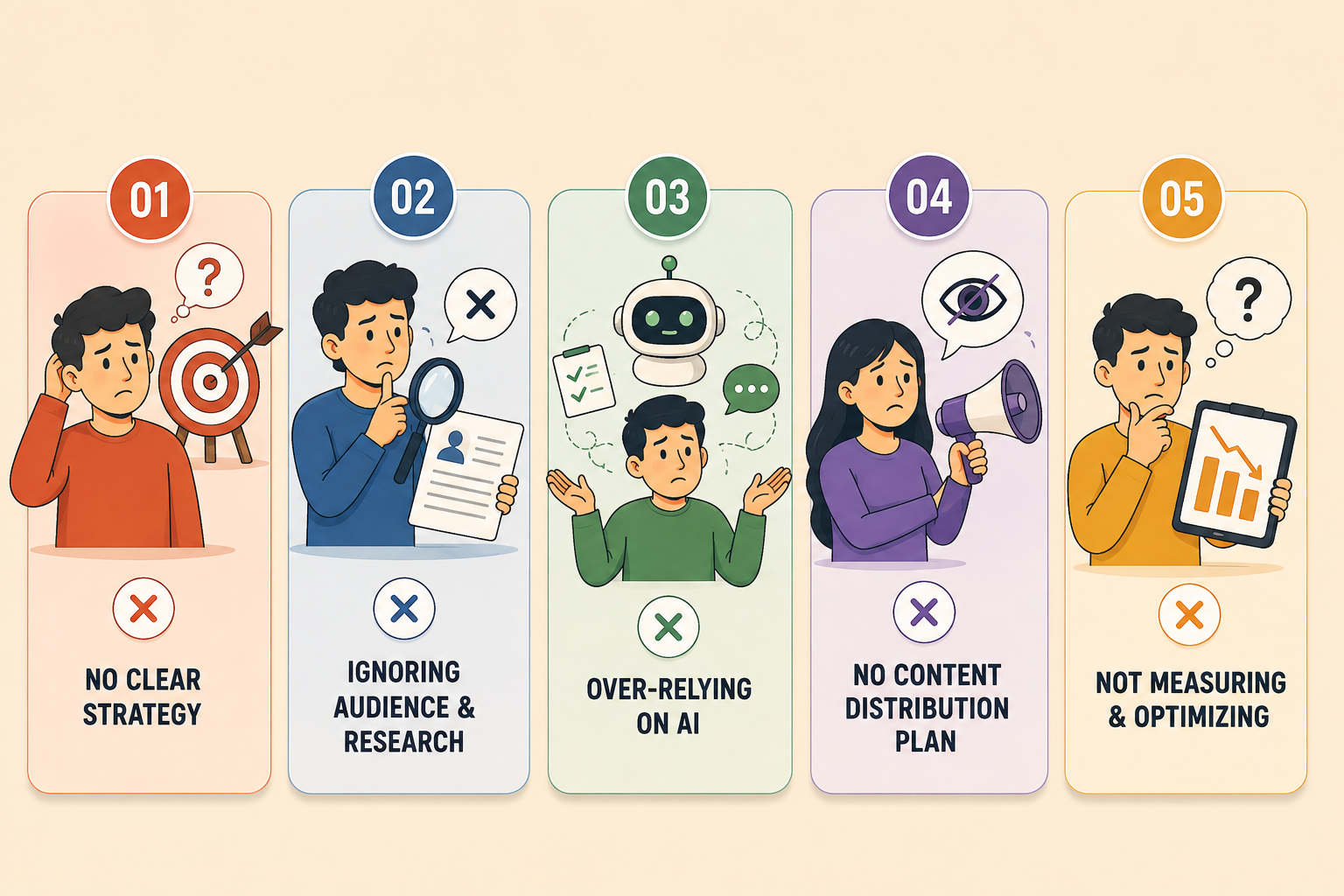
Treating “We Use AI” as the Strategy
Treating AI adoption as the strategy itself, rather than a tool inside a strategy, is one of the most common traps. “We use AI” is not a value proposition; it’s a feature, and an increasingly common one at that. A prospect wants to know what problem you solve, not which model you built on top of.
Skipping the Human Editing Pass
Letting AI generated content go out the door without a human pass for tone, accuracy, and genuine point of view is another. B2B buyers are sophisticated enough to notice when something reads like it came from a template, and that erodes exactly the trust you’re trying to build.
Deprioritizing In-Person Touchpoints
Ignoring the human touchpoints events, calls, real conversations because they don’t scale as neatly as automated campaigns is a mistake too. Those touchpoints are precisely what differentiate you when every competitor’s inbox blast looks the same.
Chasing Every New Tool
Chasing every new AI tool that launches, instead of going deep on the workflow-first approach discussed earlier, might be the most common trap of all. Novelty isn’t a strategy. Fit is.
Measuring the Wrong Things
This one’s more subtle: measuring volume instead of quality. Founders excited about their new AI stack often start reporting on numbers that are easy for AI tools to generate and easy to make look impressive in a board deck, such as:
- Emails sent per week
- Pieces of content published per month
- Total leads flagged by an intent-data tool
But volume was never the bottleneck in B2B marketing; qualified attention was. If your AI powered output is climbing while your actual pipeline quality is flat or declining, that’s not progress it’s noise dressed up as productivity. Anchor your reporting instead to the metrics that were always the real indicators of health in B2B: qualified pipeline generated, sales cycle length, and win rate. Let those numbers tell you whether your AI strategy is actually working, not just whether it’s busy.